Iranian MP Tells Kurdistan24: Khamenei Is in Good Health and Is Running the Country
Ibrahim Rezaei tells Kurdistan24 that Iran is prepared for another confrontation with the US and accuses Washington of shifting from military to economic pressure.
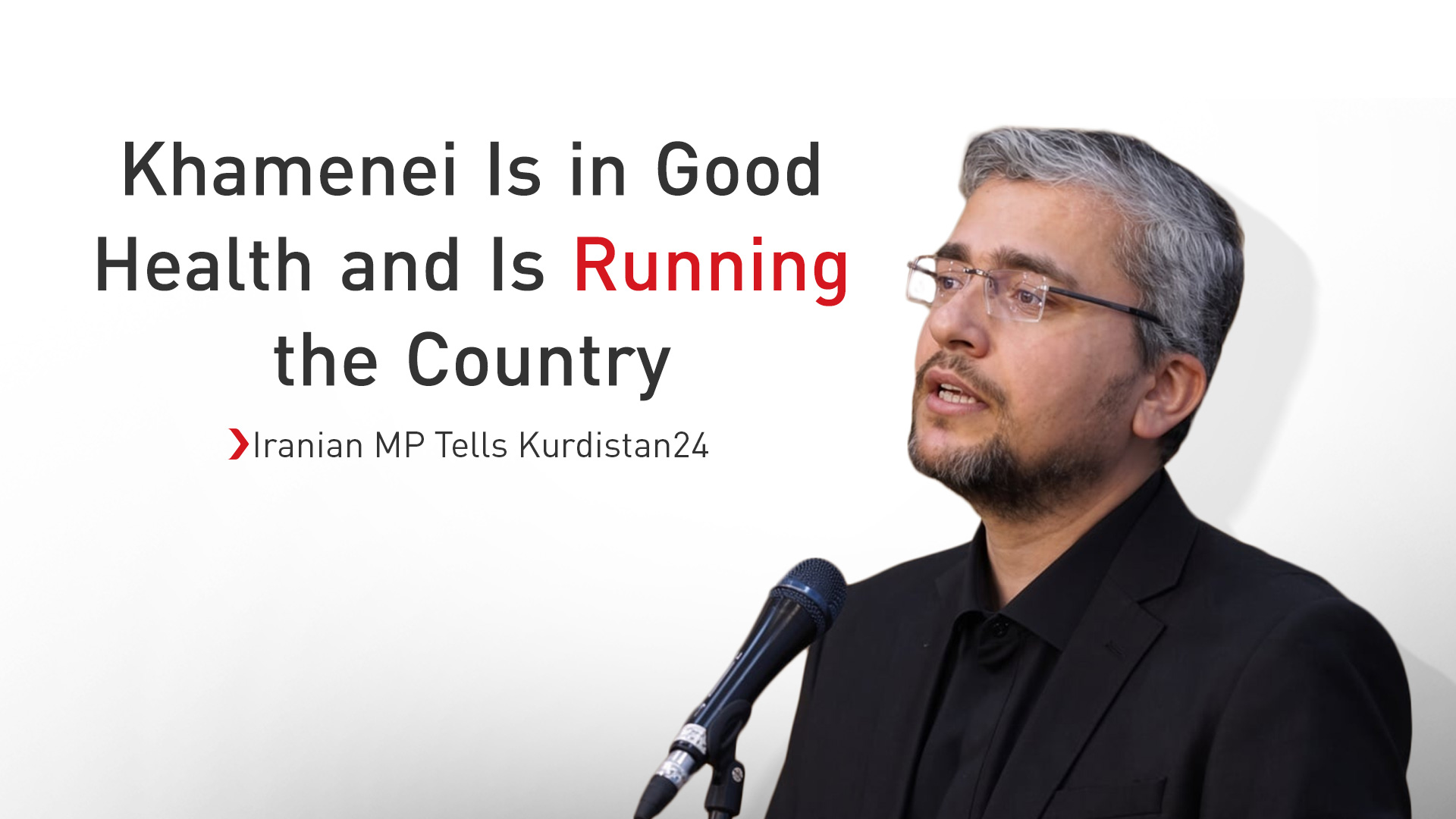
ERBIL (Kurdistan24) - Iranian lawmaker Ibrahim Rezaei has rejected reports about the health of Iran’s Supreme Leader, saying Iran’s Supreme Leader Mojtaba Khamenei is in good health and continues to oversee the country’s affairs, while accusing the United States of failing militarily against Iran and turning to economic pressure.
Rezaei, a member of the Iranian Parliament’s National Security and Foreign Policy Committee, made the remarks in an exclusive interview with Kurdistan24 on Thursday, in which he discussed Khamenei’s health, US sanctions against Tehran, the possibility of renewed conflict and the situation around the Strait of Hormuz.
Responding to reports in Western media about the deteriorating health of Iran’s Supreme Leader, Rezaei dismissed them as false.
“The reports are merely lies by Western media. The Supreme Leader is in very good health, fully overseeing the country’s affairs and serving as commander-in-chief of the armed forces,” he said.
Rezaei said the United States launched a military war against Iran nearly seven months ago with the aim of destroying the country, but suffered what he described as a major defeat and heavy losses.
“All US forces in the region were forced to flee, and our armed forces destroyed their bases,” Rezaei said. He also claimed that Iran had shot down US fighter jets, brought down dozens of US drones and seized two advanced US submarines.
According to Rezaei, the United States failed to achieve any of its objectives in the conflict.
The Iranian parliamentarian said the conflict has now entered an economic phase, arguing that Washington is seeking to force the Iranian population to surrender by tightening sanctions.
“We are prepared and know how to circumvent sanctions and how to find solutions to problems,” Rezaei said, citing restrictions affecting aviation as an example.
He described an incident during a trip to Tajikistan in which a flight carrying him returned midway because of what he attributed to US pressure, but said the trip was later completed after a way was found around the restrictions.
Rezaei also sharply criticized US President Donald Trump, arguing that what he called the “ignorance and foolishness” of US officials and Trump had imposed significant costs on American citizens.
He claimed that every American family had paid $1,500 toward a war that had brought them no benefit.
Rezaei also rejected claims that the United States had gained control of the Strait of Hormuz, calling the assertion “the biggest lie of the century.”
“If the United States controlled the Strait of Hormuz, the price of oil would now be above $100,” he said.
Rezaei claimed that no US vessel was willing to pass through the Strait of Hormuz into the Persian Gulf and said US Fifth Fleet vessels based in Bahrain had also taken shelter there.
He further claimed that any vessel passing through the strait does so with Iran’s permission.
Rezaei said around 130 US vessels previously passed through the strait each day, but claimed US traffic had now fallen to 5 percent and was approaching zero.
Rezaei said Iran is stronger than before and prepared for any confrontation.
“We have expanded the area of our territorial waters and have made significant advances in both offensive and defensive capabilities,” he said.
He also warned any regional country or leader that seeks to become what he called a “sponsor and proxy for America’s war,” saying they would be the first to pay the price.
Rezaei said Iran has “no red lines” when it comes to protecting its national security and that its objectives are broad and long-term.
Regarding Yemen’s Houthis, Rezaei said Iran considers the Ansarullah movement to be the legitimate representative of Yemen.
“They are not our proxy force and make their own decisions,” he said, adding that he viewed Israel as the United States’ proxy force.
Rezaei said Iranians were pleased with what he described as Yemen’s successes against US “mercenaries.”