Peshmerga Commander Warns of Air-Defense Gap, ISIS Threat After Coalition Withdrawal
Sirwan Barzani says Kurdistan Region faced more than 1,000 missile and drone attacks, while Peshmerga salaries remain below half those of Iraqi Army personnel
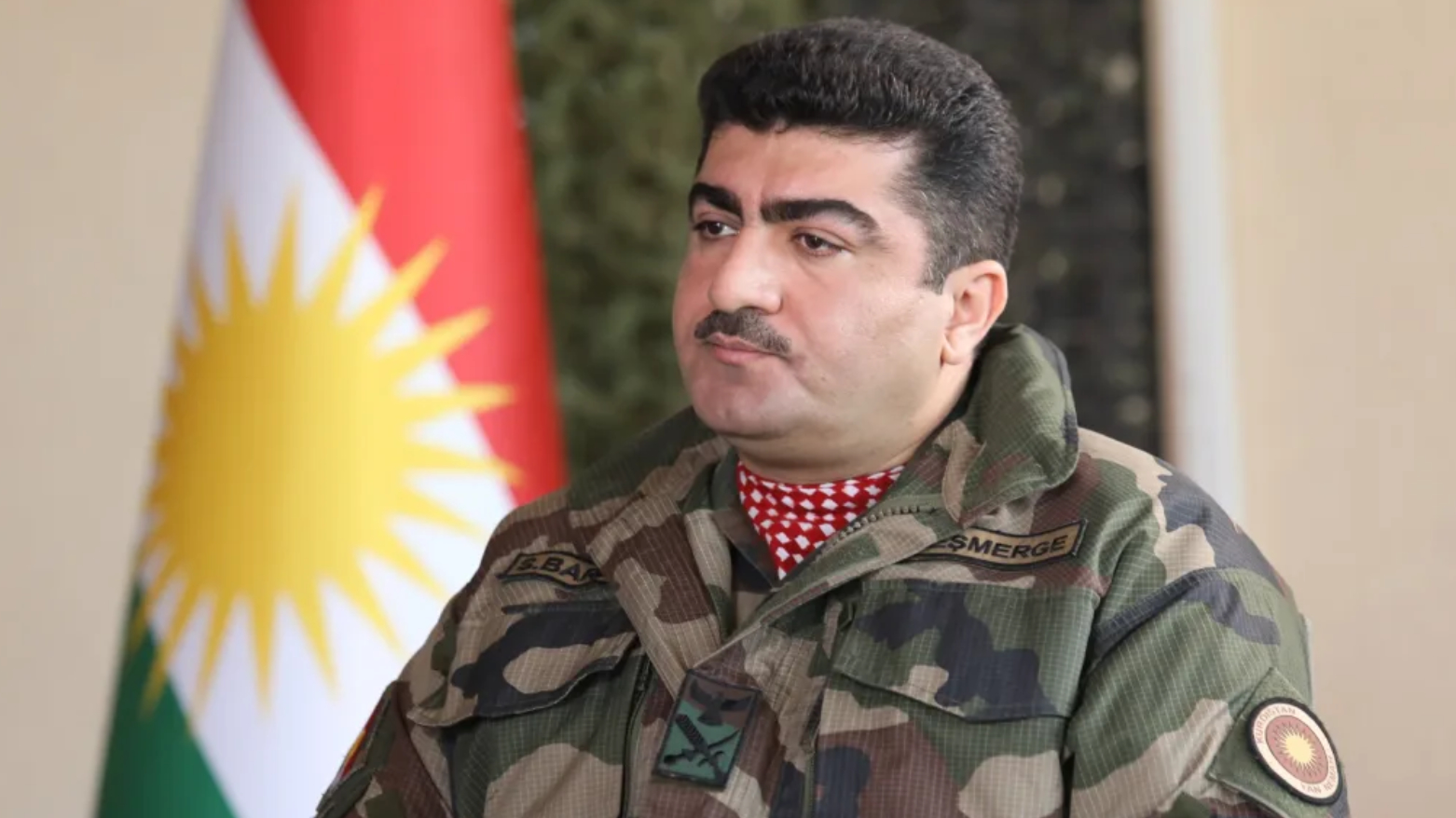
ERBIL (Kurdistan24) — Sirwan Barzani, commander of the Peshmerga Forces’ Sixth Front, warned Thursday of significant security and military challenges facing the Kurdistan Region, including the absence of an integrated air-defense system, renewed ISIS activity and disparities in the financial entitlements of Peshmerga and Iraqi Army personnel.
Speaking to the Hadath channel, Barzani said the Kurdistan Region had been subjected to more than 1,000 missile and drone attacks during the recent period of war and regional instability.
He described the lack of an air-defense system as a major challenge for the Kurdistan Region, stressing the need for advanced capabilities to protect the region against missile and drone threats.
“We hope that all the justifications and excuses used by armed groups to carry out attacks against the Kurdistan Region will come to an end once and for all,” Barzani said.
Peshmerga commander warns of ISIS activity
Barzani also warned about the continued activity of ISIS remnants in the region, describing the group’s recent attack in the Pirdi area of Kirkuk province as a dangerous warning.
He stressed that the Peshmerga continues to conduct joint and sustained operations with Iraqi security forces in the Kirkuk and Nineveh areas to clear territory and destroy militant hideouts.
The comments come as Iraqi and Kurdistan Region security forces face the post-Coalition security environment following the formal conclusion of the international Coalition’s military mission in Iraq on Sept. 30.
Peshmerga pay disparity
Barzani also raised concerns over differences in financial entitlements between the Peshmerga and Iraqi Army.
He said the salaries received by Peshmerga personnel do not even reach half the level of salaries received by members of the Iraqi Army.
He stressed, however, the Peshmerga’s direct role in securing the front lines and said its forces are responsible for protecting the entire border line of the Kirkuk and Nineveh provinces in the areas under their operational responsibility.
Barzani said continued coordination between the Peshmerga and Iraqi security forces remains essential for confronting security threats and preventing ISIS from exploiting gaps between the two forces.
Peshmerga seeks advanced military capabilities
The commander said the Peshmerga has strengthened its forces with modern military equipment and capabilities during the current period.
He acknowledged, however, that the region’s domestic capabilities still do not match the technical and logistical capabilities previously provided by the international Coalition.
As a result, Barzani said, the Peshmerga continues to require advanced military systems and international assistance.
His remarks echo concerns he raised in recent comments about the capabilities that Iraq and the Kurdistan Region could lose following the Coalition’s withdrawal, particularly in intelligence, logistics and drone operations.
The Kurdistan Region has also previously documented hundreds of drone and missile attacks during the current regional conflict, with the KRG’s Media and Information Department reporting 809 attacks between Feb. 28 and April 20, including 701 drone and 108 missile attacks.
The security concerns come as the Kurdistan Region and the federal government enter a new phase following the end of the Coalition’s military mission, with greater responsibility falling on Iraqi and Peshmerga forces to maintain security, counter ISIS remnants and protect Iraqi territory and airspace.