Iraq Seeks International Help on ISIS Detainees From Syria
Iraqi Foreign Minister Fuad Hussein called for international cooperation to repatriate foreign ISIS-affiliated nationals transferred from Syria during security talks in Washington.
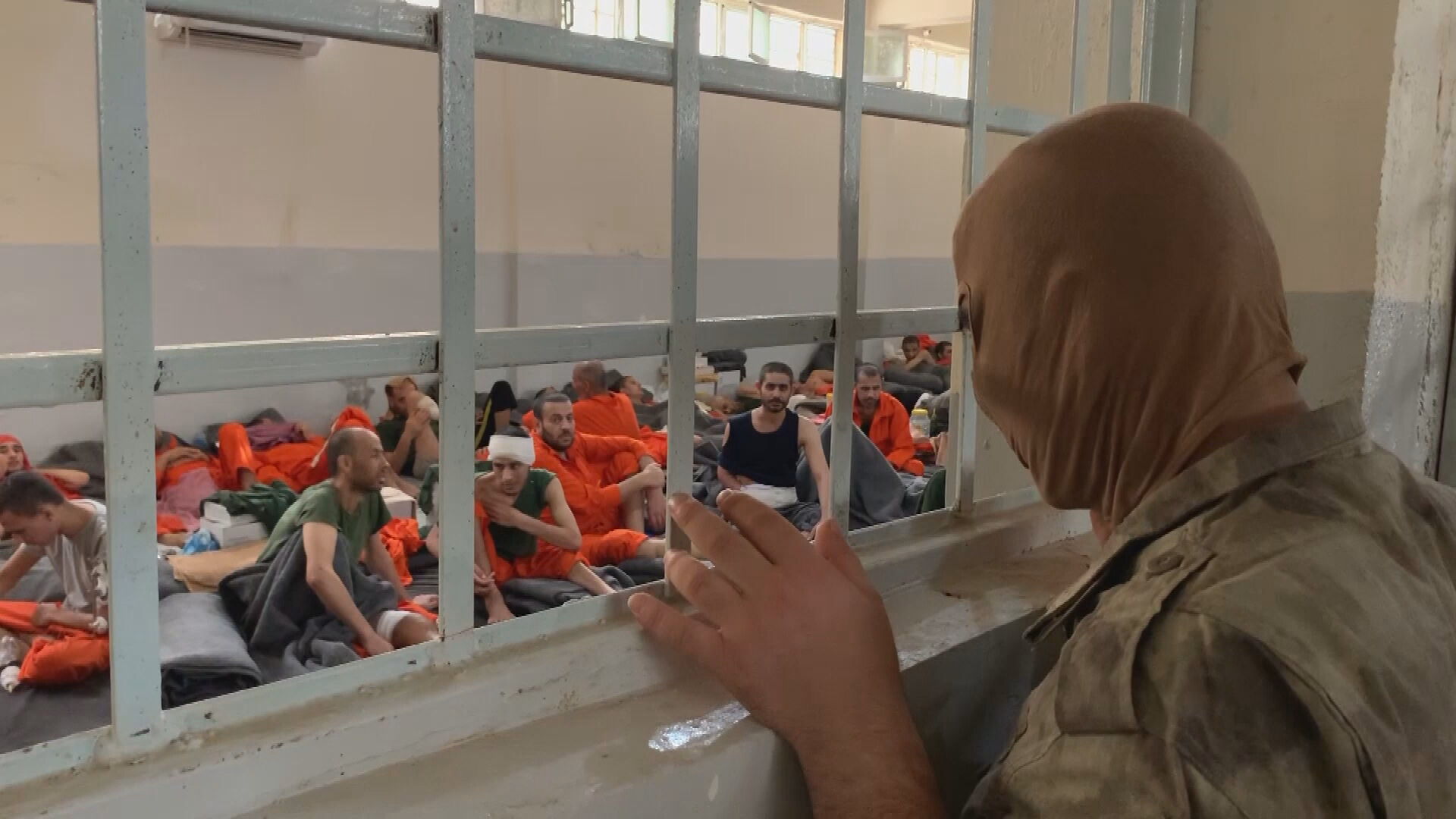
ERBIL (Kurdistan24) - Iraqi Foreign Minister Fuad Hussein has called for stronger international cooperation over ISIS detainees transferred from Syria to Iraq, including efforts to return foreign nationals affiliated with the group to their countries of origin, as Baghdad adjusts to a new security phase following the end of the international Coalition's military mission.
Hussein raised the issue during a meeting with U.S. Senator Elissa Slotkin at the U.S. Capitol in Washington, where the two also discussed the future of Iraqi-U.S. security cooperation, training for Iraqi forces and efforts to bring weapons under state control.
According to Iraq's Foreign Ministry, the ISIS detainee file featured prominently in the talks because of its international dimension.
Hussein stressed that dealing with those transferred from Syrian territory should not fall on Iraq alone and called for cooperation from other countries, particularly in facilitating the return of foreign nationals connected to ISIS.
The statement did not provide the number of detainees transferred to Iraq, identify their nationalities or give details about the mechanisms through which repatriation could take place.
The discussion came as Iraq moves into a security environment in which its own institutions are expected to assume greater responsibility for preventing an ISIS resurgence.
The international Coalition's military mission in Iraq formally concluded on Sept. 30, ending a deployment that began after ISIS seized Mosul and large areas of the country in 2014.
Over more than a decade, Coalition countries provided Iraqi forces and the Peshmerga with training, intelligence, air support, logistics and other forms of assistance while they fought to recover territory from the group.
The formal end of that mission, however, has not ended security cooperation between Iraq and its international partners.
Hussein and Slotkin discussed developing bilateral security coordination while shifting toward what the Foreign Ministry described as greater Iraqi self-reliance.
That includes continuing training programs for the Iraqi armed forces and strengthening the capabilities of the country's security institutions.
The two sides also stressed continued coordination between Baghdad and the U.S. Congress over security support, training and institutional capacity-building.
That approach broadly reflects how Iraqi officials have described the post-Coalition relationship: the multinational military framework has ended, but cooperation is expected to continue through more focused bilateral arrangements, intelligence-sharing, expertise and technical support.
Iraqi authorities have presented the transition as evidence that their security forces now have the capability to take primary responsibility for the country.
At the same time, the ISIS detainee issue illustrates why international coordination remains necessary even after foreign combat forces have departed.
The organization no longer controls the large territories it seized in 2014, but ISIS remnants remain active, including cells operating in difficult terrain and areas where security gaps persist.
The Kurdistan Region has repeatedly raised concerns about those vulnerabilities.
Peshmerga commanders have warned that ISIS cells can exploit stretches of territory between Peshmerga and Iraqi Army positions, particularly across disputed areas extending from Khanaqin toward Sinjar.
Federal officials, meanwhile, have said coordination with the Peshmerga remains strong and that both sides are working to address those gaps.
President Masoud Barzani has also warned that the withdrawal of international forces should not allow conditions resembling those that preceded ISIS's rise after the earlier U.S. withdrawal in 2011.
At the same time, Kurdish officials have said the Peshmerga remain prepared to work with federal security forces against any renewed threat.
The meeting between Hussein and Slotkin also dealt with another major question in Iraq's post-Sept. 30 security order: weapons outside state control.
According to the Foreign Ministry statement, both sides stressed support for the Iraqi government's efforts to uphold the rule of law and ensure that weapons are brought under state authority.
Prime Minister Ali Faleh al-Zaidi has tied that issue directly to his government's definition of sovereignty.
Following the end of the Coalition mission, Baghdad said it was entering a serious phase of bringing weapons outside government control under state authority, with a roadmap extending no later than June 30, 2027.
The process remains unfinished.
The government has been negotiating with armed factions over arrangements for surrendering or regulating their weapons, while different groups have taken varying positions on their future status.
Some have expressed willingness to work within the government's framework, while others have sought guarantees or alternative institutional arrangements.
For Baghdad, the issue has become closely connected to the argument that sovereignty cannot mean only the departure of foreign forces.
It also requires the government to control armed activity inside the country and retain authority over decisions involving war, peace and national security.
Kurdistan Region President Nechirvan Barzani has similarly argued that sovereignty requires state institutions and the Constitution to remain the final reference for such decisions.
Air defense and military capacity are another part of that debate.
Iraq has said it is developing a more integrated national defense system and strengthening the capabilities of its own forces, while Peshmerga officials have warned that the Kurdistan Region continues to face vulnerabilities, particularly in air defense and some intelligence and drone-related capabilities previously supported by Coalition partners.
The Hussein-Slotkin meeting therefore touched on several issues that remain connected despite the formal end of the Coalition mission: ISIS remnants, detainees transferred from Syria, continued military training, institutional capacity and the state's control over weapons.
For Iraq, the detainee issue adds an international dimension to a security transition that Baghdad has otherwise framed around national self-reliance.
Hussein's message in Washington was that responsibility for Iraq's security may increasingly rest with Iraqi institutions, but managing the consequences of the long war against ISIS, particularly foreign nationals connected to the group, still requires cooperation beyond Iraq's borders.