Iraq Vows Oil-Smuggling Prosecutions as Jurf al-Sakhar Restrictions Persist
Iraq vows to prosecute oil-smuggling suspects as official claims of progress in Jurf al-Sakhar conflict with reports of continued militia control and restrictions.
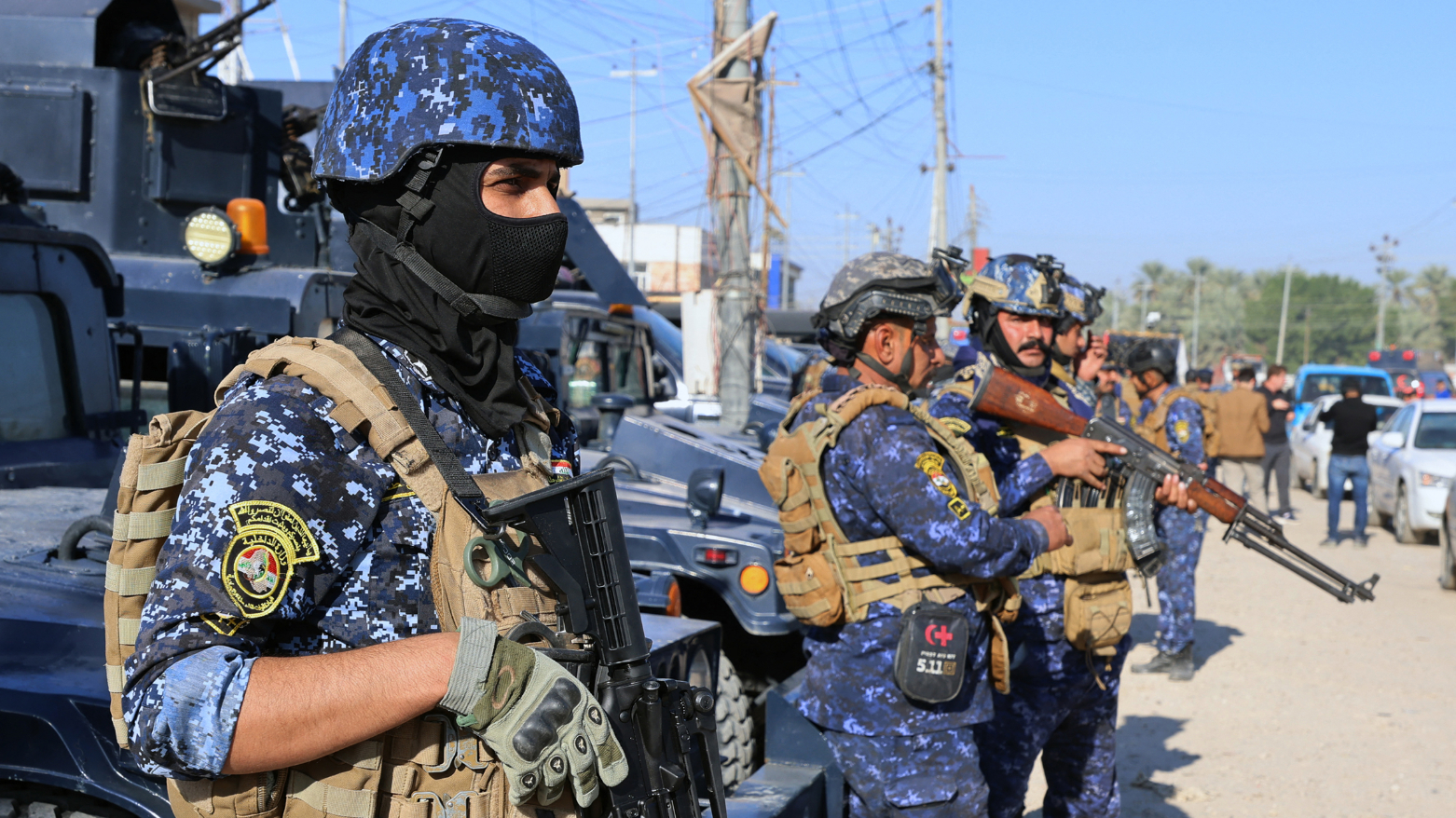
ERBIL (Kurdistan24) - Iraq's government warned Saturday that individuals implicated in oil smuggling could face arrest and prosecution as authorities pressed ahead with a security reorganization in Jurf al-Sakhar, although Kurdistan24's reporting from the area indicated that Kataib Hezbollah continued to restrict the movement of government forces and prevent displaced residents from returning.
Government spokesperson Haider al-Aboudi said on Nov. 21, 2026, that investigations into suspected oil theft had been referred to judicial authorities, while security forces had received instructions to investigate illegal petroleum activities across Iraq.
His remarks coincided with announcements that Iraqi Army and Energy Police units had completed deployments in their assigned sectors of Jurf al-Sakhar, a heavily restricted subdistrict in Babil province that has remained under armed-group control since 2014.
Yet reports from Kurdistan24 correspondent Shivan Jabari presented a more complicated picture. Despite official declarations of progress, he said Kataib Hezbollah fighters continued to control the main entrance, inspect government military vehicles and restrict Iraqi security personnel to designated positions.
The contrasting accounts raise questions about the extent of Baghdad's authority in an area that has become central to Prime Minister Ali al-Zaidi's campaign to bring weapons and strategic infrastructure under state control.

'Judicial Action'
Speaking to the Iraqi News Agency (INA), al-Aboudi said the protection of oil infrastructure was a national responsibility that extended beyond Jurf al-Sakhar.
"Protecting oil pipelines is the government's duty, and this issue is not limited to one specific area but applies to all other areas as well," he said.
The spokesperson confirmed that relevant security institutions had submitted investigative reports and evidence to the prime minister, and that the oil-smuggling file had been referred to the judiciary.
He said those whose names emerged in the investigations would face judicial scrutiny and that arrests could follow.
The statements indicate that the government intends to pursue the alleged offenses through legal proceedings rather than limiting its response to changes in security deployments.
However, the referral of investigative materials does not establish criminal responsibility, and no comprehensive list of suspects or judicial decisions was disclosed.
The investigation follows the discovery of suspected illegal refining facilities and interference with branches of the strategic Basra-Haditha oil pipeline, according to Iraqi officials.
The government subsequently dismissed nine senior security, administrative and oil-sector officials in Babil province, while directing relevant institutions to investigate suspected theft of public resources.
Kataib Hezbollah has denied involvement in oil smuggling, maintaining that fuel-processing installations in the area were established for legitimate operational needs.

Progress in Security Deployment
Meanwhile, Sabah al-Numan, spokesperson for the Commander-in-Chief of the Iraqi Armed Forces, announced Saturday that important stages of the security reorganization had been completed.
"The Energy Police protection regiment has completed its deployment and assumed responsibility for its designated sector to protect oil pipelines in Jurf al-Sakhar," al-Numan said.
He confirmed that the Iraqi Army's 38th Brigade had assumed responsibility for its assigned territory, while substantial elements of the Federal Police and a replacement Popular Mobilization Forces (PMF) brigade had entered their designated areas.
According to al-Numan, the rotation was proceeding according to the approved timetable and involved replacing previously deployed regiments and brigade headquarters through an organized command structure.
The operation began Friday, Nov. 20, under instructions from the Commander-in-Chief, with the establishment of a new control headquarters overseeing the allocation and movement of participating forces.

Al-Numan said the plan would expand security coverage across Jurf al-Sakhar, including surrounding desert areas and previously unoccupied locations, to strengthen control and prepare for the reopening of roads and infrastructure rehabilitation.
He emphasized that the participating Iraqi Army, Federal Police and PMF formations were operating under unified command and control.
The spokesperson described the different components of Iraq's armed forces as a source of strength, recalling their collective role in the campaign against ISIS.
Yasser Issawi, Assistant Chief of Staff of the PMF, separately told Kurdistan24 that three previously stationed PMF brigades had been replaced by two other PMF brigades, alongside two Iraqi Army brigades, Federal Police personnel and an Energy Police regiment.

Continued Restrictions
Despite these announcements, Kurdistan24's correspondent reported that the practical situation inside Jurf al-Sakhar remained substantially more restrictive than official statements suggested.
Reporting from an entrance to the subdistrict, Shivan Jabari said Kataib Hezbollah had not withdrawn and continued to control the main checkpoint.
According to Jabari, fighters affiliated with the group were inspecting Federal Police and Iraqi Army vehicles entering the area, including those carrying supplies and equipment.
He identified vehicles belonging to the Federal Police's 17th Brigade and the Iraqi Army's 82nd Brigade among those subjected to inspections.
More consequentially, the correspondent reported that government forces could not move freely throughout the subdistrict.

He said Army, Federal Police, Counter-Terrorism Service and Energy Police personnel had been confined to specific locations, with their movement beyond those positions restricted.
Jabari said Kurdish soldiers serving in the Federal Police's 17th Brigade had confirmed to him that they were unable to leave their assigned areas.
During a roughly 20-minute visit inside Jurf al-Sakhar on Friday, the correspondent said two or three armed men continuously monitored his camera, preventing him from filming certain locations.
He also reported instructions restricting journalists from approaching the area or broadcasting live, while access for unauthorized political and security officials remained limited.
These observations do not establish that every government unit faces identical restrictions. They do, however, indicate that the existence of a unified headquarters and the completion of assigned deployments have not necessarily translated into unrestricted government movement throughout Jurf al-Sakhar.
The discrepancy is central to assessing whether the operation represents a comprehensive transfer of security authority or an arrangement in which government forces operate alongside armed factions retaining influence over access and movement.

Displaced Residents
The uncertainty also extends to civilian access.
Saad Maan, head of Iraq's Security Media Cell, had announced that the Latifiya-Jurf al-Sakhar-Karbala road would reopen to motorists and other civilians at 6:00 a.m. Saturday.
However, Jabari reported that the entrances remained closed to civilians, including displaced families seeking to return.
He said entry had remained restricted since Friday morning to security personnel whose movements were coordinated in advance.
The restrictions particularly affected members of the Janabi and Nasrawi tribes, whose families have been displaced from the area since 2014.
Jurf al-Sakhar, officially renamed Jurf al-Nasr, lies in northern Babil province, approximately 60 kilometers southwest of Baghdad.
Before ISIS seized the area in 2014, its population was estimated at between 120,000 and 140,000 people, predominantly Sunni Arabs.
Following the area's recapture from ISIS in late 2014, Kataib Hezbollah established control, with displaced residents prevented from returning on security grounds, including concerns about explosives.
Successive Iraqi governments have been unable to secure their return.
For these families, the restoration of normal conditions will ultimately depend on whether they can access their homes, rather than solely on announcements that security units have changed positions.

Promises of Reconstruction
Al-Aboudi said the newly established control headquarters was intended to facilitate the complete reopening of Jurf al-Sakhar, the return of displaced residents and the restoration of essential services.
He denied the existence of disputes among the military formations involved and maintained that the operation was proceeding within the framework of government decisions.
The spokesperson also said Jurf al-Sakhar would receive special consideration in Iraq's 2027 federal budget to support reconstruction and rehabilitation.
No specific allocation, implementation schedule or timetable for returning displaced families was announced.
Al-Aboudi argued that improved readiness among Iraqi security forces would prevent earlier security problems from recurring and cited what he described as renewed international confidence in Iraq.
Separately, military officials have outlined plans to secure oil infrastructure, including approximately 100 kilometers of pipeline routes through the area, expand the security perimeter and restore major road connections.
The government has presented these measures as foundations for rebuilding an area that has remained isolated from ordinary civilian administration for nearly 12 years.
The reported restrictions, however, leave open whether reconstruction teams, government institutions and returning residents will have the access required to implement those plans.

A Test
The dispute over Jurf al-Sakhar has moved beyond the original investigation into suspected oil smuggling.
It now concerns the practical authority of Iraq's central government over armed formations, public infrastructure and territory that has long remained outside routine state administration.
The deployment of regular security forces represents a measurable institutional change. Army and Energy Police units have assumed designated responsibilities, a control headquarters has been established, and officials have announced plans for road access and reconstruction.
Yet the continued presence of Kataib Hezbollah, the reported inspection of government vehicles and restrictions on civilian movement complicate claims that state control has been fully restored.
They also expose the distinction between a formal security structure operating under the Commander-in-Chief and the actual ability of those forces to move, inspect facilities and exercise authority without interference.
For Baghdad, the next measure of progress will be whether the new arrangements allow judicial investigators to pursue suspected oil theft, security forces to operate throughout the area and displaced families to return.
As of Saturday, those objectives remain only partly realized. The government reports progress in its security redeployment, while Kurdistan24's field observations indicate that the restrictions defining Jurf al-Sakhar for nearly 12 years have not yet been entirely lifted.