Why Are Kirkuk Families Moving Students to Kurdish Schools
Kirkuk's Director of Kurdish Education Kamaran Ali says that Kurdish students ranked first in both Iraq-wide and Kirkuk exams, prompting many families to transfer their children from Arabic- to Kurdish-language schools.
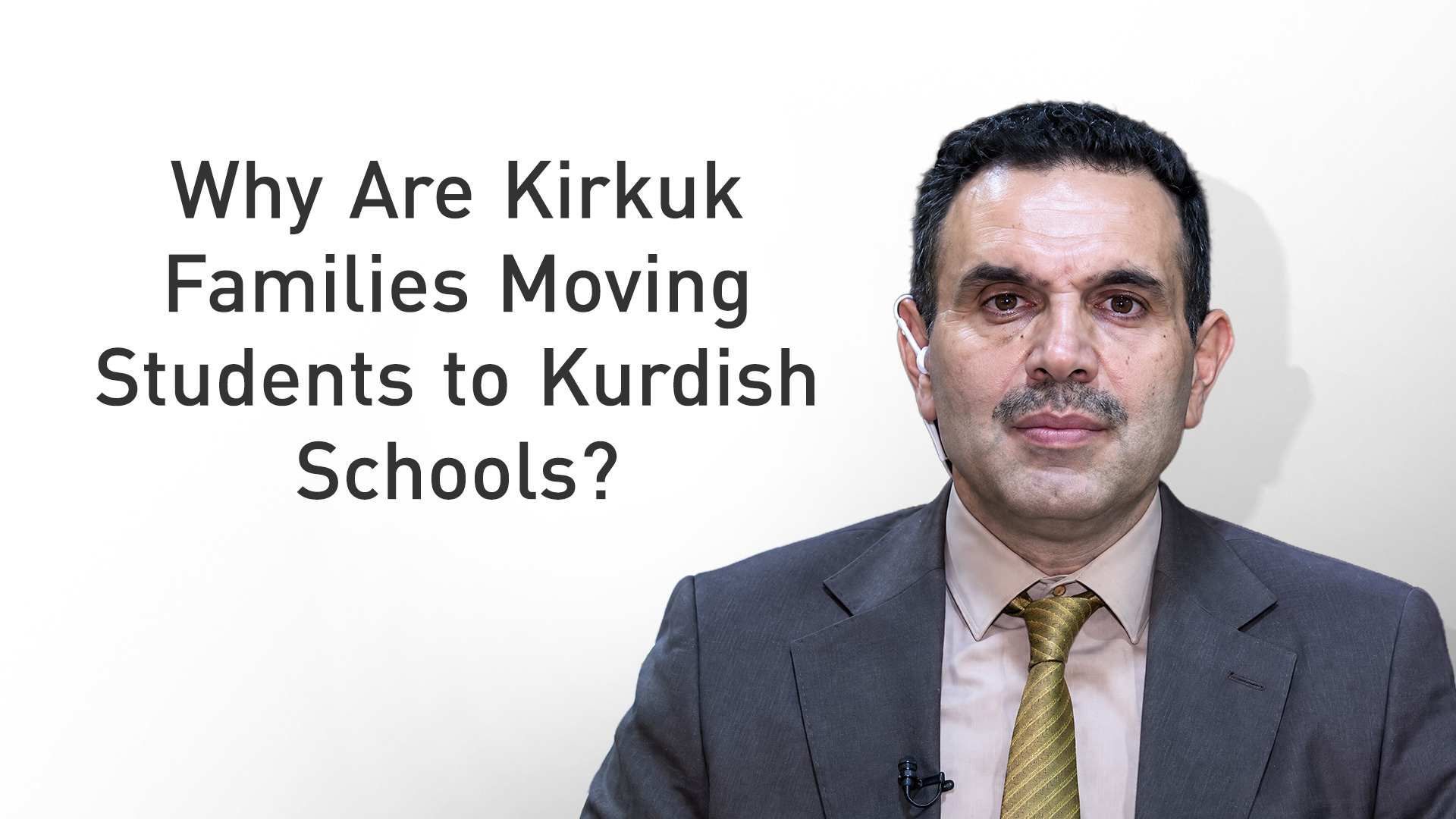
ERBIL (Kurdistan24) - Kurdish education in Kirkuk is entering a period of growth, with more than 1,000 students leaving Arabic-language schooling this year for Kurdish classrooms, the city's Director of Kurdish Education, Kamaran Ali, announced on Sunday. He credited the support of the Kurdistan Regional Government (KRG) and the devotion of teachers.
On Sunday, Kurdish girls and boys in Kirkuk went to school from the early morning hours carrying the Kurdistan flag. More than 104,000 students were welcomed across 562 schools and kindergartens by about 8,200 teachers. The KRG provided 1.2 million textbooks and other supplies.
The new school year in Kurdistani areas outside the administration of the Kurdistan Regional Government was delayed by 10 days. On Sunday, the doors of 124,000 schools opened to 12 million students.
In a speech marking the start of the school year, Ali said Kurdish-language education is a fundamental foundation for advancing society and securing a bright future for coming generations. He described it as a national duty that requires everyone's cooperation.
He said teachers, supervisors and school administrators, whom he likened to Peshmerga, have served selflessly in every season despite the obstacles. They have never abandoned their classrooms, he said, including those of the children of martyrs and Peshmerga.
In another part of his speech, Ali criticized what he described as the marginalization of Kurdish education by Kirkuk's governors since 2017. He asked the Iraqi government and the KRG to attend to the rights and privileges of teachers in Kurdistani areas outside the Region's administration. He also urged members of the provincial council to give Kurdish education practical support from now on.
In a special statement to Kurdistan24, Ali detailed the progress of Kurdish education.
"From kindergarten to preparatory school, there are 562 Kurdish schools in Kirkuk, and the mother tongue is developing," he said.
He noted that Kurdish students have taken first place at both the Iraq-wide and Kirkuk levels. In his view, these results reflect that progress and have led many families to move their children from Arabic-language schools to Kurdish ones.
On the returning students, Ali said 2,250 students have moved from Arabic to Kurdish education over the past two years: 1,200 last year and 1,050 so far this year. The process is still continuing, he said.
Sunday's events in Kirkuk unfolded alongside a different position in Khurmatu. Mayor Zulfiqar Haider, himself a Turkmen, told Kurdistan24 on Oct. 4 that schools and other institutions under federal authority may raise only the Iraqi flag, ruling out the Kurdistan flag and others. He said authorities had received instructions requiring institutions to display only Iraq's national flag.
Haider said Kurds, Arabs and Turkmen in the area all operate under the authority of the Iraqi government and should gather under the same national symbol.
"We have nearly 50 flags, so no flag other than the Iraqi flag should be raised," Haider said. "Kurds, Arabs, and Turkmen should all unite under that flag."
The mayor did not indicate whether the instruction applies specifically to schools, to all government institutions in Khurmatu, or whether a separate federal directive addressing the Kurdistan flag was issued.
Article 117 of the Iraqi Constitution recognizes "the region of Kurdistan, along with its existing authorities, as a federal region." The Constitution defers matters of the Region's flag, anthem and emblem to the Region's own legal apparatus, and the Kurdistan flag is formally recognized under that framework, including measures adopted by the Kurdistan Parliament and the designation of Kurdistan Flag Day.
The question of where the flag may be displayed outside official KRG institutions has been subject to differing legal and political interpretations, especially since the events of Oct. 16, 2017. Federal and regional authorities have previously disagreed over its use in areas such as Kirkuk, where administrative authority, identity and official symbols often intersect.
The issue places two principles side by side: the federal government's authority over institutions under its administration, and the constitutional recognition of the Kurdistan Region as a federal entity with its own institutions and symbols.
Ali concluded that the continuing backing of Masrour Barzani, Prime Minister of the Kurdistan Region, and the Ministry of Education has kept Kurdish education in Kirkuk on its feet. Without that support, he said, the continuation of schooling and the development of the sector would face serious difficulty.