Tehran Establishes First Armed Female Basij Battalion
Tehran has established its first armed female Basij battalion as part of a broader mobilization campaign involving drones, missiles and rapid-response training.
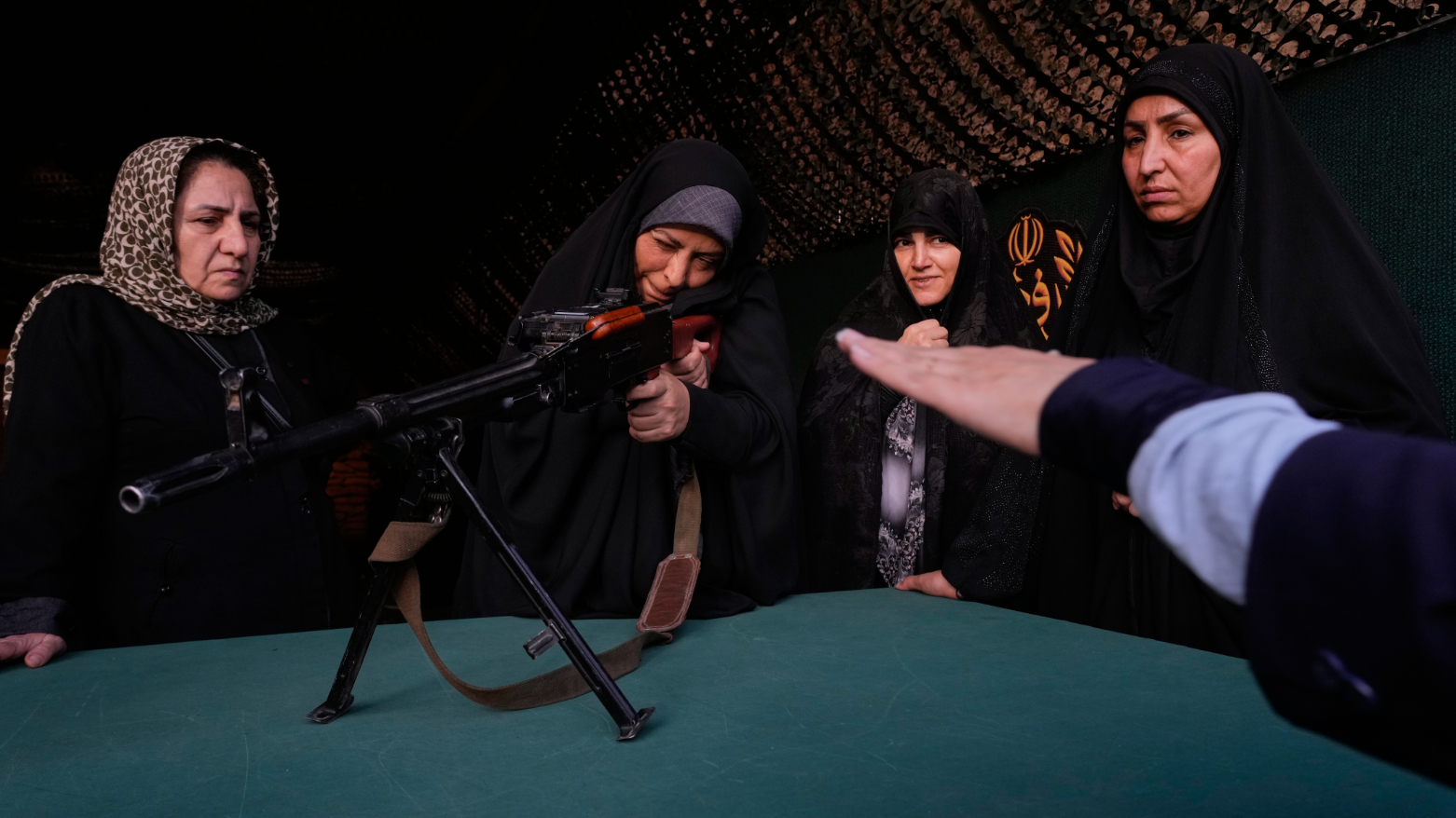
ERBIL (Kurdistan24) - Iranian authorities have established what is being described as Tehran's first official armed female battalion affiliated with the Basij, as part of a broader mobilization program aimed at increasing military preparedness and strengthening the capital's ability to respond to possible external threats.
According to a report published by IranWire, female volunteers have undergone intensive military training and field exercises involving firearms and combat equipment.
The new unit is intended to function as a rapid-response force and forms part of a wider recruitment and training effort that includes women as well as other civilian volunteers.
Iranian authorities have presented the initiative as reflecting their model of women's participation in the "Islamic Revolution," combining family responsibilities with involvement in defense and what they describe as resistance activities.
The female battalion is being developed under a wider mobilization campaign known as "Jan Fada."
The program aims to establish around 1,000 popular resistance battalions and 1,000 emergency response units across Iran after beginning in Tehran.
Training offered to volunteers goes beyond conventional small-arms instruction.
According to the report, participants are being trained to operate and handle small drones, use shoulder-fired anti-armor and anti-aircraft missiles, secure residential neighborhoods and take part in information monitoring and counterintelligence activities.
Authorities have also established a training complex at Imam Hussein Square in central Tehran, designed to simulate a tactical military environment for the direct training of civilians and women.
The initiative indicates an effort to broaden the pool of trained personnel available for emergency or wartime mobilization, particularly in urban areas.
It also reflects an emphasis on technologies and skills associated with modern warfare, including drones and portable missile systems.
The program comes amid continuing regional tensions and reports of pressure on Iran's armed forces.
According to the source material, reports have pointed to reduced manpower and logistical capacity within the Iranian military after months of pressure, increasing the need for additional trained personnel.
The mobilization drive is also taking place against the backdrop of stalled negotiations, renewed U.S. threats of military action and a severe domestic economic crisis.
Those conditions have added urgency to Tehran's efforts to improve readiness and expand its pool of volunteers.
The establishment of the female battalion does not by itself indicate that women will be deployed in regular frontline military roles, but it does show a broader effort by the Basij to incorporate female volunteers into organized armed training and rapid-response structures.
For Tehran, the initiative is being presented as part of a nationwide resilience and defense program.
For observers, it also highlights the extent to which Iranian authorities are seeking to mobilize civilian society alongside formal military institutions at a time of sustained external and internal pressure.