KCK Official Says Türkiye Peace Process Faces Stagnation
KCK official Mustafa Karasu says Türkiye's resolution process is stagnating and calls for further political reforms and greater freedom for Abdullah Öcalan to participate.
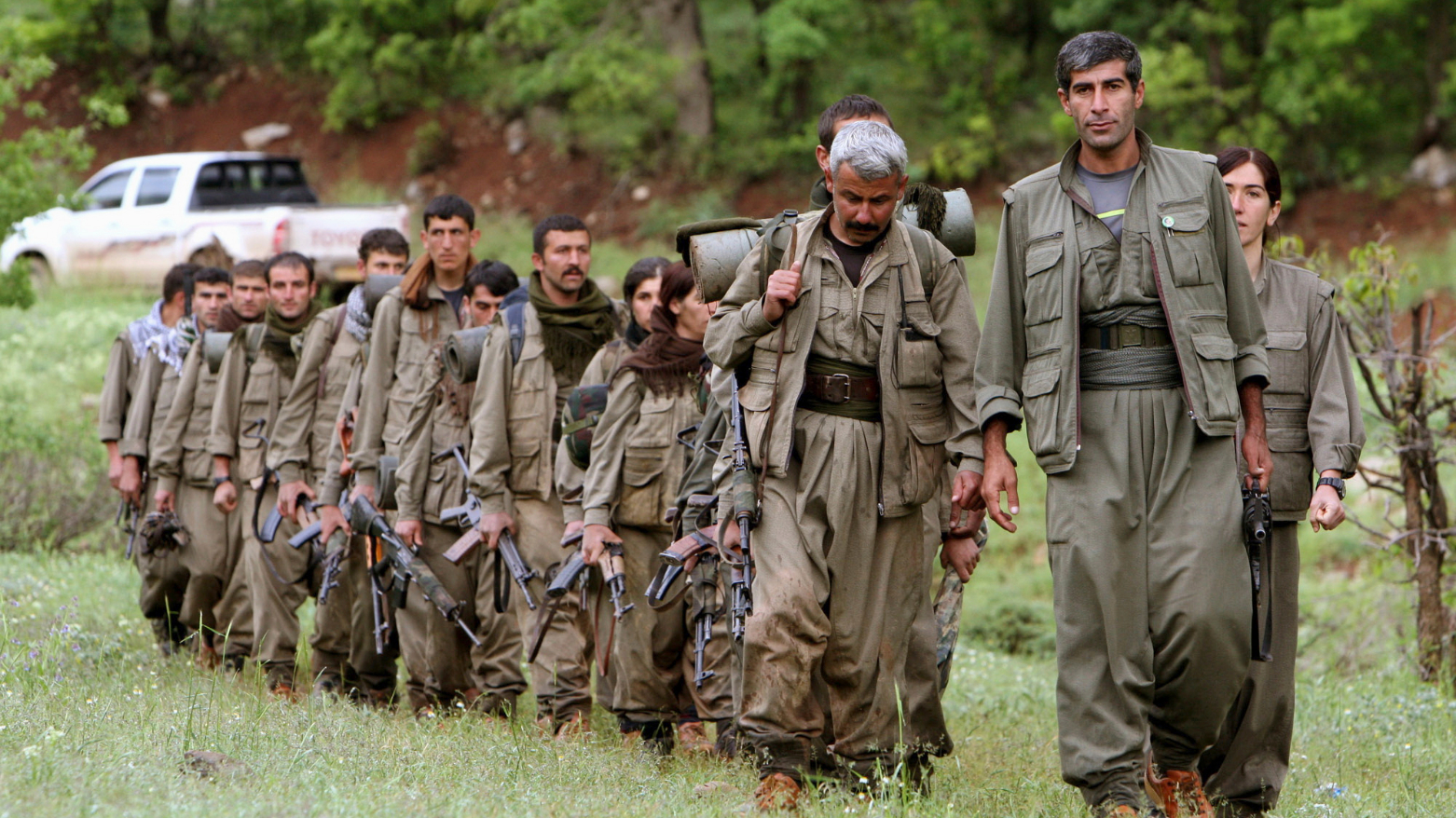
ERBIL (Kurdistan24) - Mustafa Karasu, a member of the Executive Council of the Kurdistan Communities Union (KCK), has criticized the pace of Türkiye's renewed resolution process, arguing that Ankara has failed to take practical political steps despite the passage of legislation intended to provide a legal framework for the process.
Speaking in an interview with a media outlet close to the Kurdistan Workers' Party (PKK), Karasu said the process had entered a period of serious stagnation.
He acknowledged that the Turkish Parliament approved a framework law on Aug. 10 and has since resumed its work, but argued that those developments have not been followed by sufficient measures to move the wider political process forward.
According to Karasu, the KCK and PKK have fulfilled the commitments expected of them, including ending the armed struggle, while the Turkish authorities have not taken what he considers corresponding practical steps.
That represents the KCK official's assessment of the process. Türkiye's parliament has, however, adopted legislation establishing a legal framework connected to disarmament and the future status of those covered by the process.
Karasu said peace efforts should not become tied to electoral calculations or political maneuvering.
He argued that failure to find a lasting resolution to the Kurdish issue would have consequences extending beyond Türkiye and could negatively affect the wider region.
Karasu also focused on the legal and political environment inside Türkiye.
He said progress toward peace would be difficult while laws and practices that he described as restricting rights remained in force, pointing in particular to the appointment of trustees and arrests of opposition figures.
He called on parliament to adopt additional legislation guaranteeing political freedoms and democratic activity.
Another major part of Karasu's criticism concerned the role of imprisoned PKK leader Abdullah Öcalan.
Karasu said Öcalan had not been provided with the conditions necessary to play the role expected of him in the process.
He called for changes to Öcalan's working conditions that would allow him to meet journalists, intellectuals and political representatives more freely and communicate his views directly to the Turkish public.
According to Karasu, allowing Öcalan greater ability to communicate is necessary for him to perform what the KCK official described as his coordinating role in the process.
Karasu also urged political actors and other parties involved to press for legislation protecting freedoms and to make the different stages of the resolution process transparent to the public.
The renewed process began to take shape in late 2024 and early 2025.
On Feb. 27, 2025, Öcalan issued a message calling on the PKK to lay down its weapons and end its military struggle.
The PKK subsequently announced at its 12th congress on May 12, 2025, that it had decided to end its armed struggle.
The Turkish government, led by President Recep Tayyip Erdoğan and supported by its political allies, later moved toward establishing a legal framework for the process.
Parliament approved the framework legislation on Aug. 10, 2026.
Karasu's latest remarks show that significant disagreement remains over what should follow those developments.
From the KCK's perspective, disarmament cannot constitute the entire process. Karasu argues that it must be accompanied by political and legal reforms, expanded freedoms and conditions allowing Öcalan a more active role.
His comments reflect criticism also voiced by KCK and PKK figures that the process has so far concentrated heavily on ending armed activity without, in their view, advancing sufficiently on political rights and democratic reforms.
The Turkish side, meanwhile, has already taken the legislative step of approving the framework law, marking a formal stage in the process following the PKK's decision to end its armed struggle.
The disagreement is therefore increasingly centered on what comes next.
Karasu's position is that the legal framework should now be followed by measures addressing political freedoms, democratic participation and Öcalan's ability to communicate.
He called on all sides to assume responsibility for preventing the process from stalling and said its future should be handled transparently rather than shaped by short-term political interests.
Kurdistan24 correspondent Ebdulselam Tutinçî contributed to this report.