US CENTCOM Rejects Iran’s Claim That Strait of Hormuz Is Closed as Tanker Hit off Qatar
CENTCOM says commercial traffic, including crude oil shipments, continues through the strategic waterway as UKMTO reports tanker struck by multiple projectiles near Qatar
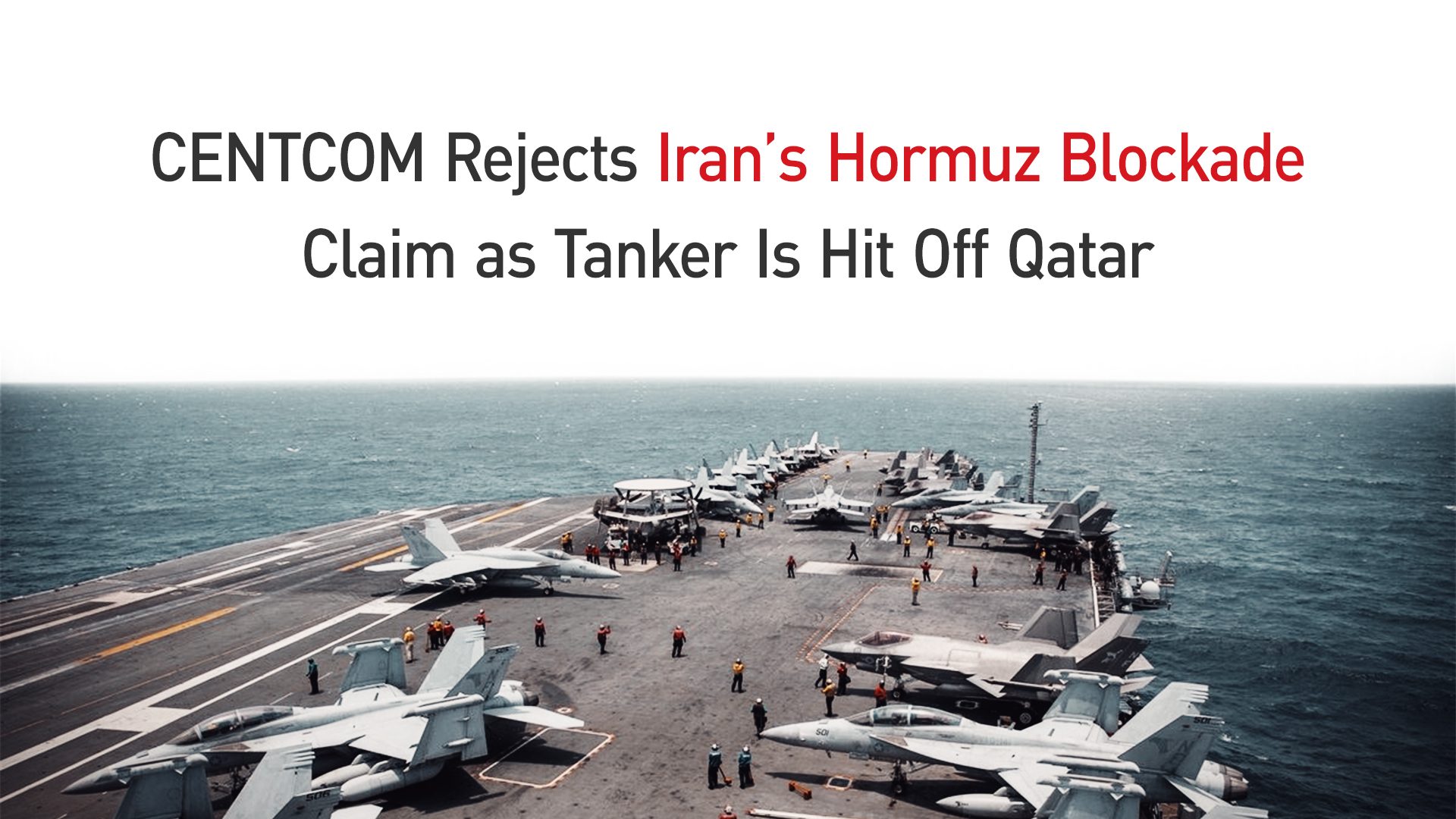
ERBIL (Kurdistan24) — The US Central Command (CENTCOM) on Thursday rejected an Iranian claim that the Strait of Hormuz had been closed and that Tehran had full control over the strategic waterway, saying commercial and energy traffic was continuing through the strait as a tanker was reported struck by multiple projectiles off the northern coast of Qatar.
“Traffic is flowing through the Strait of Hormuz right now carrying commercial goods and energy supplies, including 20 million barrels of crude oil,” CENTCOM said in a post on X, describing the Iranian claim that the strait was closed as “FALSE.”
The command added that the United States and regional partners “clearly control the strait.”
The statement came as the United Kingdom Maritime Trade Operations (UKMTO) late Wednesday reported that a tanker sailing off the north coast of Qatar had been struck by “multiple projectiles,” with an unspecified number of casualties reported.
The incident occurred 51 nautical miles (94 kilometers) off the Qatari coast, and authorities were investigating, according to the maritime agency. The vessel’s identity and the origin of the projectiles were not immediately disclosed.
The reported attack took place around 500 kilometers from the Strait of Hormuz, underscoring the continuing security risks facing commercial shipping in the Gulf even as Washington disputes Tehran’s assertion of control over the waterway.
The incident also comes amid repeated attacks on vessels in and around the Strait of Hormuz since the US-Israeli war with Iran began on February 28.
UKMTO has reported a recent increase in attacks on tankers in the strategic waterway, while commercial vessels have continued to use the route despite heightened security risks.
The Strait of Hormuz is one of the world’s most important energy chokepoints, linking the Gulf with the Gulf of Oman and the Arabian Sea.
Before the war, roughly one-fifth of global crude oil and liquefied natural gas supplies passed through the waterway, making its security critical to international energy markets.
Iranian officials have claimed that Tehran has full control of the strait and has sought to restrict vessels it considers to be making unauthorized crossings.
Washington, meanwhile, has maintained pressure on Iranian maritime activity and has established a counterblockade of Iranian ports.
Despite the heightened tensions and attacks on shipping, some vessels continue to transit the waterway.
The latest tanker incident, however, highlights the continuing vulnerability of commercial shipping in the Gulf as the United States and Iran offer sharply conflicting accounts of who controls the strategic passage.