Iraq PM Adviser Says Dollar Rate Hike Is Precautionary Measure to Shield Economy From Regional Shocks
Mazhar Mohammed Saleh says exchange-rate adjustment is aimed at protecting Iraq’s fiscal and monetary stability amid risks to oil revenues, foreign-currency liquidity and trade
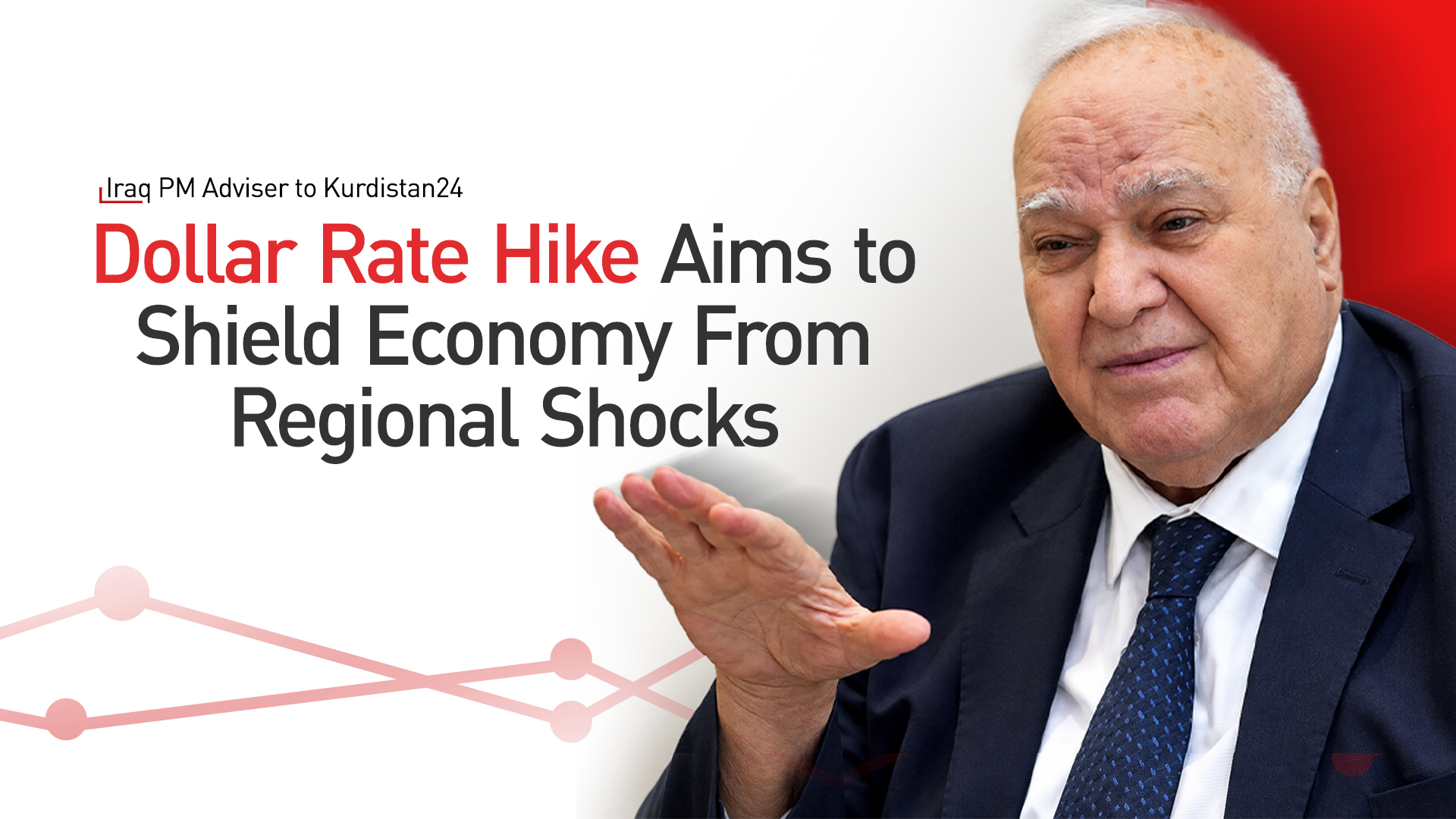
ERBIL (Kurdistan24) — Iraqi Prime Minister Ali Faleh al-Zaidi’s financial adviser, Mazhar Mohammed Saleh, said Thursday that the government’s decision to raise the official dollar exchange rate against the Iraqi dinar was a precautionary measure aimed at preventing economic shocks and protecting Iraq’s financial stability amid regional and international crises.
Speaking exclusively to Kurdistan24, Saleh said the decision came as Iraq faces potential economic repercussions from regional turmoil, particularly the impact of the war and instability on oil exports through the Strait of Hormuz.
He said the circumstances required cautious management of oil revenues, the state budget and foreign-currency liquidity.
Saleh said the adjustment should not be interpreted as evidence of an economic breakdown, but rather as part of a preemptive approach to protect economic, fiscal and monetary stability and prepare for developments that could affect state revenues or Iraq’s ability to finance foreign trade and public spending.
His remarks are consistent with comments he gave the state-owned Iraqi National News Agency (INA) describing the 152,000-dinar rate for $100 as a precautionary measure rather than an indication of disruption in Iraq’s economic situation.
He said monetary policy would focus on managing the foreign-exchange market while maintaining flexibility in the supply of foreign currency to ensure continued financing for external trade.
Fiscal policy, meanwhile, would act as a stabilizing mechanism through the management of public spending, revenues, taxes, customs duties and government support.
On customs and tax measures, Saleh said such policies were part of the broader economic protection framework and were being applied on a technical basis.
Their purpose, he said, was to regulate imports, strengthen public revenues and guide the use of foreign currency, rather than increase the burden on citizens or automatically transfer the full financial impact of the measures to consumers.
Saleh also highlighted the role of the state budget in maintaining domestic stability by ensuring continued spending on food, medicine, fuel and essential services. Government support at the current stage, he said, was not only a social responsibility but also an economic tool for protecting price stability and domestic demand.
He urged that fiscal, customs and tax measures be viewed as safeguards designed to strengthen the state’s ability to withstand potential declines in oil revenues or foreign-currency liquidity while preserving the capacity of the public budget and stability in the domestic market.
Addressing citizens and the business community, Saleh said the measures were not intended to create abrupt changes in the exchange rate or shift the cost of the crisis onto society.
Rather, he said, they were intended to create a financial and monetary safety margin that would give Iraq greater capacity to deal with abnormal economic conditions.
“Economic strength is not measured only by the size of resources, but also by the ability to manage shocks before their effects occur,” Saleh said, stressing the importance of coordination between monetary and fiscal policy to protect Iraq’s economy and citizens from external disruptions affecting oil and international trade.
The remarks came after Iraq’s Council of Ministers approved on Oct. 6 a new exchange-rate structure, with the Central Bank of Iraq implementing the revised rates from Oct. 7. Under the new structure, the Finance Ministry buys dollars at 1,500 dinars per dollar, banks purchase them at 1,510 dinars, and the public selling rate is set at 1,520 dinars per dollar.
The new public rate represents a significant change from the previous official rate of 1,320 dinars per dollar. The adjustment amounts to roughly a 14.5 percent devaluation of the dinar against the dollar.
The move triggered sharp volatility in Iraq’s parallel currency markets, with the price of $100 reportedly rising above 170,000 dinars before later falling to around 166,000 dinars.
Kurdistan24 correspondent in Erbil Azer Farooq reported that the market rate had stabilized at around 166,000 dinars per $100 ahead of the reopening of the exchange market on Thursday. Further movements remained dependent on dollar demand and market conditions.
The decision has prompted concern among citizens and businesses over its potential impact on prices and purchasing power. A weaker dinar can increase the local-currency cost of imported goods, while businesses that rely on foreign currency may face higher operating and import costs.
The measure is also intended to provide the government with more dinars for each dollar of oil revenue at a time when Iraq is facing pressure on its oil-export earnings. Iraq is heavily dependent on oil revenues, while disruptions to oil shipping routes linked to the regional conflict have added pressure to the country’s public finances.
Iraq’s oil exports had fallen sharply amid disruptions caused by the war and problems shipping oil through the Strait of Hormuz.
The Central Bank has sought to reassure the market that Iraq has sufficient foreign-currency reserves to meet legitimate demand. In announcing the new rates, the bank said its reserves were adequate to finance foreign trade, settle card transactions abroad and meet cash demand from travelers.
The Central Bank has also described the adjustment as part of a broader effort to strengthen financial stability and support domestic production and non-oil economic sectors, while maintaining its ability to meet foreign-currency requirements.
For businesses in the Kurdistan Region, the change has added to existing difficulties in accessing official foreign-currency channels. Some traders who are not registered in the relevant electronic systems have been unable to access dollars at official rates and have instead had to obtain foreign currency through the market, increasing their trading costs.
The government’s defense of the exchange-rate adjustment comes as Iraq remains highly dependent on oil exports and exposed to disruptions in regional energy markets.
Saleh said the coordination of monetary and fiscal policy was therefore essential to creating a buffer against potential external shocks while preserving the stability of the Iraqi economy and protecting citizens from their effects.