Rubio Calls for Stronger Europe and NATO Allies as US Pushes Greater Burden-Sharing
US secretary of state says stronger European allies would reinforce NATO and Washington as Trump administration presses members to increase defense spending
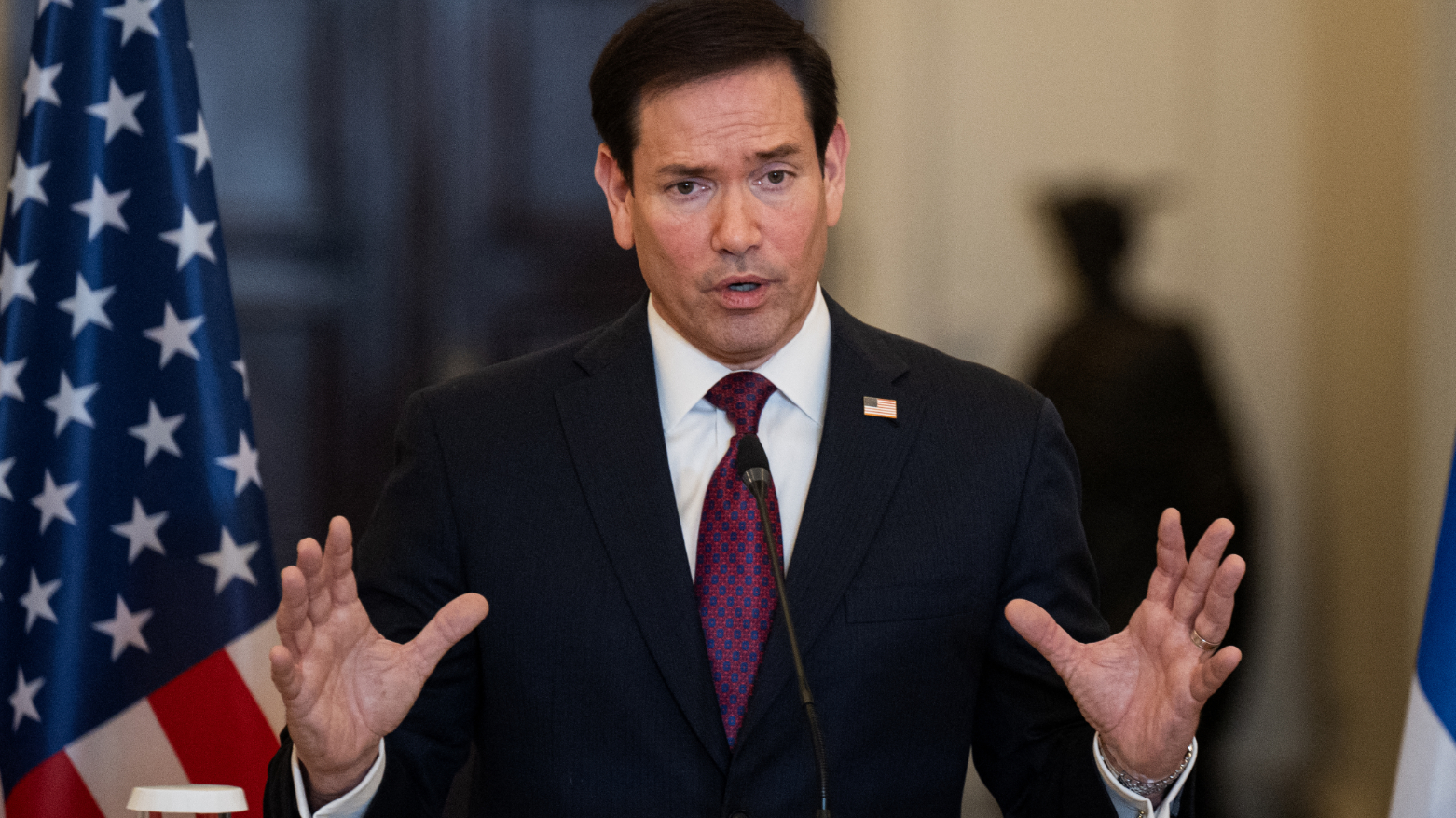
ERBIL (Kurdistan24) — US Secretary of State Marco Rubio said Thursday that Washington wants stronger allies in Europe, arguing that greater economic, societal and military strength among NATO members would reinforce the alliance as the Trump administration continues to push Europe to take greater responsibility for its own security.
“We want our allies to be strong. The stronger they are, the stronger we are collectively,” Rubio told reporters at Athens airport as he traveled to Portugal, the final stop of his four-day European tour.
“We want a strong Europe. We want strong partners in Europe.”
“The stronger the individual members of NATO are, both societally, economically, and militarily, the stronger NATO is,” he added.
Rubio’s comments came after talks in Greece on Wednesday focused on energy, defense and cultural cooperation. During the visit, Washington and Athens also announced a joint agreement to strengthen information-sharing on drug trafficking and terrorism.
In a speech beneath the Acropolis following meetings with Greek officials, Rubio called on Europe to emerge from what he described as a “long slumber,” warning that Western civilization was at a crossroads between strengthening national power and facing decline.
His remarks reflected a broader Trump administration push for European NATO members to increase defense spending and assume a larger share of responsibility for the alliance’s collective security.
At a NATO summit in The Hague in June 2025, alliance members committed to investing 5 percent of their gross domestic product annually on defense and defense-related security spending by 2035.
Rubio said some European countries were already responding to the call for greater contributions, citing Germany as an example.
“There are many countries that have stepped up. Frankly, the Germans who are stepping up and doing their part to be stronger,” Rubio said.
“I think there’s some good signs in a lot of different places where that’s happening. And obviously, there’s some countries that are dragging, and I know they have a lot of domestic pressure. But I think this is good for all of them,” he added.
Rubio began his European tour late Monday in Iceland, where he sought to advance greater US influence in the strategically important Arctic following Washington’s agreement with Greenland.
On Tuesday, he described Iceland as “a critical outpost for monitoring clandestine behaviour and deterring our adversaries,” underscoring the growing strategic importance Washington attaches to the Arctic amid competition with Russia and other powers.
His visit to Greece also came amid controversy surrounding US Ambassador to Greece Kimberly Guilfoyle, with US media reporting allegations of potential conflicts of interest involving her diplomatic activities.
Several Democrats have accused Guilfoyle, a former fiancée of President Donald Trump’s son, Donald Trump Jr., of promoting the commercial interests of a Greek construction and energy company during official engagements.
She has also been accused of repeatedly allowing a registered lobbyist for the company to participate in meetings with senior US officials.
Asked about the allegations, Rubio declined to comment but reiterated his support for Guilfoyle.
The controversy comes as the Trump administration seeks to reinforce US alliances while simultaneously pressing European partners to increase their economic and military capabilities, reflecting Washington’s broader emphasis on burden-sharing within NATO.