Saudi Ambassador Claims Bab al-Mandab Retaken From Houthis
Saudi Arabia's ambassador to Yemen says Bab al-Mandab has been cleared of Houthi forces, but military sources report fierce fighting and limited advances around the strategic strait.
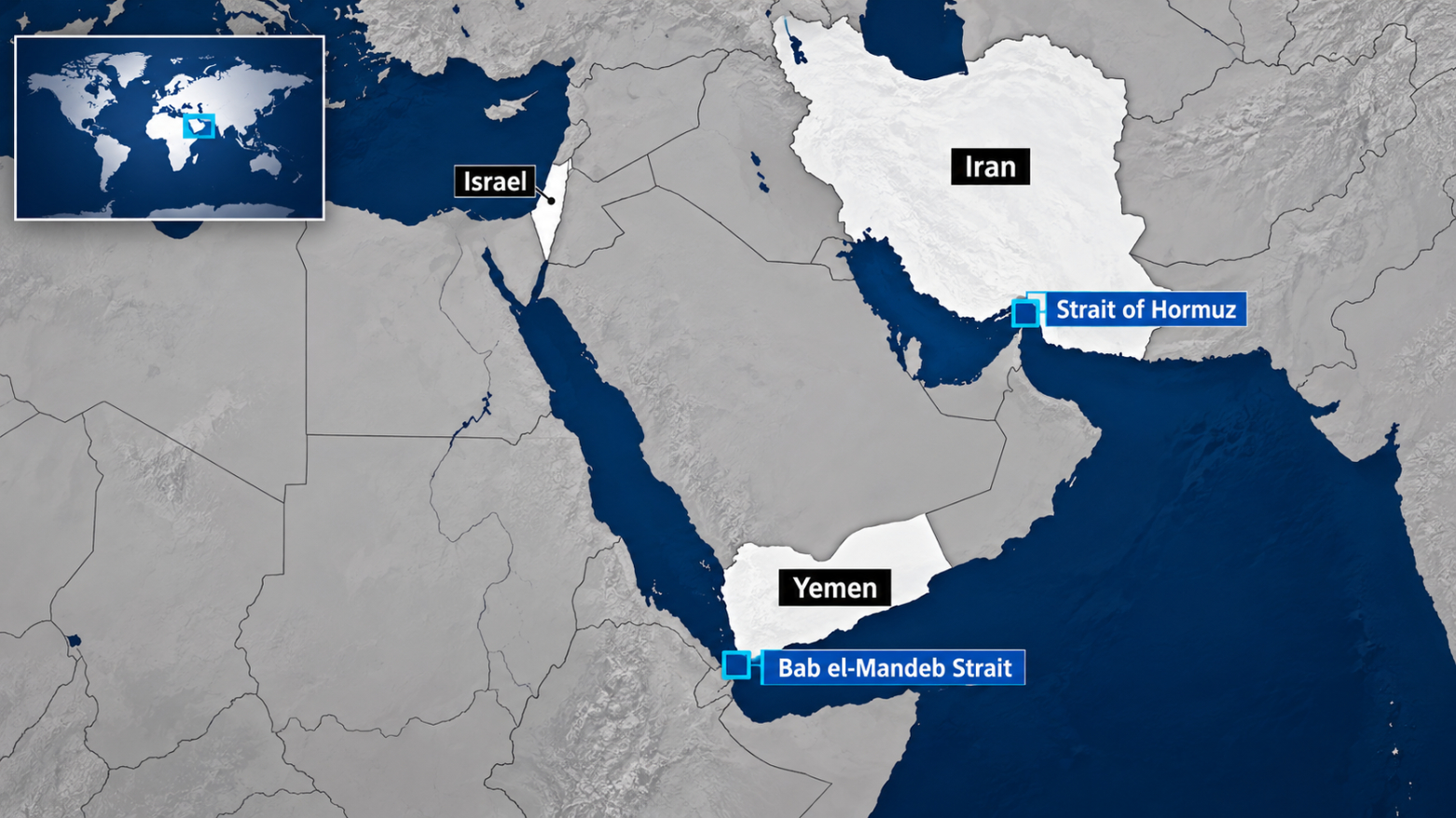
ERBIL (Kurdistan24) - Saudi Arabia's ambassador to Yemen said Friday that the strategic Bab al-Mandab Strait had been cleared of remaining Houthi forces, although military sources on the ground gave a more cautious account, saying fierce fighting was continuing and advances remained limited.
Mohammed al-Jaber, Saudi Arabia's ambassador to Yemen, announced the claimed breakthrough on X on Oct. 9.
"A blessed Friday. A great victory for Arabs and Yemenis," al-Jaber wrote, before saying that Bab al-Mandab had been cleared of the remaining Houthi military elements.
The statement came during an offensive by Yemeni government-aligned forces, backed by Saudi air power, to regain territory around one of the world's most important maritime chokepoints.
However, the situation on the ground remained contested.
A Yemeni government military source told Agence France-Presse that forces had launched a "major operation" in the Bab al-Mandab area with Saudi air support but said fighting remained intense.
"Fighting is fierce and advances are limited," the source told AFP before the Saudi ambassador issued his statement.
AFP reported that al-Jaber did not provide evidence to support his declaration that the strait had been fully cleared.
The Houthi-affiliated Saba news agency offered a competing account, saying government forces had launched an attack south of the strait but that Houthi fighters had repelled it.
Yemeni military and local sources cited by Sky News Arabia similarly reported heavy clashes between the Southern Giants forces and Houthi fighters around Bab al-Mandab.
Those sources said the Giants forces had made territorial advances as part of efforts to regain control of the area. No confirmed casualty or material-loss figures were available.
The conflicting accounts leave the precise battlefield situation unclear, but they show that control of Bab al-Mandab has become one of the central objectives in the renewed fighting in Yemen.
The Houthis seized coastline along the important trade route during an offensive last month, expanding their control across Yemen's Red Sea coast, according to AFP.
Government forces have since been attempting to recover the territory.
Bab al-Mandab sits at the southern entrance to the Red Sea and connects it with the Gulf of Aden.
Its strategic significance has increased further during the current Middle East conflict because Saudi Arabia has become more dependent on Red Sea export routes while Iran attempts to restrict shipping through the Strait of Hormuz.
The fighting around Bab al-Mandab is unfolding alongside a wider escalation between Houthi forces and Saudi Arabia.
The Associated Press reported Friday that attacks on King Khalid International Airport in Riyadh and a Saudia Airlines aircraft the previous day killed three Saudi citizens and injured several other people.
Saudi aviation authorities did not identify who carried out the attacks, but the Houthis claimed that they had targeted the airport with a ballistic missile.
Saudi authorities said the strikes caused material damage and that several injured people, some seriously wounded, were taken to hospital.
The escalation has also reached Houthi-held areas of Yemen.
Residents of Sanaa reported powerful explosions overnight and into Friday amid renewed fighting between the Houthis and Saudi-backed government forces.
Anees al-Asbahi, spokesperson for the Houthi-run Health Ministry, said two strikes in Sanaa injured six people, including a child.
Houthi military spokesperson Brig. Gen. Yahya Saree claimed that airstrikes launched from Saudi bases had hit multiple Houthi-controlled areas over a 24-hour period. The Associated Press said it could not independently verify his account.
Meanwhile, the fighting is also intensifying around Taiz.
Separate reports cited in the source material said military commanders affiliated with the Islah Party and serving with Yemeni government-aligned forces in Taiz had released dozens of prisoners who had been sentenced to death.
According to those reports, the prisoners were sent to the Jabal Habashi front to reinforce forces seeking to stop Houthi advances toward the southern entrance of Taiz.
No further details were provided regarding the prisoners, the legal process surrounding their release or their subsequent status, making the reports difficult to independently assess from the information available.
The latest battles mark another escalation in a conflict that began in its current form in 2014, when the Houthis seized the capital, Sanaa, and expanded into other parts of Yemen.
A Saudi-led coalition intervened in 2015 in support of the internationally recognized Yemeni government.
The war has since gone through changing periods of intense fighting, reduced hostilities and renewed confrontation.
The latest offensive has again placed the Red Sea coast at the center of the conflict.
For Saudi Arabia and the Yemeni government, regaining Bab al-Mandab would restore control over a strategically important corridor that has assumed greater economic importance during disruptions elsewhere in the region.
For the Houthis, holding territory around the strait provides both military leverage and influence over a route central to international shipping and regional energy flows.
Al-Jaber's declaration Friday suggests Riyadh believes its allies have achieved a major battlefield success.
But accounts from military sources and Houthi-affiliated media show that the outcome remains disputed.
Until there is clearer confirmation from the ground, the Saudi ambassador's announcement stands alongside reports of continuing combat over one of Yemen's most strategically important areas.