Medvedev Raises Possibility of Preemptive Nuclear Strike Against Russia's Adversaries
Russian Security Council deputy chairman says large-scale conventional attacks capable of causing catastrophic damage could bring nuclear retaliation into consideration
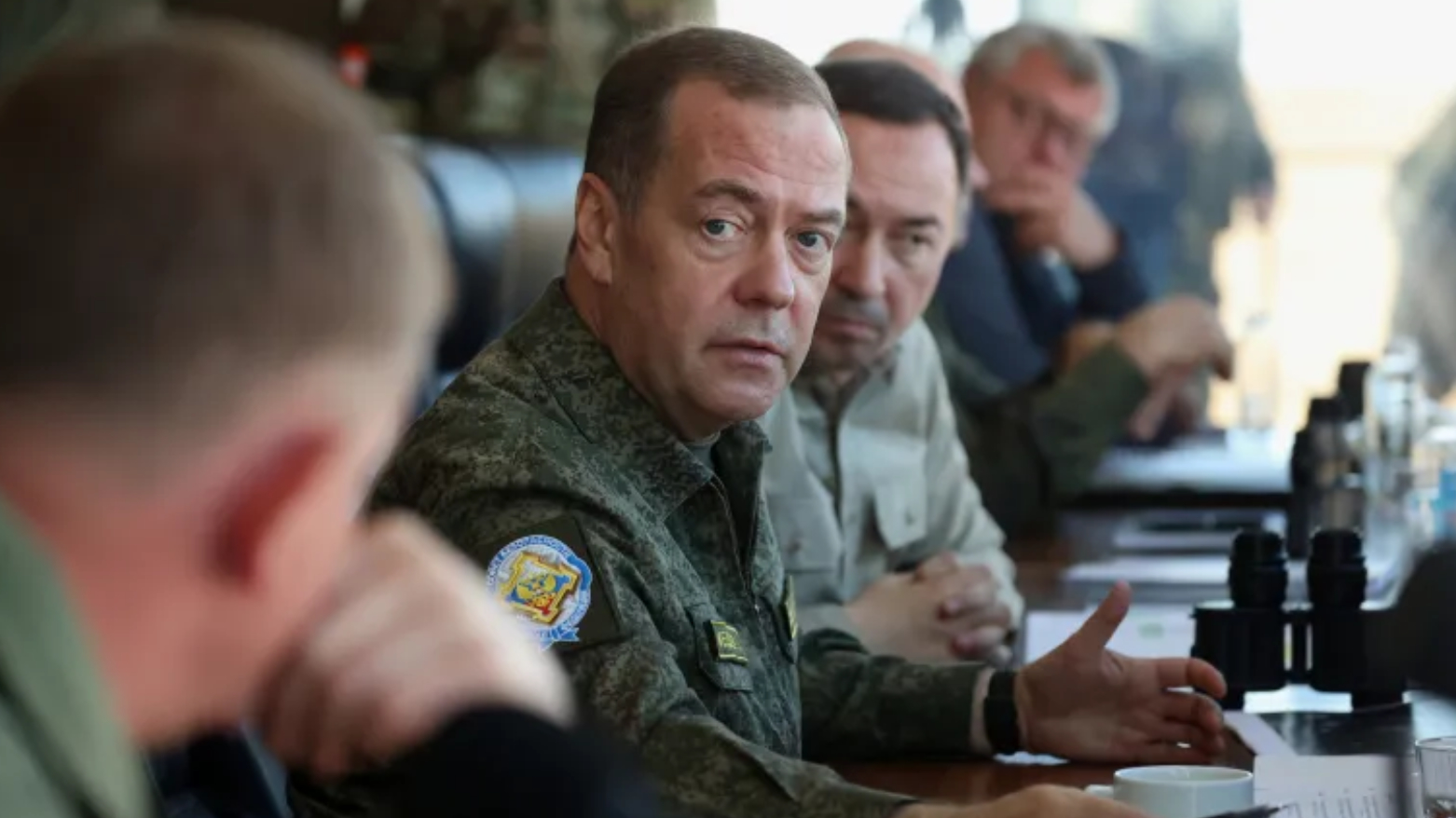
ERBIL (Kurdistan24) — Dmitry Medvedev, deputy chairman of Russia's Security Council, has warned that Moscow could consider a preemptive nuclear strike under certain circumstances, including large-scale conventional attacks capable of causing catastrophic damage, as Ukraine continues expanding its military operations against Russian assets beyond the battlefield.
In an article titled "State Sovereignty and Nuclear Weapons: International Legal Aspects of Ensuring National Security," published Monday in the Moscow Journal of International Law, Medvedev argued that Russia's nuclear policy provides grounds for considering a preemptive strike if the country's existence is threatened or it sustains what Moscow considers unacceptable damage.
"The creation of military threats to the Russian Federation by an adversary, including through the massive use of non-nuclear means of air and space attacks that could lead to man-made, environmental, or social catastrophes, effectively brings the question of launching a preemptive nuclear strike into practical consideration," Medvedev wrote, according to Russia's state news agency TASS.
He added that Russia's nuclear policy effectively provides for such an option "if the very existence of our state is threatened or our country has sustained unacceptable damage."
Medvedev also warned that any Western decision to supply Ukraine with nuclear weapons, whether openly or covertly, could trigger a preemptive Russian response aimed at neutralizing the threat.
However, he acknowledged that the developments in the war had not yet created circumstances in which the direct use of nuclear weapons was necessary.
Medvedev further claimed that Ukraine and NATO countries had already created situations in which Russia had considered the possibility of using nuclear weapons, adding that President Vladimir Putin would assess all relevant factors and the proportionality between damage inflicted on Russia and any potential retaliation before making such a decision.
His remarks come as Ukraine intensifies its attacks against Russian military and logistical assets beyond the immediate war zone.
On Monday, Ukrainian President Volodymyr Zelenskyy announced that Ukrainian forces had used seven domestically manufactured naval drones to sink the Russian corvette Merkury and strike the cargo vessel MV Angara off the coast of Libya.
Zelenskyy described the operation as a response to Russia's aggression, saying the cargo vessel had been used to transport weapons. The Ukrainian announcement followed reports of drone attacks near Benghazi that prompted the United Nations to call for an independent investigation.
Medvedev did not explicitly link his nuclear warnings to the Ukrainian operation off Libya, and his article addressed broader questions concerning Russia's nuclear doctrine, national security and the legal grounds for using nuclear weapons.
Russia's nuclear policy was revised in November 2024, when Putin approved updated principles governing nuclear deterrence, expanding the circumstances under which Moscow says it could consider using its nuclear arsenal.
The revisions included provisions concerning conventional attacks that pose a critical threat to Russia's sovereignty or territorial integrity, including attacks supported by a nuclear-armed state.
The latest statements add to Moscow's repeated nuclear warnings amid its war with Ukraine and growing confrontation with Western countries over military support for Kyiv, keeping the risks of further escalation in focus.