Najaf Cleric Joins Calls Against Iraq's Dinar Devaluation
Najaf Friday preacher Sayyid Sadr al-Din al-Qubanchi urged Iraq's government to reconsider the dinar devaluation and proposed paying public employees in dollars if the weaker rate remains.
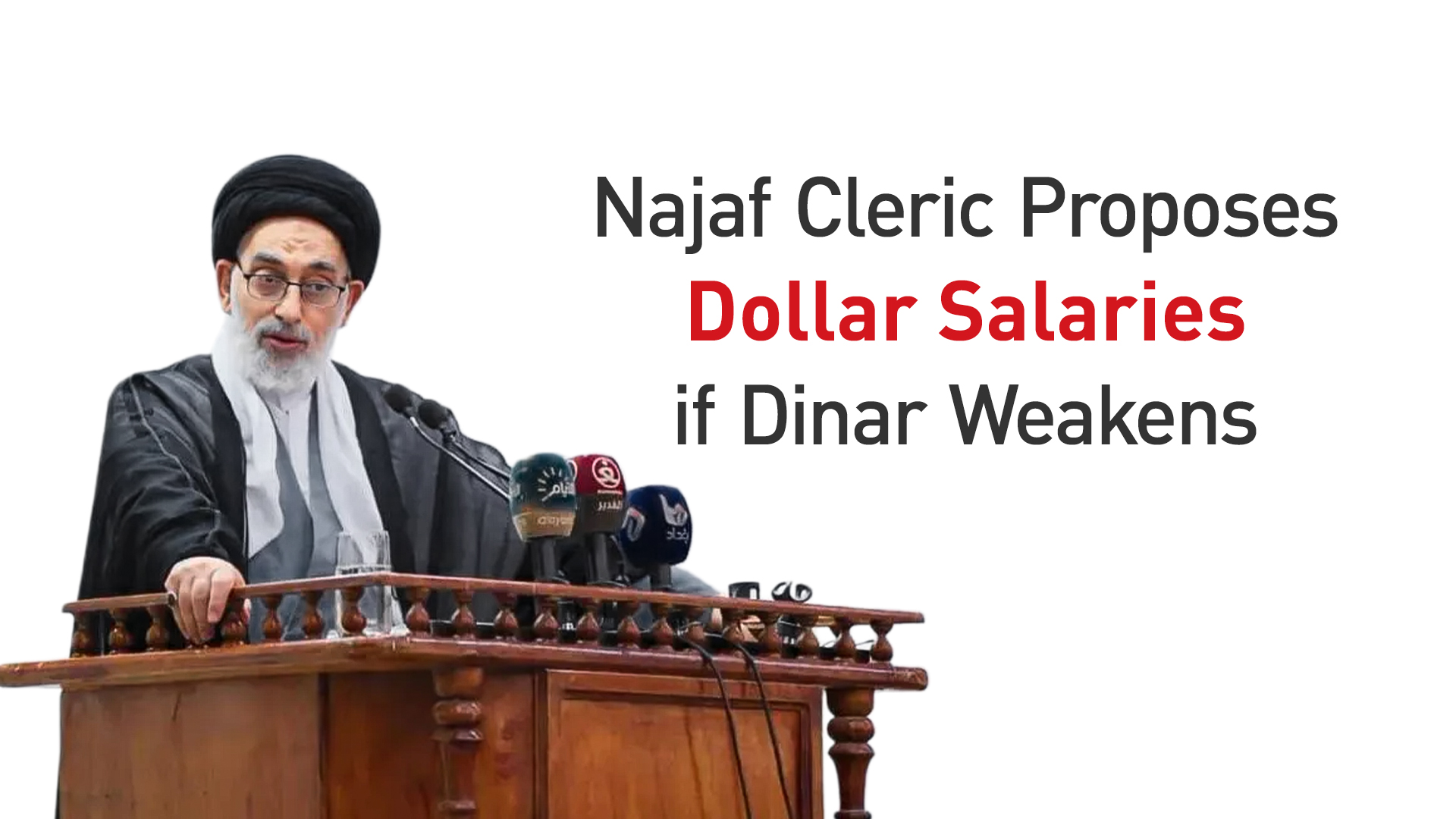
ERBIL (Kurdistan24) - Sayyid Sadr al-Din al-Qubanchi, imam and Friday preacher of Najaf's Grand Mosque, on Friday joined growing calls for the Iraqi government to reconsider its decision to devalue the dinar, warning about the effect of the higher dollar rate on citizens and proposing that public employees be paid in U.S. dollars if the currency adjustment cannot be reversed.
Addressing the issue during his Oct. 9 sermon, Qubanchi said he was adding his voice to public opposition to the exchange-rate decision.
"We add our voice to that of the people and call on the government to reconsider this decision," Qubanchi said.
He argued that Iraq's heavy dependence on oil revenues should give the government room to seek other solutions rather than place additional pressure on the national currency.
Qubanchi said nearly 90% of Iraq's financial revenues come from oil, while religious tourism contributes around 3%.
He acknowledged that oil exports have faced temporary difficulties but argued that authorities should continue searching for alternatives to devaluation.
The cleric pointed in particular to government statements that the Strait of Hormuz remains open to large Iraqi oil tankers.
According to Qubanchi, Iraqi tankers transported around four million barrels of oil through the route during the previous month.
His argument was that difficulties affecting exports should be addressed directly rather than allowing the consequences to fall primarily on citizens through a weaker dinar.
Qubanchi then proposed an alternative if the government ultimately decides that devaluation cannot be avoided.
He said public-sector employees should be paid in U.S. dollars in order to preserve the value of their salaries.
Such a move, he argued, could protect purchasing power and reduce the inflationary effects of the weaker Iraqi currency.
The proposal comes only days after the Central Bank of Iraq introduced a new official exchange-rate structure following a Council of Ministers decision.
Effective Oct. 7, the Finance Ministry purchases dollars at 1,500 dinars, banks receive them at 1,510 dinars, and the selling rate to final beneficiaries is 1,520 dinars per dollar.
Read More: Dollar Exchange Rate Reaches 173,000 Dinars in Kurdistan Region Markets
The previous official rate had been around 1,320 dinars per dollar.
The adjustment has already generated criticism from lawmakers, businesses and sections of the public concerned that a weaker dinar could raise the local cost of imported goods and reduce household purchasing power.
The Iraqi Contractors Federation has also opposed the measure, warning that higher foreign-currency costs could affect construction projects, investment and employment.
Read More: Iraqi Contractors Reject Dollar Rate Hike as PM Moves to Ease Food Costs
The government, however, has defended the decision as necessary under difficult fiscal conditions.
Prime Minister Ali Faleh al-Zaidi told Parliament on Thursday that his government inherited public debt exceeding 208 trillion dinars and must secure around 10 trillion dinars every month to meet financial obligations.
Al-Zaidi said disruption to oil exports and the closure of the Strait of Hormuz had placed the economy under pressure.
He also argued that speculators had benefited from the previous gap between the official exchange rate and the parallel-market rate.
Read More: Iraqi PM: Speculators Benefited from Previous Dollar Rate Differential
Mazhar Mohammed Saleh, the Prime Minister's financial adviser, has similarly described the exchange-rate change as a precautionary measure intended to create a financial buffer against regional shocks, falling oil revenues and pressure on foreign-currency liquidity.
The Central Bank has said the measure is designed to protect financial stability and support domestic production, while maintaining that Iraq has sufficient foreign-currency reserves to meet legitimate demand.
Those assurances have not ended concern over the immediate effect on prices.
Read More: Iraq Central Bank Says Dinar Rate Adjustment Aims to Protect Financial Stability
The exchange-rate decision has already faced parliamentary scrutiny, with lawmakers collecting signatures to summon the Central Bank governor and the Finance Minister.
Read More: Iraqi Parliament Collects Signatures to Summon Central Bank Governor, Finance Minister
Market rates have also remained above the new official rate, adding another layer of concern for businesses and consumers who cannot obtain dollars through official channels.
Qubanchi's intervention therefore adds a prominent religious voice from Najaf to the public debate over how Iraq should manage its financial pressures.
His position is that the government should reconsider the devaluation while Iraq still has substantial oil income and should seek other solutions to export and revenue problems.
If authorities conclude that the weaker dinar must remain, he said, then the state should take direct measures to prevent public employees from losing purchasing power.
For Qubanchi, paying salaries in dollars would be one such measure.
The broader debate now centers on whether the government's attempt to strengthen public finances can be carried out without transferring too much of the cost to households through higher prices and a weaker national currency.