Iran Accuses France of Seeking Monopoly on Nuclear Deterrence
Iranian Foreign Ministry spokesperson Esmaeil Baghaei accused France of applying double standards to nuclear security and seeking to monopolize deterrence.
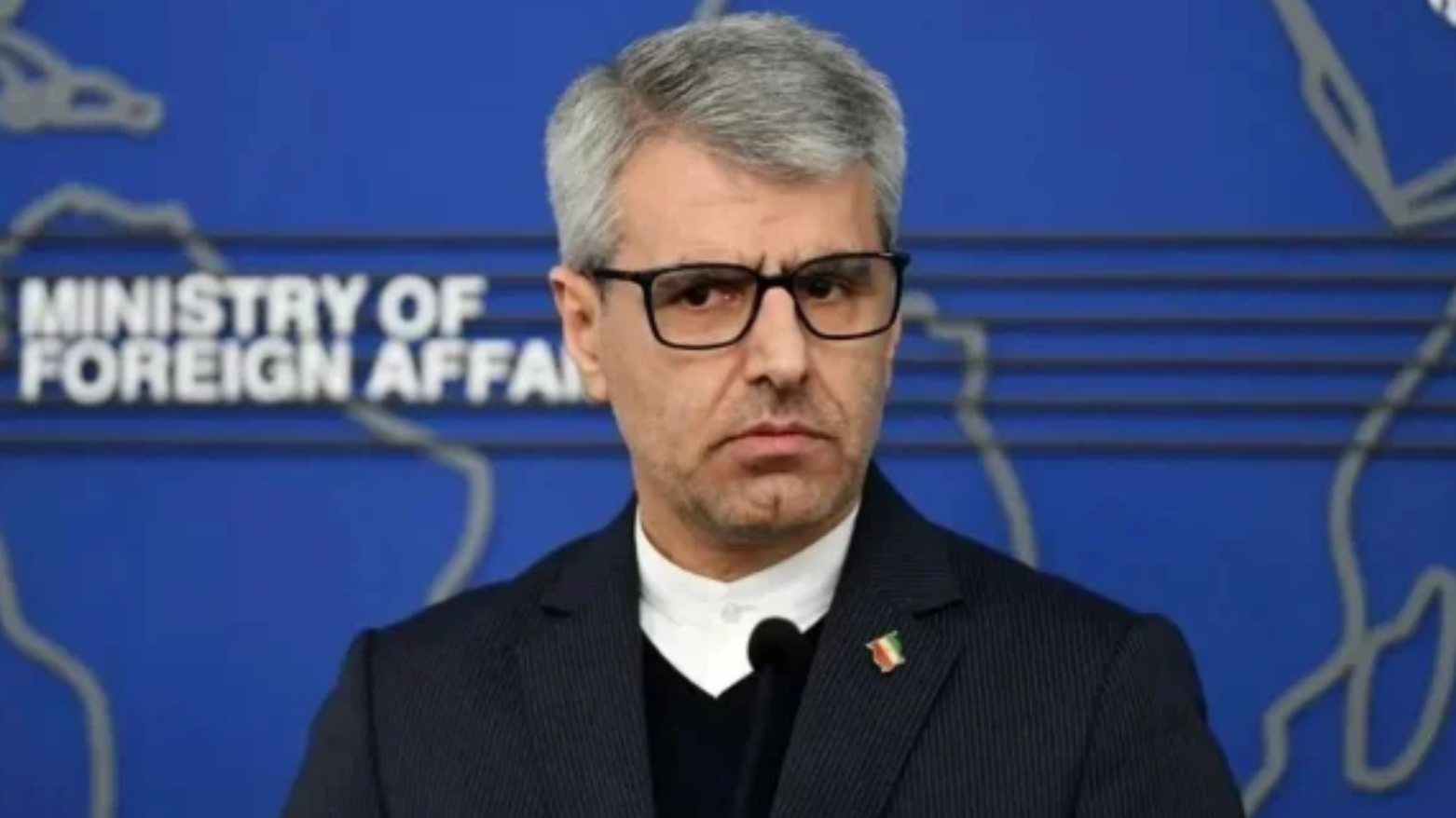
ERBIL (Kurdistan24) - Iran's Foreign Ministry on Friday accused France of applying contradictory standards to nuclear security, arguing that Paris presents its own nuclear deterrent as a guarantee of independence while insisting that Iran must never possess a nuclear weapon.
Foreign Ministry spokesperson Esmaeil Baghaei made the remarks on Oct. 9 while responding to recent statements by French President Emmanuel Macron surrounding the testing of a ballistic missile capable of carrying a nuclear warhead.
Baghaei cited Macron as saying: "To be free, you must be feared, and to be feared, you must be strong."
He contrasted that position with Macron's statements regarding Tehran, quoting the French president as saying: "Iran must never possess a nuclear weapon - not today, not in five years, and not in ten years."
Baghaei argued that the central issue was not France's possession of a nuclear deterrent itself, but what he described as a contradiction in how the logic of deterrence is applied.
According to the Iranian spokesperson, a military capability presented by Paris as necessary for French security and independence is portrayed as threatening when the discussion turns to Iran.
He also sought to distinguish nuclear weapons from what Tehran describes as its civilian nuclear program, saying Iran's peaceful nuclear activities are conducted under international supervision.
Baghaei accused Western countries of seeking to preserve their own strategic advantage while restricting the nuclear activities of other states.
In his account, the issue reflected an attempt to monopolize deterrence rather than create equal security.
He said Western powers wanted to remain militarily strong and nuclear-armed while using what he called a fabricated image of an Iranian nuclear threat to deprive other countries of their right to peaceful nuclear technology.
Those comments represent the Iranian government's position amid continuing disagreement between Tehran and Western governments over Iran's nuclear activities.
Baghaei argued that a system in which nuclear-armed countries regard their own arsenals as legitimate instruments of security while viewing similar capabilities elsewhere as threats could not provide genuine peace.
He described such an arrangement instead as a system of power based on superiority.
"A peace in which nuclear powers consider their own weapons a guarantee of freedom while regarding them as a threat for other countries is not peace," Baghaei argued, according to the source material.
His comments came during a period of heightened military and diplomatic tension involving Iran.
On the same day, the naval forces of Iran's Islamic Revolutionary Guard Corps announced that they had targeted a large liquefied petroleum gas tanker south of the Strait of Hormuz.
The IRGC identified the vessel as the NV Sunshine, belonging to the company Natwit, and said it had been struck after traveling through what Tehran described as an unauthorized route.
According to the IRGC statement, the attack caused a major fire in the vessel's engine and propulsion section.
The Iranian force said the operation was part of efforts to impose what it described as full control over the Strait of Hormuz and insisted that no foreign power would be permitted to control the passage.
The statement also blamed the U.S. military for instability in regional maritime traffic and accused Washington of pressuring shipping and insurance companies.
Those accusations were made by the IRGC and were not independently established in the supplied material.
The IRGC further warned that shipping companies complying with U.S. demands could face Iranian punitive measures.
More significantly, it said Iranian action against vessels Tehran considers to be violating its rules would no longer necessarily be limited to the Strait of Hormuz.
The force warned that vessels using what Iran regards as unauthorized routes elsewhere in the region could also be pursued.
The maritime escalation provides a broader security backdrop to Baghaei's nuclear comments.
His criticism of France centers on Tehran's longstanding argument that international security arrangements should not allow nuclear-armed powers to claim deterrence as a legitimate safeguard for themselves while limiting what Iran considers its right to peaceful nuclear development.
Baghaei's argument, however, does not erase the central distinction in France's stated position: Macron's warning concerns Iran acquiring a nuclear weapon, while Tehran maintains that its nuclear activities are intended for civilian purposes.
For the Iranian Foreign Ministry, the dispute is ultimately about who is permitted to define security and deterrence.
Baghaei said a durable international order must treat security and peace as rights belonging to all countries rather than privileges reserved for a smaller group of powerful states.