Baghdad Residents Warn Government as Dinar Devaluation Hits Prices
Baghdad residents say Iraq's dinar devaluation is already raising food prices and worsening living conditions, as parliament blocs propose emergency measures and the Central Bank moves to protect traders.
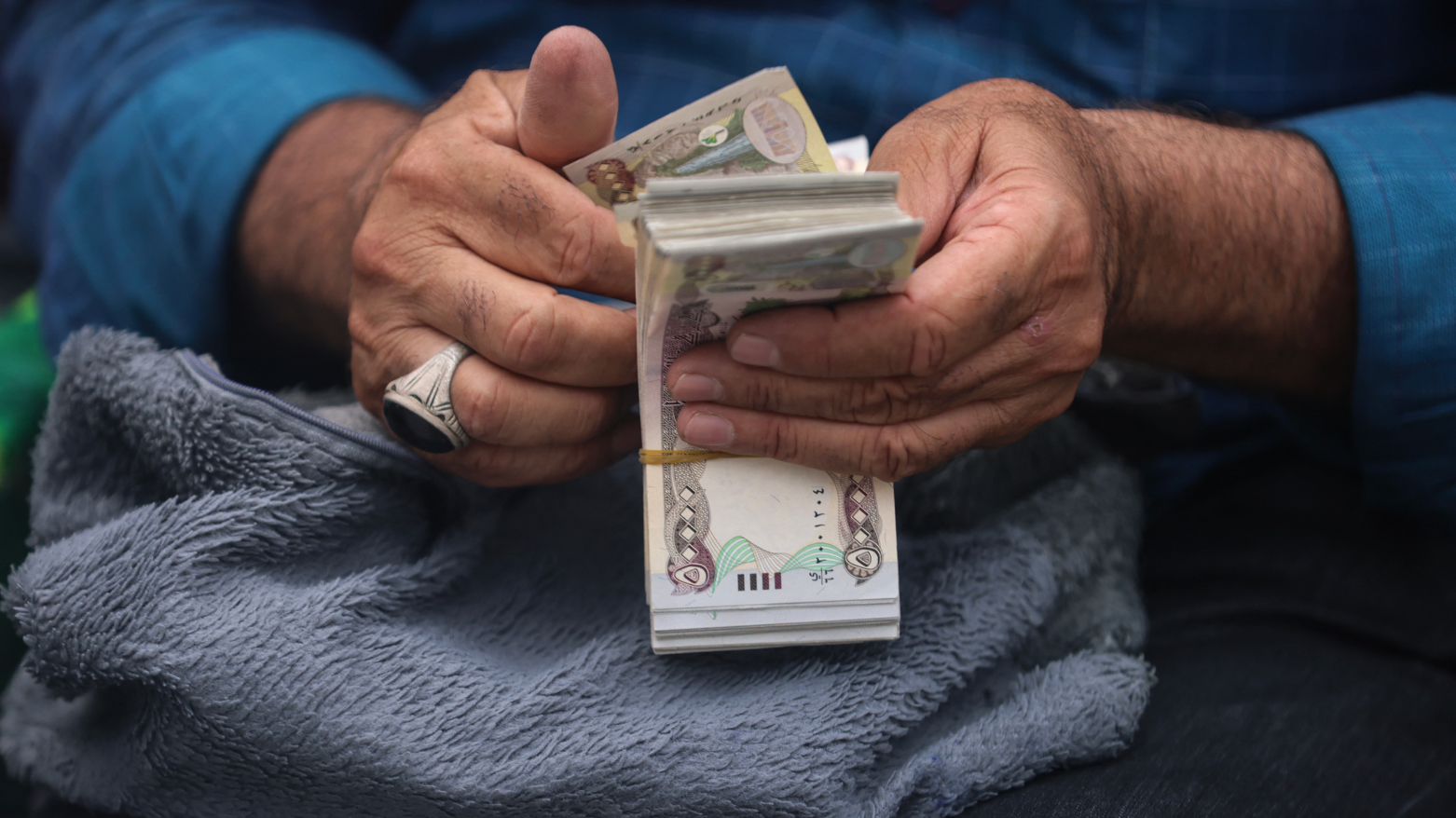
ERBIL (Kurdistan24) - Baghdad residents are warning that Iraq's recent dinar devaluation is already pushing up the cost of basic goods and worsening living conditions, as political blocs in parliament propose emergency measures to contain the economic fallout from the new exchange rate.
Speaking to Kurdistan24 correspondent Shvan Jabari in Baghdad, several residents said the government's decision to raise the official value of the U.S. dollar against the Iraqi dinar had quickly translated into higher prices and growing frustration on the street.
Their comments came as Coordination Framework blocs in the Iraqi Parliament presented a series of proposals on Saturday aimed at easing the impact of the exchange-rate adjustment.
The proposals include reducing tuition fees at private universities and institutes by 15%, supplying construction materials at subsidized prices for six months, and establishing a fund intended to protect the dinar.

The measures follow Iraqi Prime Minister Ali Faleh al-Zaidi's late-night appearance before parliament from Thursday into Friday, during which lawmakers questioned the government over its handling of the currency adjustment and wider financial pressures.
Several Baghdad residents told Kurdistan24 that they understood the government was seeking ways to address Iraq's financial difficulties and secure salaries, but said ordinary citizens were paying the immediate price.
One resident said the decision had affected the entire market, with the cost of essential goods rising after the exchange-rate change.
He said that while the Prime Minister's intention may have been to address the fiscal crisis, the impact on households had been damaging.
Another resident said Iraqis had lived through repeated economic crises since 2003 and were familiar with periods of financial instability.

He argued that Prime Minister al-Zaidi was attempting to revive the country, but claimed people surrounding the government were undermining those efforts.
The resident blamed corrupt officials who had held positions of responsibility for much of Iraq's current economic situation.
At the same time, he said the consequences of the weaker dinar were already visible in everyday shopping.
According to him, a container of cooking oil had risen to 4,000 dinars, molasses to 3,000 dinars, while eggs had also become more expensive.
He warned that if the pressure on household budgets continued, public dissatisfaction could intensify and turn more directly against the government.

Another Baghdad resident told Kurdistan24 that anger was already spreading across the Iraqi street and that people's living standards were deteriorating.
He said he believed the decision to increase the dollar exchange rate had not been sufficiently studied before implementation.
While the measure may benefit state finances, he argued, it has placed a disproportionate burden on poorer citizens and people whose incomes are fixed in dinars.
He also pointed to the closure of currency exchange offices as another sign of disruption following the decision.
The new exchange-rate structure took effect on Oct. 7 following approval by the Council of Ministers.

Under the arrangement, the Finance Ministry buys dollars at 1,500 dinars per dollar, banks receive them at 1,510 dinars, and the selling rate to final beneficiaries is 1,520 dinars per dollar.
The previous official rate had been around 1,320 dinars to the dollar.
The adjustment has therefore weakened the official value of the dinar while giving the government more dinars for each dollar of oil revenue it converts.
The government has defended the policy as a response to severe fiscal pressure.
Prime Minister al-Zaidi told parliament that he took office with public debt exceeding 208 trillion dinars and that the state needs around 10 trillion dinars every month to cover its financial obligations.
He has also said that disruptions to oil exports and pressure surrounding the Strait of Hormuz have reduced government revenues.
His financial adviser, Mazhar Mohammed Saleh, has described the exchange-rate adjustment as a precautionary measure designed to protect fiscal and monetary stability and give Iraq greater room to absorb external shocks.
The Central Bank of Iraq has similarly said that the move is intended to safeguard financial stability and support domestic production.
On Saturday, the Central Bank issued another statement addressing concerns from traders whose import transfers had already been arranged before the new exchange rate took effect.
The bank said transfers eligible for execution before Oct. 7 should be completed at the previous rate and that traders should not be required to pay the difference created by the new exchange rate.
It instructed companies and traders affected by delays to contact the banks handling their transfers, noting that the necessary funds had already been provided for transactions approved before the change.
The Central Bank said it would follow up on any cases in which traders were asked to make additional payments and encouraged affected customers to file complaints through its designated platform or email system.
It also announced that it was working with banks and electronic payment companies to create a special foreign-trade card for small traders, intended to make financing imports easier under procedures to be set later.
The clarification comes as businesses and consumers remain concerned that higher dollar costs will continue feeding into retail prices.
Public criticism has also extended beyond Baghdad.

Najaf Friday preacher Sayyid Sadr al-Din al-Qubanchi on Friday called on the government to reconsider the devaluation, arguing that citizens should not carry the burden of Iraq's financial difficulties.
He proposed that, if the weaker dinar cannot be reversed, public employees should be paid in dollars to protect their purchasing power.
The Coordination Framework's proposals now add another political response to the growing controversy.
However, the supplied material does not specify how the proposed dinar-protection fund would operate, how the subsidies would be financed, or when any of the measures might take effect.
For residents speaking to Kurdistan24 in Baghdad, the concern is more immediate.
They say the debate over fiscal policy is already being felt in the price of food and daily necessities.
Their warning to the government is that the longer those pressures continue, the greater the risk that economic frustration will turn into broader public anger.