Wild Pistachio Season Begins Across Barzan
Barzan residents have begun the annual qazwan, or wild pistachio, harvest after an officially designated opening date, with this year's crop reported to be substantially larger than last year's.
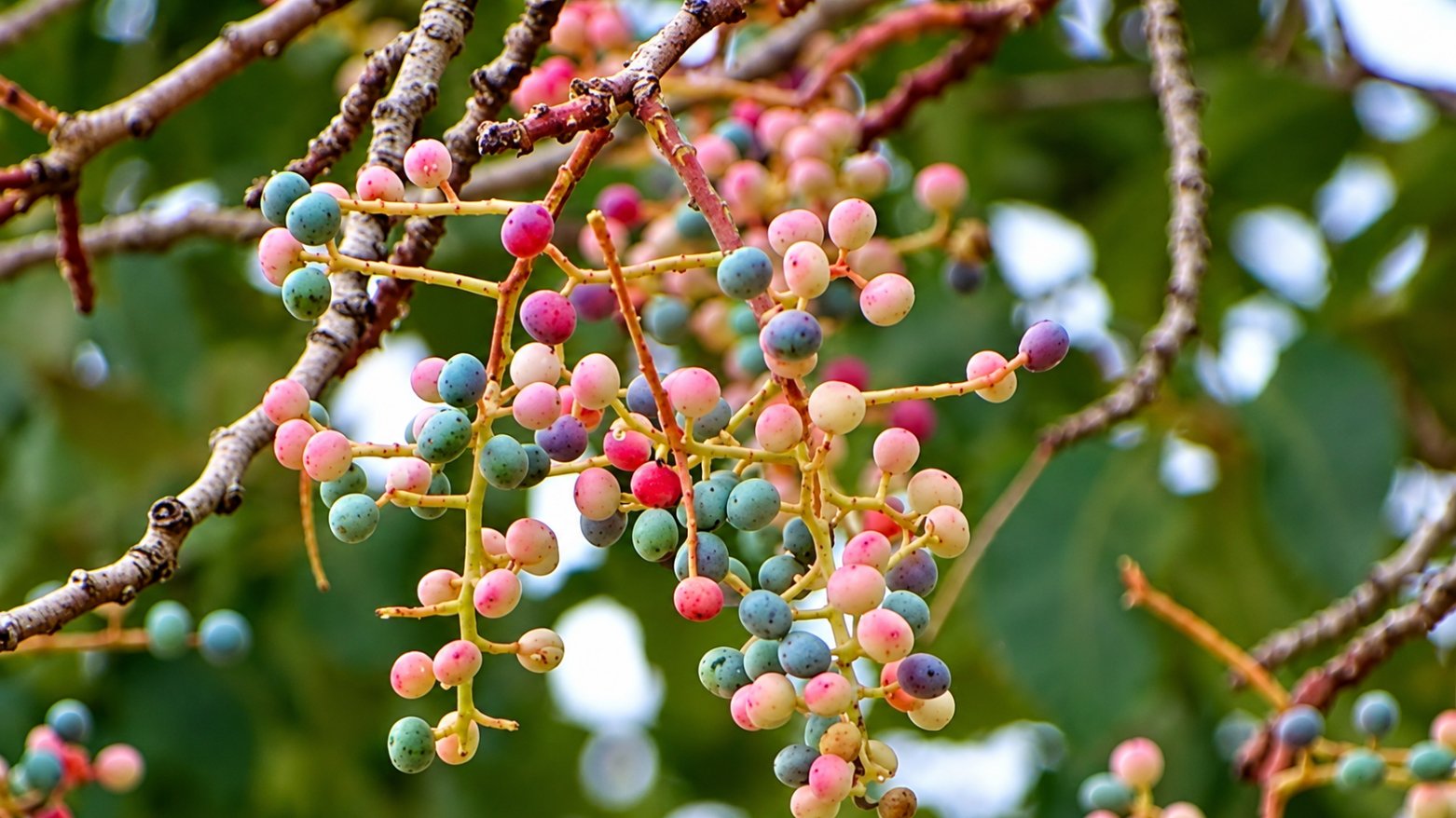
ERBIL (Kurdistan24) - Across the mountains of Barzan, Saturday marked the opening of a familiar seasonal ritual: residents were once again free to gather qazwan, the wild pistachio (terebinth) that has long been collected, eaten, sold and transformed into a range of traditional products.
But the harvest does not begin whenever the first ripe crop appears.
In Barzan, residents wait for an officially designated date before anyone is permitted to collect from the trees, a system intended to give everyone an equal opportunity and preserve a tradition tied closely to the area's natural environment.
Lt. Sadiq Hassan, Director of Awareness and Media at the Barzan Environment Battalion, told Kurdistan24 that similar dates are set each year for harvesting qazwan, kangar (Thistles) and mazoo (Oak apple), as well as for gathering firewood.
A committee first meets to determine when each season should officially open.
Until then, residents are expected to leave the crop untouched.
"The aim is to ensure that everyone benefits equally and that this tradition is preserved," Hassan explained.
For qazwan, the official date this year is Oct. 10, meaning residents can now head into designated areas and begin collecting the crop.
The season could continue for another 15 to 20 days, depending on conditions.
The exact timing can vary slightly from year to year, Hassan said, while another established seasonal date is Aug. 8 for mazoo.
There is no precise figure yet for how much qazwan Barzan and the wider Mergasor district will produce this season.
Harvesting is largely carried out independently, with individual residents commonly collecting between 10 and 20 kilograms.
What is already clear, according to Hassan, is that this year has been generous.
He said the crop is considerably more abundant than last year's, raising expectations both for household use and sales in local markets.
For many families, qazwan does not have a single purpose.
Some keep part of their harvest for winter, when the wild pistachios are eaten as a snack.
Others grind them to make gushma, a traditional product that develops a texture similar to halva.
Qazwan is also used to produce prayer beads.
When still green, it can be added to yogurt and doogh, while some residents process it into coffee.
A portion of the crop also finds its way to markets, where Hassan said prices are offering particularly good returns this year.
The harvest, however, comes with a reminder that the trees producing it must survive long after this season ends.
Hassan urged collectors not to damage the natural shape of the trees or break branches while reaching for the fruit.
That concern reflects a wider challenge surrounding qazwan in the mountainous areas where it grows naturally.
Kamaran Hussein, Director of Agriculture for the Soran Independent Administration, told Kurdistan24 earlier this month that qazwan is found in mountain environments and does not grow everywhere.
He said relatively little work has been done to domesticate the trees or develop systematic cultivation, while harvesting still relies heavily on traditional methods because modern equipment is unavailable.
Hussein also warned that qazwan and goizh trees are cut and burned each year.
At the same time, he pointed to knowledge passed down through generations about the plant's traditional uses.
Residents have historically used qazwan and bitter gum for stomach ailments, he said, while qazwan has also been combined with mazoo in traditional treatment of wounds.
Hussein stressed that these remain traditional practices rather than scientifically established medical claims in the information provided.
He believes greater attention to the crop could nevertheless open opportunities in food production.
Amir Mustafa, Director of Agriculture in Barzan, has offered a somewhat different assessment, rejecting the suggestion that qazwan production has been entirely neglected.
He said farmers naturally concentrate more heavily on crops with established market demand.
The mountainous terrain, difficult roads and the fact that qazwan trees grow largely in the wild have also limited efforts to turn the crop into a larger commercial industry.
For now, however, Barzan's harvest remains rooted in a simpler rhythm.
A date is agreed, everyone waits, and when the day finally arrives, families head into the mountains.
What they bring home may become a winter snack, gushma, coffee, prayer beads or goods for sale.
But the shared opening date also carries another purpose: ensuring the wild trees and the tradition surrounding them remain something the community can return to again next year.