Western Kurdistan's Cotton Sector Struggles With High Costs
Cotton cultivation in Western Kurdistan is declining rapidly as farmers face soaring diesel, fertilizer and machinery costs, weak prices and a lack of official purchasing centers.
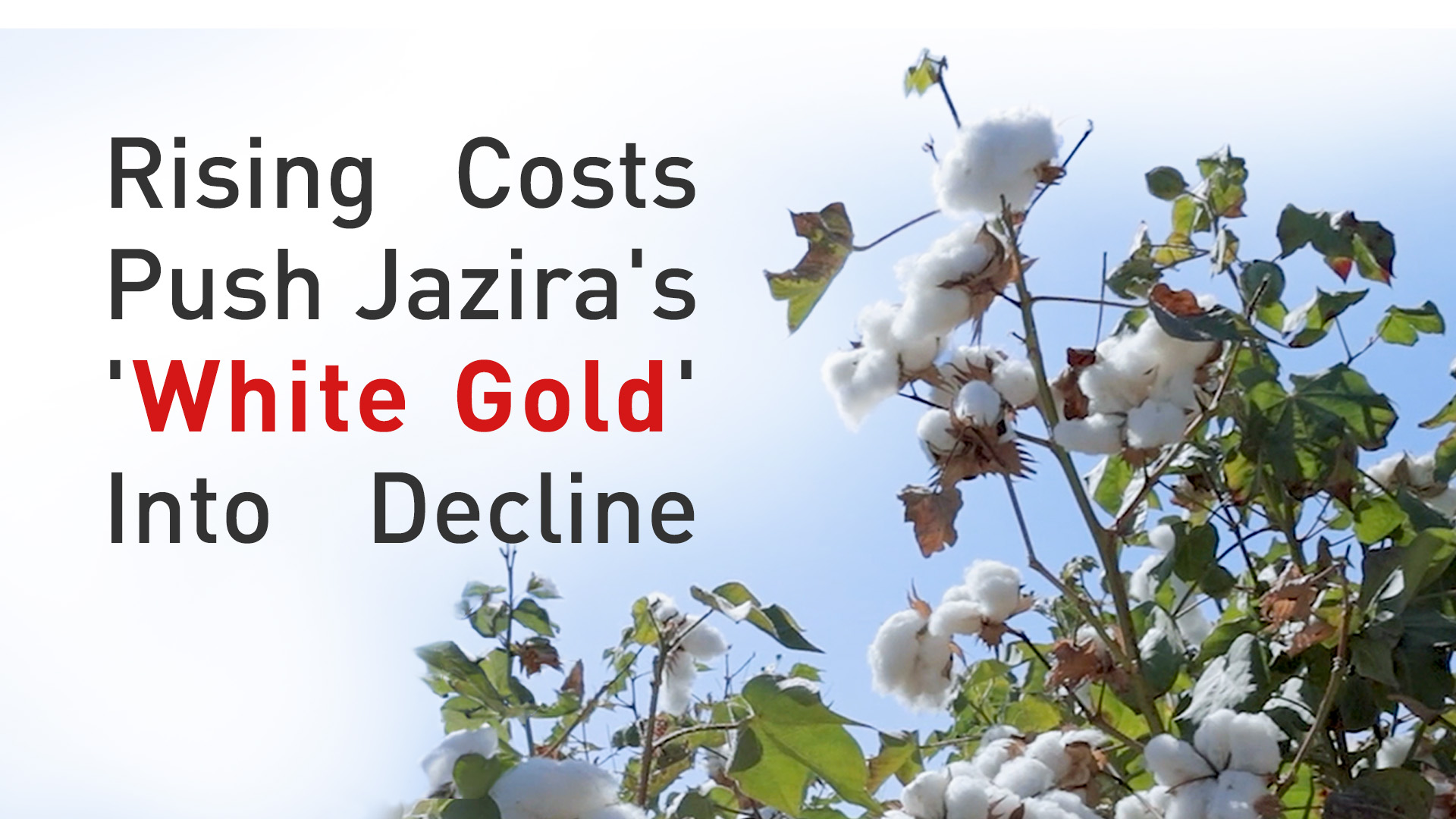
ERBIL (Kurdistan24) - Cotton cultivation across Western Kurdistan and Hasakah province is shrinking sharply as farmers struggle with rising diesel, fertilizer, pesticide and machinery costs, raising fears that a crop once known as the region's "white gold" could disappear from large parts of Jazira.
Fields that were once widely planted with cotton after the wheat harvest have become increasingly rare.
From Qamishlo toward Amuda and surrounding areas, only scattered plots remain where cotton was once a common part of the agricultural landscape.
For farmer Abdulrahman Walika, months of work this year have produced little except financial loss.
Walika said he had invested heavily in irrigating and treating his fields, but the cost of production had risen beyond what farmers could recover through sales.
"Everything is expensive; seeds, fertilizer, and tractor rental have become extremely costly," he told Kurdistan24's correspondent Ekrem Salih.
Fuel has been one of the heaviest burdens.
"Diesel was very expensive this year. We bought a tanker-load for $17,500," Walika said.
He added that no calculation could make the current season profitable.
"We are completely caught in a difficult situation and are suffering greatly," he said. "If the situation continues like this, we will be forced to abandon this work."
For many families in the area, agriculture remains their main source of income, leaving them with few alternatives when a crop fails to cover its costs.
Farmers also say the absence of official purchasing mechanisms leaves them dependent on market traders.
Without a fixed guaranteed price, they argue, producers have little bargaining power and may be forced to sell at prices that fail to cover the cost of cultivation.
Agricultural engineer Azad Oso said production and quality have both declined.
In previous years, as much as 500 kilograms of high-quality cotton could be harvested from one dunam of land, he said.
Today, however, lower fertilizer use and insufficient irrigation have reduced both yield and quality.
Oso said the marketing system remains one of the sector's biggest problems.
"There is no fixed price for purchasing cotton from farmers," he said.
"At the same time, there is no designated official center where farmers can directly deliver their produce. Without these facilities, farmers face major losses," he added.
The crisis in Western Kurdistan reflects a much broader decline in Syria's cotton sector.
According to figures from Syria's Ministry of Agriculture cited in the report, national cotton production this year is expected to reach only around 79,000 tons.
Before 2011, production had reached as much as 800,000 tons, when Syria accounted for 8.3% of global cotton production, according to the supplied figures.
The scale of that decline shows how far cotton has fallen from its former place in Syrian agriculture.
For farmers in Jazira, however, the problem is experienced less through national statistics than through the rising cost of every stage of production.
Diesel is needed for irrigation and machinery. Fertilizer and pesticides have become more expensive. Tractor rental adds another major expense.
At the end of the season, farmers then face uncertainty over what price they will receive and where they can sell.
The result, according to growers and agricultural specialists, is a cycle in which farmers reduce fertilizer use, irrigate less, receive lower-quality harvests and become increasingly reluctant to plant cotton the following season.
For Walika and others like him, the question is no longer how much profit cotton can generate, but whether planting it is economically possible at all.
Agricultural experts warn that without stronger support, a reliable purchasing system and lower production costs, more farmers are likely to leave the crop behind.
For a region where cotton once filled fields across Jazira and became closely associated with rural livelihoods, that would mean the loss of more than a commodity.
It would mark the fading of a crop that for decades shaped the agricultural economy of the region.