Riyadh Airport Hit Again as Saudi Arabia Suspends Flights After Deadly Houthi Attack
A new projectile strike and a reported cruise missile interception came as the Iran-backed Houthis threatened further attacks on Saudi airports, leaving 12 dead and 309 wounded in Saturday’s assault
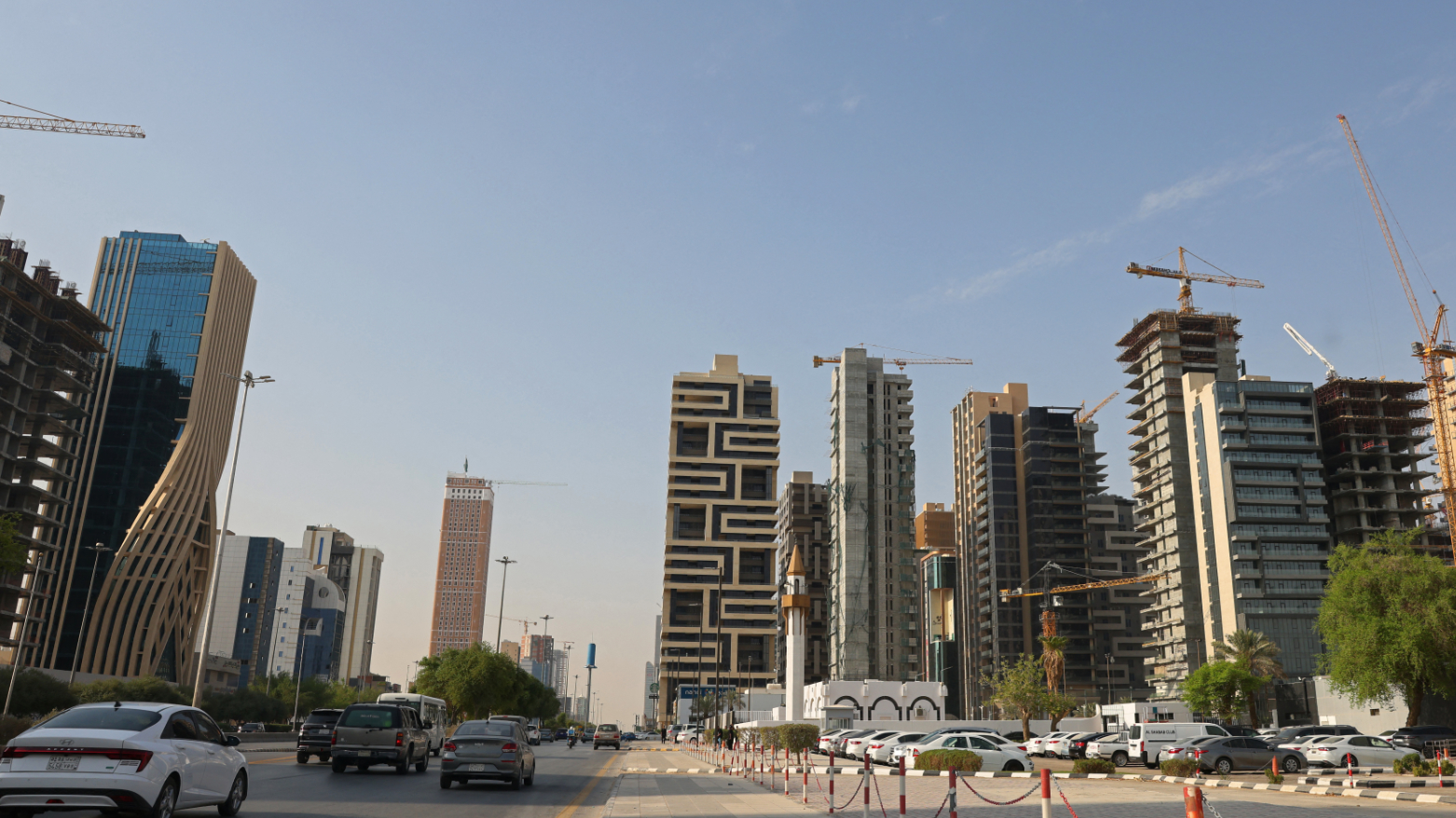
ERBIL (Kurdistan24) — A projectile struck a terminal at Riyadh’s King Khalid International Airport on Sunday, causing a fire, as Saudi Arabia extended the suspension of airport operations following a deadly attack a day earlier that killed 12 people and wounded 309, according to Saudi officials and aviation sources cited by AFP.
Major General Turki al-Malki, spokesman for the Saudi-led coalition fighting Yemen’s Houthis, said the unidentified projectile hit Terminal 4. He added that Saudi air defenses intercepted and destroyed a cruise missile near the airport.
Airport operations remained suspended on Sunday, with a senior aviation source telling AFP that authorities had informed them of the renewed suspension at dawn.
A second source confirmed that operations had been halted until further notice, citing damage to radar and communications equipment and the need to assess the runways.
Air traffic monitor Flightradar24 said the closure had been extended by another 24 hours, until 21:00 GMT on Sunday.
The latest incident followed Saturday’s deadly assault on the Saudi capital’s main airport, which Saudi authorities attributed to the Iran-backed Houthi movement.
The Houthis stopped short of claiming responsibility but subsequently threatened further attacks on Saudi airports, excluding those in the holy cities of Mecca and Medina.
“The airports and airspace are exposed to targeting and constitute a theatre of operations for our forces,” Houthi military spokesman Yahya Saree wrote on X, warning passengers against traveling through the targeted facilities.
The Saudi-led coalition described Saturday’s attack as a “full-fledged war crime” and vowed to respond. On Sunday, Houthi media reported two Saudi strikes in Yemen’s Houthi-controlled Sanaa governorate.
International warnings and travel restrictions
The escalating threat prompted several governments to tighten security measures and advise their citizens to avoid the airport.
Australia’s embassy in Saudi Arabia urged Australians in Riyadh to shelter in place, remain indoors, follow local authorities’ instructions and avoid unnecessary travel.
The US embassy said American government employees in Saudi Arabia would require special authorization to use King Khalid International Airport in Riyadh, as well as airports in Jeddah and Dammam. A similar restriction had already been imposed on staff using Riyadh airport.
The US, Canadian, German and Spanish embassies also warned their citizens against using Riyadh airport. A senior Western diplomat told AFP that several embassies were prohibiting their staff from using the facility over the coming week.
Meanwhile, the Saudi embassy in Kuwait announced that it was arranging buses for Saudi citizens whose flights had been canceled and who wished to return to the kingdom, provided they could show proof of their canceled bookings.
The disruption extended beyond air travel. Schools in Riyadh were ordered to switch to remote learning for the entire week, according to an email sent to parents and seen by AFP. It was the second time in less than a month that schools in the capital had moved to distance learning.
Health officials also activated an emergency call-up of doctors in response to the casualties, a medical source told AFP.
Regional condemnation and possible US response
The attack drew condemnation from regional governments and international leaders, who warned of the implications for Saudi sovereignty and regional stability.
Israeli Prime Minister Benjamin Netanyahu on Sunday condemned what he called the “horrific terrorist attack” on Riyadh’s King Khalid International Airport, expressing condolences to the families of those killed in Saturday’s assault.
“I condemn in the strongest possible terms the horrific terrorist attack on King Khalid International Airport in Riyadh,” Netanyahu wrote on X, extending Israel’s “deepest condolences” to the victims’ families.
The United Arab Emirates denounced the attack as a “flagrant violation” of Saudi Arabia’s sovereignty and expressed full solidarity with the kingdom, supporting all measures aimed at safeguarding its security and stability.
Iraq also condemned the assault, warning that it threatened regional security and stability. Prime Minister’s spokesman Sabah al-Numan called for a comprehensive cessation of military operations to protect civilians and civilian infrastructure across the region.
The United Nations and the European Union also condemned the attack, with the EU’s chief describing it as a “dangerous escalation.”
Pakistan’s Prime Minister Shehbaz Sharif denounced what he called a “heinous attack,” while Britain, Germany and Jordan also issued condemnations.
US President Donald Trump on Saturday said Washington was considering joining Saudi strikes against the Houthis.
“We may. We’re going to look at it. We just found out about the recent attack, so we’ll make a decision,” Trump told reporters.
Saudi Arabia’s civil aviation authority said the 12 people killed in Saturday’s attack included four Saudi citizens, two Bangladeshis, one American, one Egyptian, one Jordanian, one Syrian, one Palestinian and one Sudanese. It reported 309 wounded, some of whom were in serious condition.
A Western diplomat based in Riyadh told AFP that the official injury toll might not include people with minor wounds.
The attack was described as the deadliest on Saudi soil in more than a decade, intensifying the confrontation between the kingdom and the Houthis, who have fought Saudi-backed Yemeni government forces since the Saudi-led coalition intervened in Yemen in 2015.
The escalation comes as Saudi-supported government forces advance in a counteroffensive against the Houthis near the Bab al-Mandab Strait, a strategic maritime passage linking the Red Sea to the Gulf of Aden.
Military sources said the government forces had been making progress, while the Houthis claimed to have repelled the advance. The competing battlefield claims could not be independently verified.
The latest violence threatens to widen the conflict beyond Yemen, with attacks on Saudi infrastructure, aviation disruptions and warnings to foreign nationals raising concerns over regional security and the safety of international travel.