Iraq Says Iran Has Not Responded to Hormuz Export Request
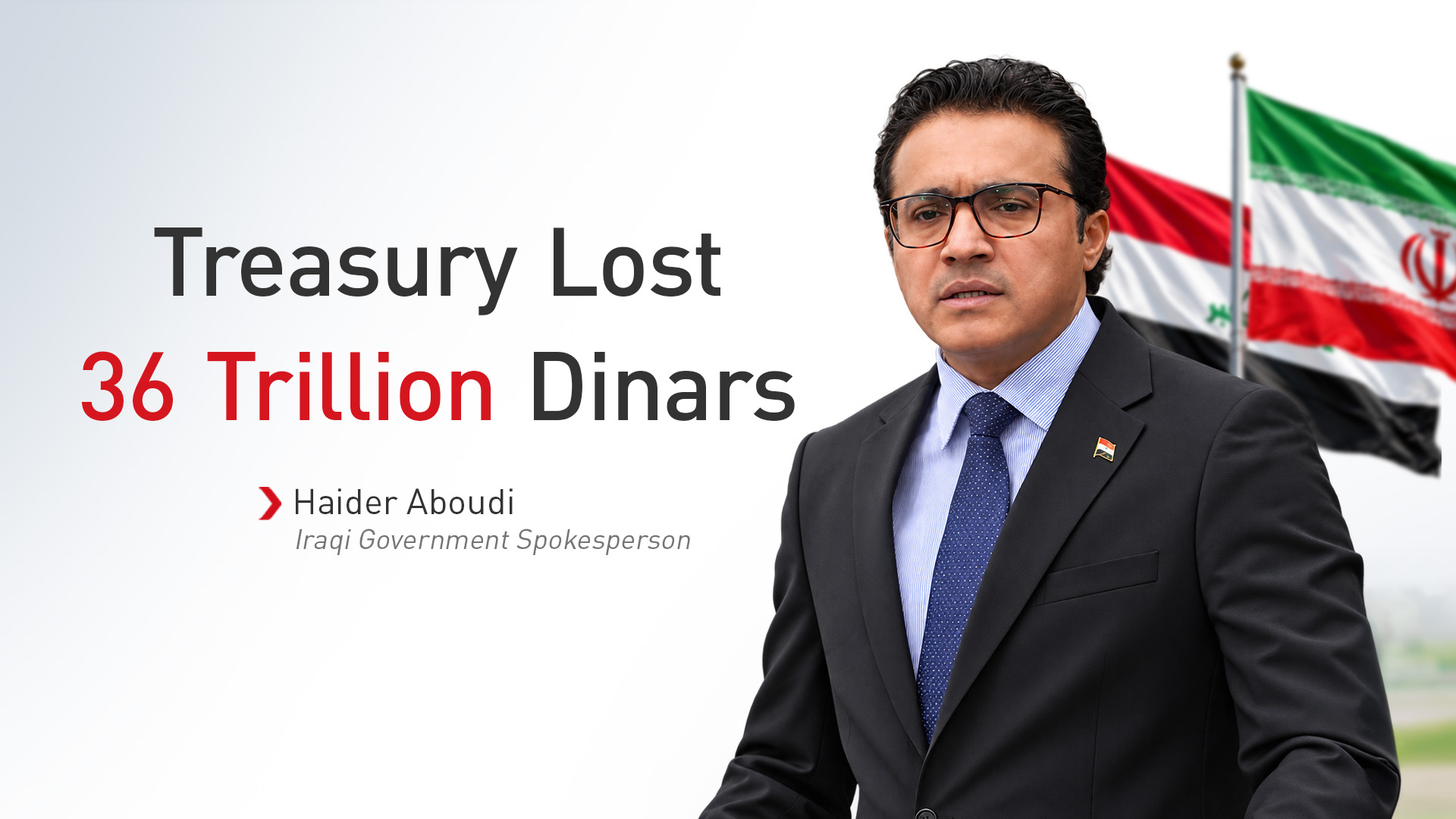
Iraq's government says the treasury lost more than 36 trillion dinars under the previous exchange rate while oil export disruptions through the Strait of Hormuz deepen fiscal pressure.
ERBIL (Kurdistan24) - Iraq's government says the state treasury has suffered losses exceeding 36 trillion dinars while the country faces mounting pressure from disrupted oil exports, a weaker fiscal position and instability in domestic markets following the latest exchange-rate adjustment.
Haider Aboudi, spokesperson for the Iraqi government, said in an interview that Iraq's economy was under severe pressure and that no outside party had so far facilitated the passage of Iraqi oil.
He said Baghdad had asked Iran to allow Iraqi oil exports to pass through the Strait of Hormuz because of the country's difficult financial situation, but had not received a response.
Most of Iraq's crude exports leave through southern ports into the Gulf before passing through the Strait of Hormuz.
Regional tensions and the closure of the strait have therefore created major obstacles for Iraqi oil shipments, reducing the government's revenues at a time when the state remains heavily dependent on oil income.
Aboudi also criticized the economic policies of the previous government headed by Mohammed Shia al-Sudani.
He said the decision taken at the beginning of 2023 to reduce the official dollar exchange rate from 147,000 dinars to 132,000 dinars per $100 resulted in losses of nearly 36 trillion dinars to the state treasury.
His argument is based on the way Iraq receives and spends its revenues.
The government sells oil in U.S. dollars but pays public salaries and most domestic budget obligations in Iraqi dinars. Aboudi said the stronger dinar adopted in 2023 meant that each dollar of oil revenue generated fewer dinars for the state budget, creating a substantial shortfall in dinar-denominated income.
The current government has since moved in the opposite direction.
On Oct. 6, the Iraqi Council of Ministers and the Central Bank of Iraq approved an increase in the official exchange rate to 1,520 dinars per dollar.
The decision triggered immediate volatility in the domestic market, with the parallel-market price of $100 rising above 160,000 dinars.
Consumers have since reported higher prices for food and other essential goods.
Aboudi attributed at least part of those increases to what he described as opportunistic behavior by some traders, saying certain businesses had attempted to exploit the uncertainty surrounding the exchange-rate change.
He said the rise in commodity prices was not entirely justified by market conditions and accused some traders of temporarily taking advantage of the situation.
At the same time, he said the government was preparing a series of decisions aimed at supporting the supply of essential goods and restoring greater stability to the market.
No details were provided on the measures or when they would take effect.
The government's position reflects the competing pressures facing Baghdad.
A weaker dinar allows the state to convert dollar-denominated oil revenues into more local currency, potentially easing pressure on salary payments and public spending.
At the same time, a higher dollar rate increases the cost of imported goods and risks worsening inflation for households whose incomes remain fixed in dinars.
Those pressures have become more acute as oil exports face disruption.
Aboudi's disclosure that Iran has not responded to Baghdad's request over the Strait of Hormuz highlights the limited options available to Iraq while its primary export route remains constrained.
For the government, the challenge is now to protect public finances while limiting the effect of the exchange-rate change and oil-export disruption on ordinary consumers.
The next policy measures promised by Aboudi are expected to focus on maintaining supplies of essential goods and reducing instability in the domestic market as Baghdad navigates one of its most difficult fiscal periods in recent years.