Elham Ahmad: Kurdish Recognition Is Historic but Implementation Incomplete
Elham Ahmad says integrating the SDF into the Syrian army has brought stability and major change, while warning of gaps in women's participation and Kurdish-language rights.
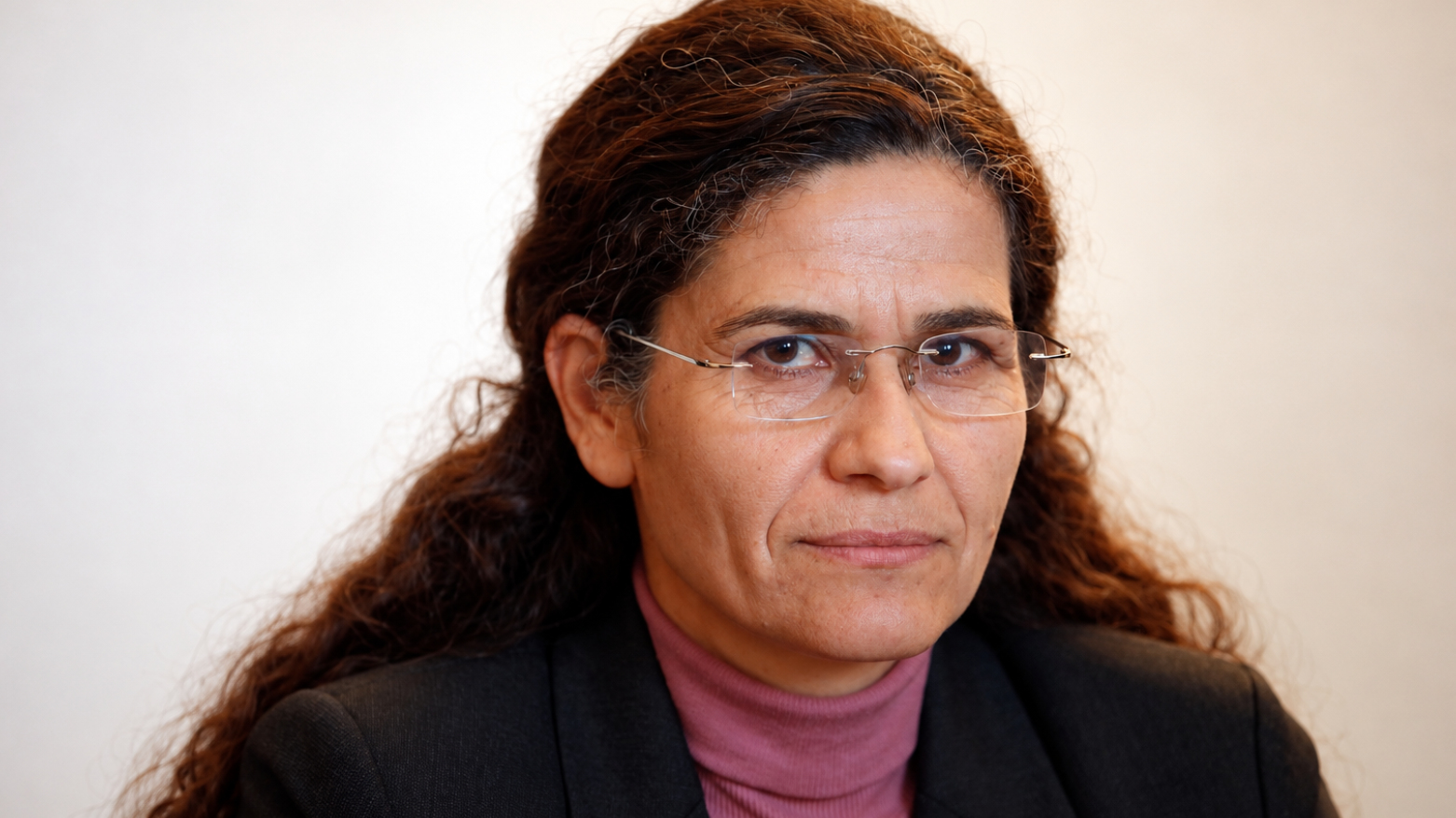
ERBIL (Kurdistan24) - Elham Ahmad, a member of the Syrian Parliament's Foreign Relations Committee, said on Monday that the integration of the Syrian Democratic Forces and other armed groups into the Syrian army has brought wide-ranging change to the country, while warning that important political, social and security challenges remain unresolved.
Speaking on the sidelines of the first day of the MERI Forum in Erbil on Oct. 12, Ahmad described the integration process as part of a broader transformation across Syria.
She said the unification of the SDF and other forces within the Syrian army had contributed to greater stability, reopened connections between Syrian cities, enabled border crossings to function and created opportunities for citizens to return.
Ahmad described the scale of the change as a "revolution," while stressing that the process was not yet complete.
She added that Syria as a whole remains in a phase of reconstruction and that the integration process continues to require careful follow-up.
According to Ahmad, the process has so far been largely successful and has produced important gains for Syrians.
At the same time, she cautioned that progress in the security and institutional fields has not been matched equally in all areas.
One of her main concerns was the role of women.
Ahmad compared the current situation with the experience of the Autonomous Administration in northern and eastern Syria, which she said had created substantial opportunities for women to participate in political, economic and public life.
"The experience of the Autonomous Administration remains present in the minds of the people of northern and eastern Syria and Syrians as a whole," she said.
Ahmad described that experience as a positive model for women's participation, but said women's representation had weakened after the integration of the Autonomous Administration's institutions into state structures.
"Following the integration of the forces and institutions of the Autonomous Administration into state institutions, there has been a decline in women's role," Ahmad said.
She described that decline as a major obstacle to women's participation in decision-making centers.
Ahmad also addressed Kurdish rights under Syria's new political arrangements.
She pointed to a presidential decree that, according to her, marked the first official recognition in Syrian history of the Kurdish people, their language and their culture, while acknowledging Kurds as an essential and indigenous component of Syrian society.
She described the decree as an important achievement, but said its practical implementation remained incomplete.
"The decree is a major achievement, but its implementation has certain shortcomings," Ahmad said.
She identified Kurdish-language education as one of the main areas where further work is required.
"Particularly regarding the right to education and study in the Kurdish language, the framework remains incomplete and requires a clear mechanism for implementation in practice," she said.
Ahmad argued that the Syrian government has responsibility for establishing clear procedures for implementing political decisions and ensuring greater transparency and economic stability.
She said ambiguity surrounding implementation had contributed to disorder and uncertainty.
Security also remains a concern.
Ahmad warned of periodic tensions and attributed them partly to extremist and racist thinking within Syrian society and among some political and social movements.
She also pointed to regional interference as another factor that, in her view, undermines stability and makes internal Syrian understanding more difficult.
Despite those concerns, Ahmad said the integration process has created meaningful gains for the Syrian people.
She characterized the current stage as a testing period in which institutional arrangements, rights and security structures still need to be strengthened.
Continued follow-up and clear implementation mechanisms, she argued, will be necessary if the process is to produce lasting stability.
Ahmad's remarks came during the opening day of the annual MERI Forum, organized in Erbil by the Middle East Research Institute.
The gathering brings together political leaders, decision-makers, academics and other local and international participants to discuss major developments affecting the Middle East.
Her assessment presented Syria's current transition as one combining significant institutional change with unresolved questions over representation, rights, implementation and security.