Zelensky Backs Energy Ceasefire if Russia Reciprocates
Volodymyr Zelensky says Ukraine will stop strikes on Russian energy infrastructure if Moscow reciprocates, as Trump's Russian diesel deal faces bipartisan criticism in Washington.
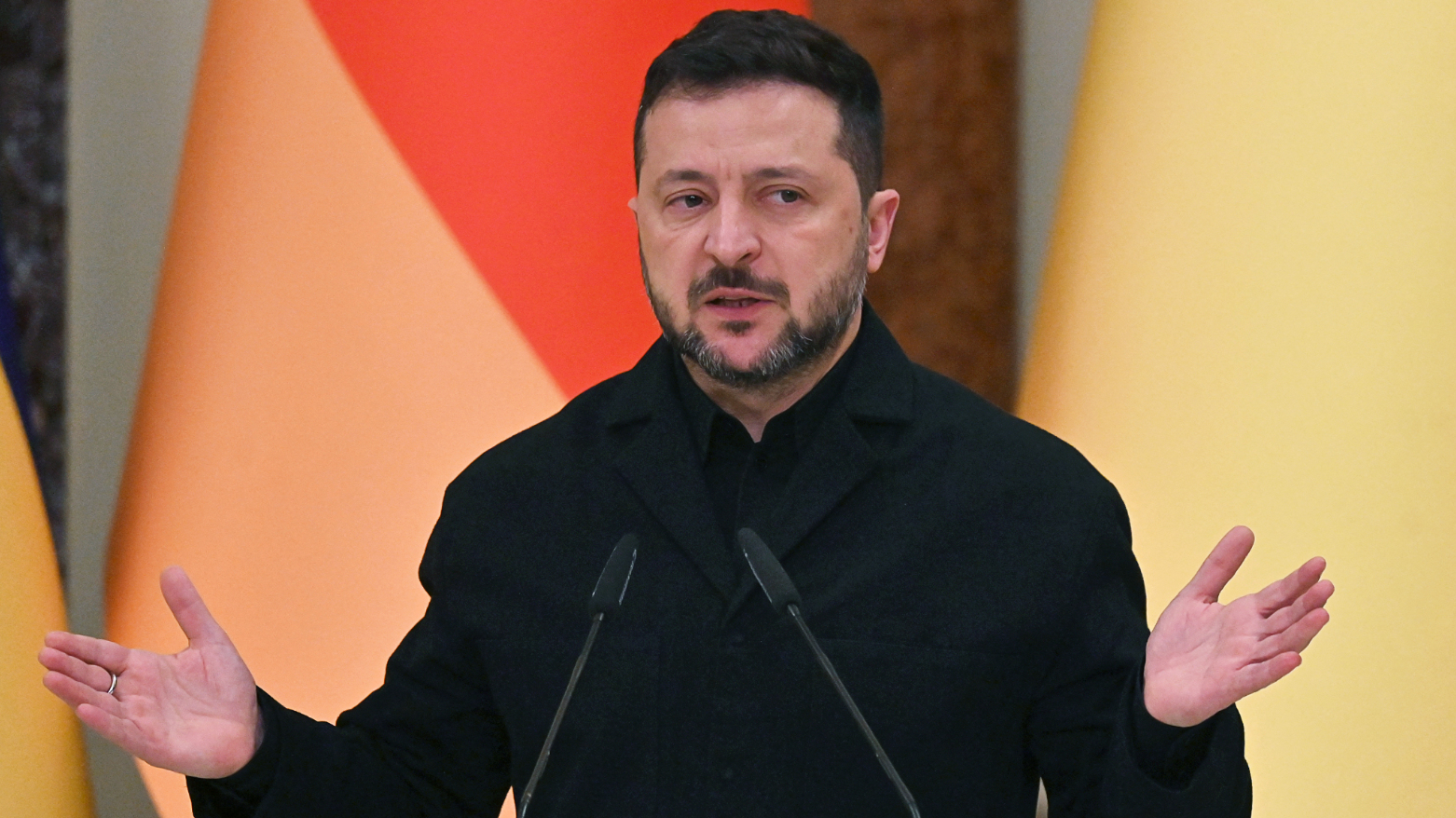
ERBIL (Kurdistan24) - Ukrainian President Volodymyr Zelensky on Monday welcomed U.S. President Donald Trump's announcement of an energy ceasefire between Ukraine and Russia, saying Kyiv is prepared to stop striking Russian energy infrastructure if Moscow does the same.
In a video message released through his official Telegram channel, Zelensky described Trump's announcement as positive but stressed that the agreement must be implemented in practice.
Ukraine, he said, supports credible ceasefire arrangements and measures that could contribute to ending the war.
Zelensky said Ukrainian forces had received instructions reflecting that position and that Kyiv was ready to refrain from attacks on Russian energy infrastructure on the condition that Russia showed the same restraint.
He said Ukraine was counting on Moscow to honor the understanding described by Trump and was awaiting clearer details of discussions between Washington and Russia.
The Ukrainian president also used the statement to question whether Moscow was genuinely prepared to pursue de-escalation.
He said Ukraine had previously proposed a number of steps aimed at reducing tensions but argued that Russian President Vladimir Putin had repeatedly rejected them.
"Ukraine wants peace," Zelensky said, adding that the central question was whether Russia was prepared to pursue the same objective.
Trump said in a social media post on Sunday that Ukraine and Russia had agreed to what he described as an immediate "energy ceasefire," though he did not provide detailed terms.
Reuters reported that Moscow had not announced its own position on the arrangement at the time, while Zelensky said Kyiv was still seeking clarification about the scope and conditions of the U.S.-Russian discussions.
The ceasefire announcement comes as the Trump administration faces a separate political dispute in Washington over its decision to allow Russian diesel supplies to enter U.S. and global markets.
Reuters journalists Jan Wolfe and Patricia Zengerle reported Sunday that seven Republican and Democratic senators urged Trump to reverse the policy, arguing that it conflicts with U.S. legislation restricting Russian energy imports while Moscow continues its war against Ukraine.
The group included Republican Senators Susan Collins, Lisa Murkowski, Thom Tillis and John Curtis, along with Democratic Senators Jeanne Shaheen, Richard Blumenthal and Ron Wyden.
In a joint statement published by the Senate Foreign Relations Committee, the lawmakers said Congress had prohibited Russian energy imports in 2022 in an effort to prevent U.S. money from supporting Russia's war effort.
They argued that allowing Russian diesel into the United States ran contrary to that law and said the administration had not provided Congress with the explanation they said was legally required.
The senators called on the administration to reverse the decision.
Tillis separately told NBC that he believed there was a legitimate argument that Trump's decision might not comply with existing law.
Trump announced Friday that Russia had agreed to increase diesel supplies, while his administration temporarily eased U.S. sanctions affecting Russian fuel.
The administration has defended the arrangement as a measure intended to lower fuel costs.
U.S. Treasury Secretary Scott Bessent said the administration believed it had the legal authority needed to proceed and argued that the deal would benefit American consumers by reducing prices.
Republican Senator John Barrasso also defended the agreement, saying Trump was attempting to balance competing pressures while bringing energy costs down.
Other Republicans have opposed the policy.
Representative Don Bacon criticized providing additional revenue to Russia while the war in Ukraine continues, while former U.S. Vice President Mike Pence urged Trump to reverse the sanctions relief.
The issue has also drawn concern from U.S. allies.
Canadian Prime Minister Mark Carney's office said after a call with Zelensky that the diesel agreement ran against efforts by Canada, Ukraine and their partners to promote peace and stability in Europe.
The disputes over the diesel arrangement and energy ceasefire have become closely linked because both center on Russian energy infrastructure and revenues.
Trump's administration is seeking lower diesel prices while simultaneously attempting to secure a halt to attacks on energy facilities in Ukraine and Russia.
Zelensky's response leaves Kyiv publicly open to such an arrangement, but only on a reciprocal basis.
He said Ukraine would support steps by international partners capable of moving the conflict toward peace, while making clear that implementation by Russia would be the decisive test.
For Kyiv, the immediate position is therefore one of conditional support: Ukrainian forces are prepared to stop targeting Russian energy infrastructure if Moscow observes the same restriction.
Whether that produces a functioning ceasefire now depends on the details of the U.S.-Russia discussions and, as Zelensky stressed, whether Russia follows through.