Iran Says It Struck Supertanker in Strait of Hormuz
The IRGC says the supertanker caught fire after being struck in the Strait of Hormuz, accusing the vessel of disabling its transponder and ignoring warnings from the Guards’ navy
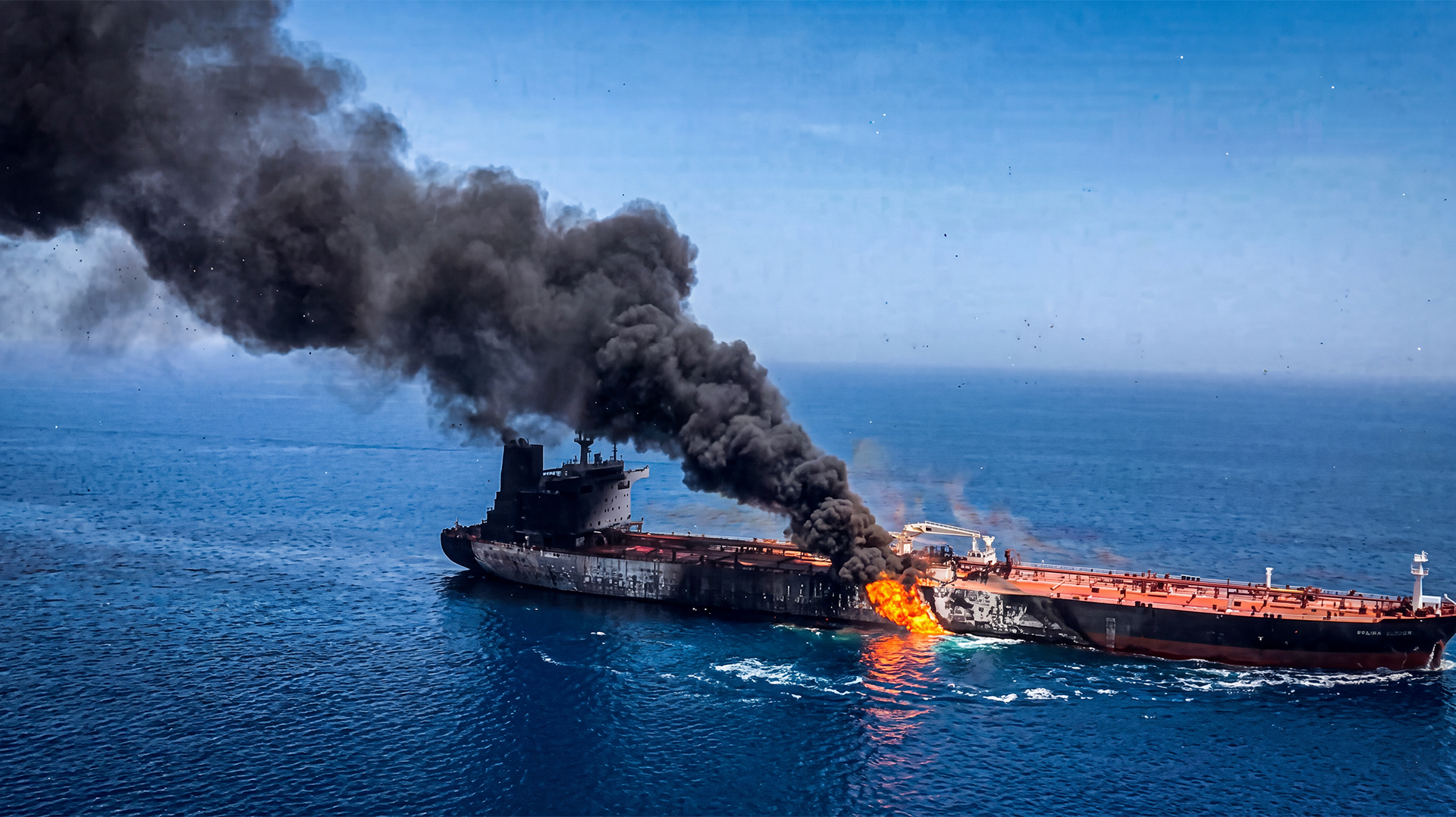
ERBIL (Kurdistan24) — Iran’s Islamic Revolutionary Guard Corps (IRGC) said on Monday that its navy struck a supertanker in the Strait of Hormuz and set it on fire, amid escalating maritime tensions with the United States and competing efforts to control shipping through the strategic waterway.
The Guards’ navy announced the strike in a statement published on its Sepah News platform, saying the vessel had attempted to cross the strait while disabling its transponders and ignoring warnings from Iranian naval forces.
“A supertanker was hit in the Strait of Hormuz and caught fire,” the statement said.
The IRGC said the ship had attempted to evade detection by switching off its transponder, a system used to identify and track vessels, despite warnings from the Guards’ navy.
Ali Ozmaei, the Guards’ naval commander, had warned over the weekend that vessels disabling their transponders to avoid detection while crossing the strait would be considered hostile and face a “severe” response.
The Iranian statement did not identify the tanker, specify its flag or provide details about casualties or the extent of the damage.
The reported strike had not been independently verified in the information available.
The incident comes as Iran and the United States maintain competing naval restrictions in the region following the outbreak of war involving Iran, the United States, and Israel in February.
CENTCOM Reports Disabling Commercial Vessel in Gulf of Oman
The reported Iranian strike follows a separate incident disclosed by US Central Command (CENTCOM) on Sunday, October 11, in which American forces disabled a commercial cargo vessel in the Gulf of Oman after its crew allegedly ignored repeated warnings and attempted to breach the US naval blockade of Iranian ports.
According to CENTCOM, a US military fighter jet struck the stern of the Panama-flagged M/V Ocean Molica, also known as the Arika Sun, with a precision munition on October 10, disabling the vessel’s propulsion system without harming its crew.
The command said the cargo ship had previously departed an Iranian port and was attempting to transit regional waters in violation of the blockade.
“U.S. Central Command forces disabled a commercial cargo vessel in the Gulf of Oman, Oct. 10, after the ship’s crew ignored repeated warnings and attempted to run the ongoing naval blockade against Iran,” CENTCOM said in a statement posted on X.
The US military said it had resumed its blockade of all ships entering or departing Iranian ports on July 14. Over the subsequent three months, CENTCOM reported disabling four commercial vessels and turning back 135 ships.
The command also said US forces had destroyed 10 tankers linked to what it described as the Islamic Revolutionary Guard Corps’ multibillion-dollar shadow network during the same period.
CENTCOM urged mariners to comply with blockade warnings, monitor official maritime safety broadcasts, and contact US naval forces on bridge-to-bridge radio channel 16 when operating in the Gulf of Oman and approaches to the Strait of Hormuz.
The two reported incidents involve separate vessels and locations: Iran’s reported strike on a supertanker in the Strait of Hormuz and the US operation against the Ocean Molica in the Gulf of Oman.
Strait of Hormuz at the Center of Maritime Confrontation
The Strait of Hormuz, connecting the Gulf with the Gulf of Oman and the wider Arabian Sea, is one of the world’s most important maritime chokepoints for oil and liquefied natural gas shipments.
Its strategic position makes access to the waterway a critical issue for global energy markets, international shipping, and regional security. Restrictions on commercial traffic or attacks on vessels can disrupt supply routes, raise shipping costs, and increase uncertainty for energy-importing countries.
Iran has imposed restrictions on passage through the strait since the United States and Israel launched strikes against the Islamic Republic in February, according to the supplied reporting.
Washington has responded with a naval blockade targeting vessels entering or departing Iranian ports, while US forces have also escorted ships transiting the region.
Iranian forces have repeatedly targeted vessels attempting to cross the waterway without Tehran’s permission, further complicating efforts to maintain commercial navigation.
The confrontation has created competing enforcement regimes, with Iran warning ships against crossing the strait without its authorization and Washington seeking to prevent maritime traffic from entering or leaving Iranian ports.
The latest reported strike and the separate US operation in the Gulf of Oman underscore the risks facing commercial shipping as both sides enforce their restrictions.
The incidents also raise renewed concerns about the security of a waterway through which disruptions can have consequences well beyond the Middle East.
With neither side showing signs of abandoning its maritime measures, the Strait of Hormuz and its surrounding waters remain a focal point of the broader US-Iran confrontation, with the safety of commercial vessels and the continuity of global energy shipments increasingly at stake.