Iraqi Group Backs Houthis as Saudi Tensions Rise
Iraq's Kataib Hezbollah has backed Houthi attacks on Saudi Arabia and issued three demands to Riyadh, days before Iraqi Prime Minister Ali Faleh Zaidi's planned Saudi visit.
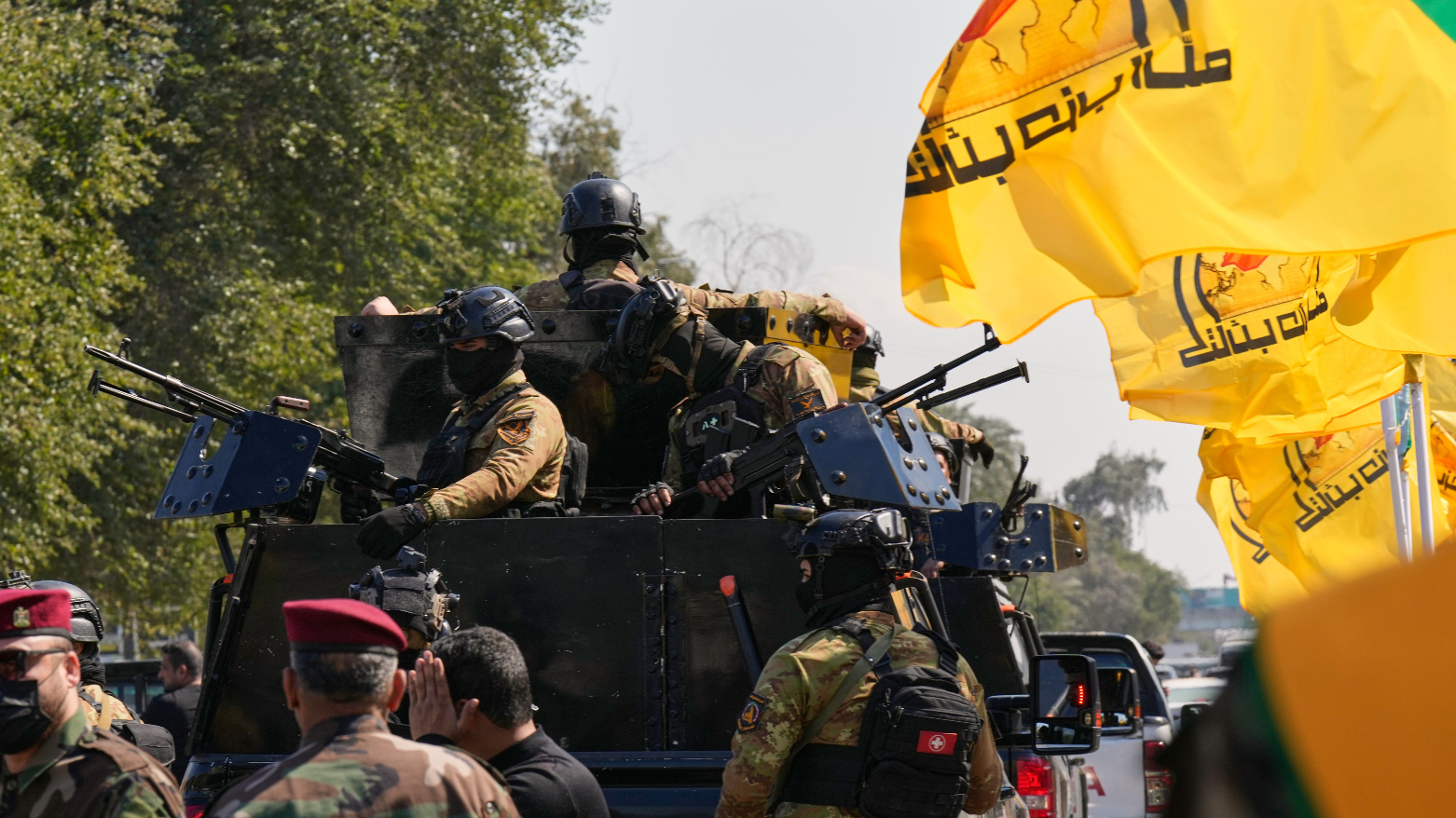
ERBIL (Kurdistan24) - Iraq's Kataib Hezbollah has declared support for Yemen's Houthis and their military operations against Saudi Arabia, issuing three demands to Riyadh as regional tensions intensify ahead of Iraqi Prime Minister Ali Faleh Zaidi's planned visit to the kingdom.
In a statement, Kataib Hezbollah, part of Iraq's so-called Islamic Resistance Front, congratulated Yemen's leadership and people over recent military operations targeting Saudi territory.
The statement followed another large-scale attack on King Khalid International Airport in Riyadh amid an escalating confrontation between Saudi Arabia and the Houthis.
Kataib Hezbollah described the Houthi operations as a response to what it characterized as a blockade on Yemen supported by Saudi Arabia, the United States and Israel.
Those assertions reflect the group's own position.
The group then set out three demands directed at Saudi Crown Prince Mohammed bin Salman and Riyadh's allies.
First, it called on Mohammed bin Salman and his supporters to formally acknowledge what Kataib Hezbollah described as their defeat.
Second, it demanded an immediate end to what it called the blockade imposed on the Yemeni people.
Third, it urged Houthi forces to continue their military operations until what the group described as victory is achieved.
Kataib Hezbollah also said Iraq's "Resistance Front" and the Iraqi people support the Houthis, while dismissing Iraqi voices opposed to its position as personal opinions that, in its view, do not represent the country as a whole.
The statement does not establish that Kataib Hezbollah's position represents Iraqi public opinion or the Iraqi government.
The group's declaration comes against the backdrop of repeated attacks on Saudi infrastructure, particularly King Khalid International Airport.
Saudi authorities said Saturday's major attack on the Riyadh airport killed 12 people and wounded 309, including Saudi citizens and foreign nationals.
Read More: Saudi Coalition Vows Response After Deadly Riyadh Airport Strike
The Houthis did not initially claim responsibility for that particular strike, although they had claimed earlier attacks on the airport and subsequently warned that Saudi airports and airspace, with the exception of those in Mecca and Medina, remained exposed to military action.
Read More: Saudi Airports Remain Military Targets, Houthis Warn
Saudi Arabia has blamed the Iran-backed Houthis for the deadly airport attack and has vowed a firm response.
The Houthis, for their part, have framed their operations as retaliation for Saudi military action and what they describe as restrictions imposed on Yemen.
The escalation has drawn increasingly sharp reactions across the Gulf.
On Monday, Anwar Gargash, diplomatic adviser to the president of the United Arab Emirates, said attacks on Saudi Arabia threaten the security of the UAE and all Gulf states.
He called for stronger collective Gulf security and renewed cooperation in defense, arguing that the security of Gulf states is inseparable.
Read More: UAE Adviser Says Attacks on Saudi Arabia Threaten Gulf Security
The contrasting statements underline the widening regional divide surrounding the Saudi-Houthi confrontation.
While Gulf officials are calling for stronger collective security in response to attacks on Saudi territory, Kataib Hezbollah has openly aligned itself with the Houthis and encouraged continued military pressure on Riyadh.
The timing is also politically sensitive for Baghdad.
Prime Minister Zaidi is scheduled to make an official visit to Saudi Arabia on Wednesday, Oct. 14, where security, political and regional issues are expected to be discussed.
According to the primary report, Zaidi's planned trip to Riyadh had previously been postponed twice because of attacks carried out against Saudi territory by groups associated with Iraq's Resistance Front.
The latest statement from Kataib Hezbollah therefore comes only days before a visit intended to reopen direct high-level engagement between Baghdad and Riyadh.
Saudi-Iraqi relations have already faced pressure from regional security developments, while Baghdad has sought to maintain diplomatic ties with Gulf states despite the activities and statements of armed groups operating inside Iraq.
The Kataib Hezbollah statement creates an additional complication by openly supporting military operations against a country the Iraqi prime minister is preparing to visit.
It remains unclear from the supplied material whether the Iraqi government has formally responded to Kataib Hezbollah's latest statement.
What is clear is that the Saudi-Houthi escalation is increasingly affecting regional diplomacy beyond Yemen itself.
With Saudi Arabia facing continued threats against its airports and Iraqi armed groups publicly backing the Houthis, Zaidi's upcoming visit to Riyadh will take place against a considerably more sensitive security and political backdrop than originally planned.