Flour Prices Hit Record High in Iraq, Threatening Baghdad Bakeries
A 50-kilogram sack of flour has climbed to 40,000 Iraqi dinars as currency depreciation and rising food costs squeeze bakery owners and force some to reduce bread sizes or cut the number sold for 1,000 dinars
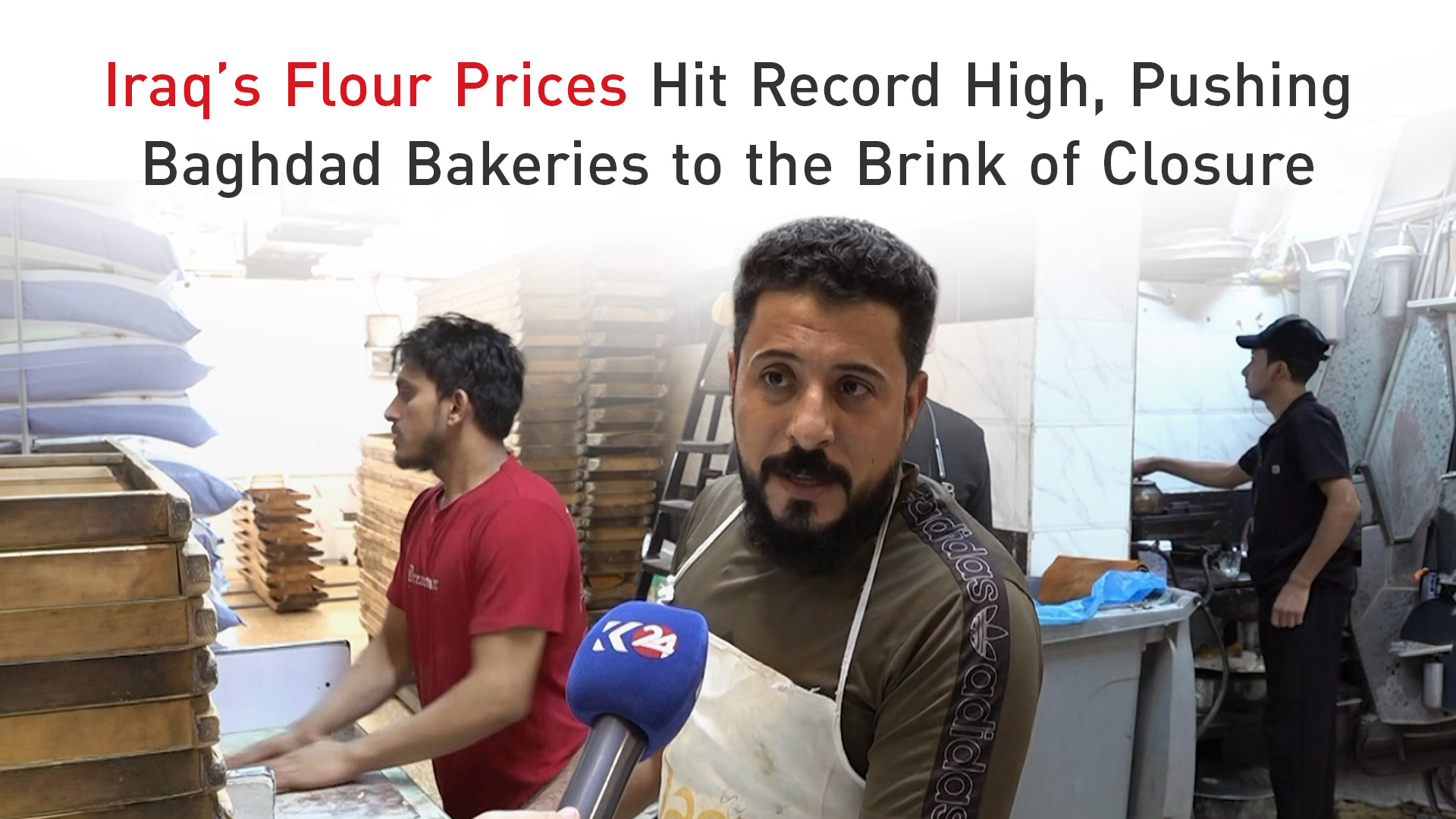
ERBIL (Kurdistan24) — Flour prices in Iraq have surged to unprecedented levels, putting mounting pressure on bakery owners in Baghdad and raising the prospect of closures as businesses struggle to absorb rising production costs while keeping bread affordable for consumers.
The price of a 50-kilogram sack of flour has reached 40,000 Iraqi dinars, up from around 36,000 dinars previously and exceeding 34,000 dinars before the Iraqi dinar weakened against the US dollar, according to local bakery owners. Some have warned they may be forced to shut down if prices continue to rise.
Ali Muaz, a bakery owner in Baghdad, told Kurdistan24 correspondent Saif Ali that the latest increase was making it increasingly difficult to cover operating expenses while maintaining existing bread prices and quantities.
“We used to buy flour for 36,000 dinars, but yesterday the price reached 40,000 dinars,” Muaz said. He explained that selling six pieces of bread for 1,000 dinars was becoming unprofitable because he still had to pay shop rent and workers’ wages.
Muaz said he had so far tried to absorb the additional costs rather than pass them on to customers. However, he warned that a further increase could make continued operation financially impossible.
“If the price of a 50-kilogram sack of flour reaches 44,000 or 45,000 dinars next month, we will have no choice but to close the shop,” he said.
The price increases have extended beyond flour to other food staples, adding to the financial strain on households already facing higher living costs.

Hamid Adel, a Baghdad resident, told Kurdistan24 that the amount of money previously sufficient to purchase his household necessities no longer covered the same goods.
“I used to buy my necessities for 100,000 dinars. Now that amount is not enough for the same products, and the cost has risen to 120,000 dinars or more,” Adel said.
Bakeries Reduce Bread Sizes as Costs Rise
The impact has been particularly visible in Baghdad’s Rusafa district, where some bakeries have begun adjusting their products and sales to limit losses.
According to the report, some bakery owners have reduced the size of their bread or cut the number of pieces sold for 1,000 dinars from six to five.
The changes allow businesses to manage rising flour costs without immediately increasing the price paid by customers, but they also mean consumers receive less for the same amount of money.
The pressure highlights the difficult position facing small bakeries, which must balance the cost of flour, workers’ wages, shop rent and other operating expenses against customers’ limited purchasing power.

Currency Pressures Add to Iraq’s Cost-of-Living Challenges
The increase in flour prices comes amid wider concerns over the purchasing power of the Iraqi dinar and the cost of essential goods. A weaker dinar can raise the local-currency cost of imported products and production inputs, particularly when international purchases are priced in US dollars.
Although the extent to which currency movements account for the latest flour increases has not been independently established, bakery owners and consumers interviewed by Kurdistan24 have linked the broader rise in prices to the dinar’s depreciation and increasing costs across the food market.
Bread is a daily staple for many Iraqi households, making flour prices particularly sensitive for both consumers and small businesses.
When production costs rise, bakeries face a difficult choice: absorb the losses, reduce the size or quantity of bread sold at existing prices, increase prices, or suspend operations.
For households, higher food bills reduce the purchasing power of fixed incomes and leave less money available for other necessities.
For bakery owners, continued increases in flour prices risk turning a high-volume, low-margin business into an unsustainable operation.
If flour prices continue climbing, the consequences could extend beyond individual businesses, placing additional pressure on household budgets and intensifying concerns about the affordability of basic food items in Iraq.
Saif Ali, Kurdistan24’s correspondent in Baghdad, contributed to this article by gathering interviews and soundbites from local residents and bakery owners.