Kurdistan Region Supplies More Than 35% of Iraq's Natural Gas
KRG Deputy Natural Resources Minister Ahmed Mufti says the Kurdistan Region produces more than 35% of Iraq's natural gas and now generates up to one billion cubic meters.
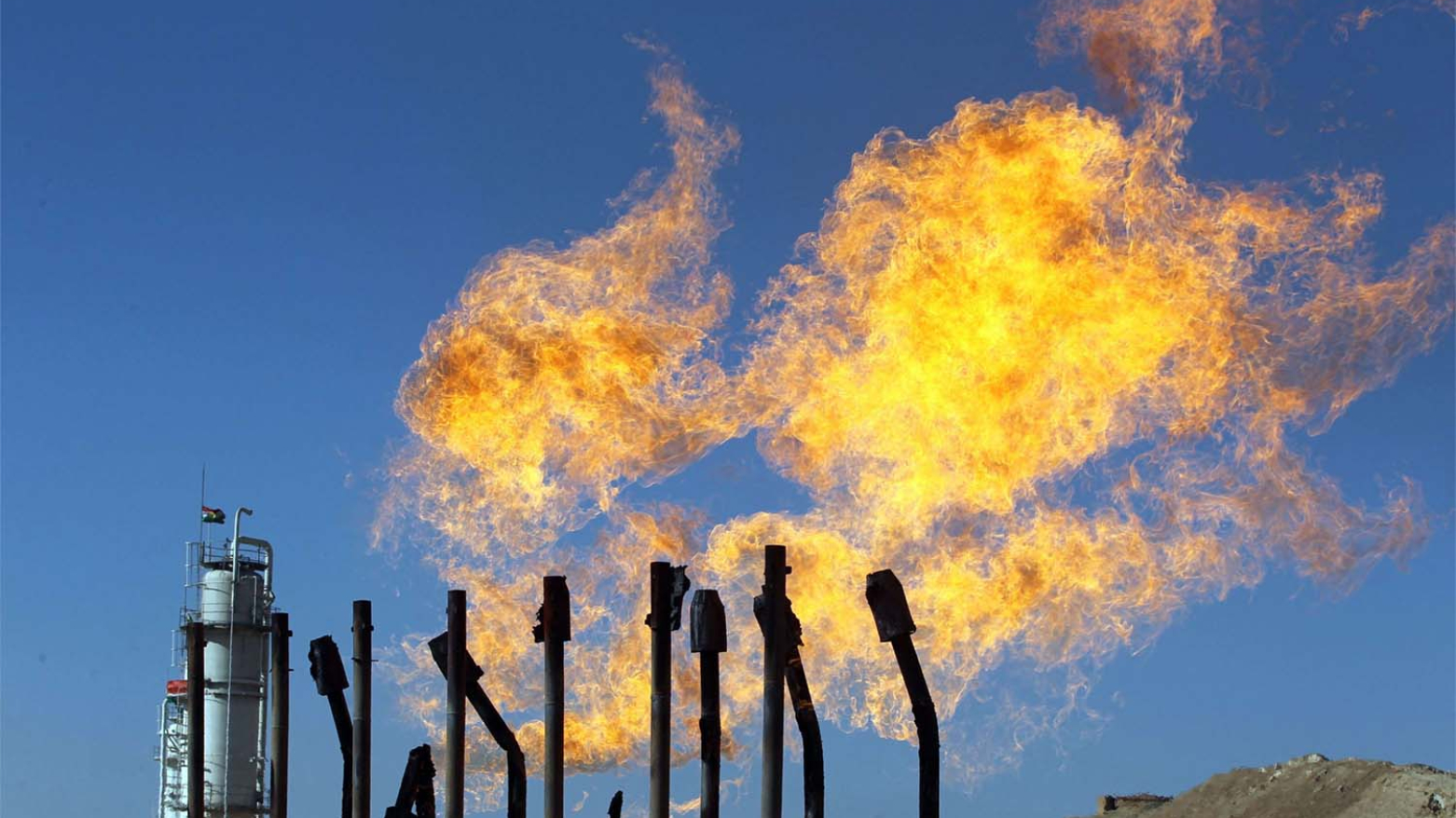
ERBIL (Kurdistan24) - The Kurdistan Region now produces more than 35% of Iraq's natural gas, Deputy Minister of Natural Resources Ahmed Mufti said on Tuesday, arguing that the Region's foreign-investment model and the federal government's budget-funded approach can complement one another as Iraq seeks to expand gas production.
Speaking during a MERI Forum panel in Erbil titled "Powering Kurdistan's Future," Mufti said the two systems together had created what he described as a broader gas strategy.
"The models for managing natural gas production in the Kurdistan Region and the Iraqi government have together created a synergy in which they complement one another," Mufti said.
He explained that the Kurdistan Region has largely relied on foreign capital to develop gas production, while Iraq's federal budget includes annual allocations for investment in the oil and gas sector.
According to Mufti, between $200 million and $250 million is allocated annually on the federal side for production-related investment.
By contrast, he said the Kurdistan Region does not rely on government investment allocations for this purpose.
"In the Kurdistan Region's model, the government's investment allocation is zero," Mufti said. "It is financed by foreign capital rather than government money."
He said this structure is reflected in the Region's partnership contracts, under which investing companies recover their costs through a share of production once gas output begins.
Mufti said Iraq, including the Kurdistan Region, currently produces 3 billion cubic meters of gas, with more than 35% of that total coming from the Kurdistan Region.
He attributed the Region's growing output to the implementation of its Oil and Gas Law and the investment model developed around it.
Mufti also pointed to a much larger level of production that Iraq would require to provide round-the-clock electricity.
"For Iraq to have 24-hour electricity, it needs 8 billion cubic meters," he said.
He added that Iraq has not yet been able to reach that level and has therefore relied on a combination of domestic production and imports.
According to Mufti, Iraq currently imports gas from Iran and also receives 500 million cubic meters per day from Turkmenistan in the form of liquefied natural gas, while continuing to produce gas domestically.
He argued that several major Iraqi gas fields remain below their potential because they have either not attracted sufficient investment or previous investment efforts have not succeeded.
Mufti named Akkas, Khashm al-Ahmar in Diyala, and Mansouriya among the significant fields that, in his assessment, have not yet received the investment required for Iraq and the Kurdistan Region to fully benefit from their reserves.
He contrasted those challenges with production growth inside the Kurdistan Region.
Mufti said the Region's gas output stood at around 350 million cubic meters per day in 2020.
Today, he said, production from Khor Mor alone has reached 750 million cubic meters, while total production across the Kurdistan Region has risen to between 900 million and one billion cubic meters.
"Kurdistan has been able to make significant advances," Mufti said.
His remarks at the MERI Forum presented the Kurdistan Region's gas sector as an increasingly important component of Iraq's broader energy picture, while also underlining the scale of the country'’s remaining supply gap and the need for further investment in undeveloped or underdeveloped gas fields.