Baghdad, Erbil Security Coordination 'Exceptional,' Aboudi Says
Iraq's National Security Adviser Qasim Aboudi says Iraqi forces are highly prepared after the coalition withdrawal and that Baghdad-Erbil security coordination is at its strongest level.
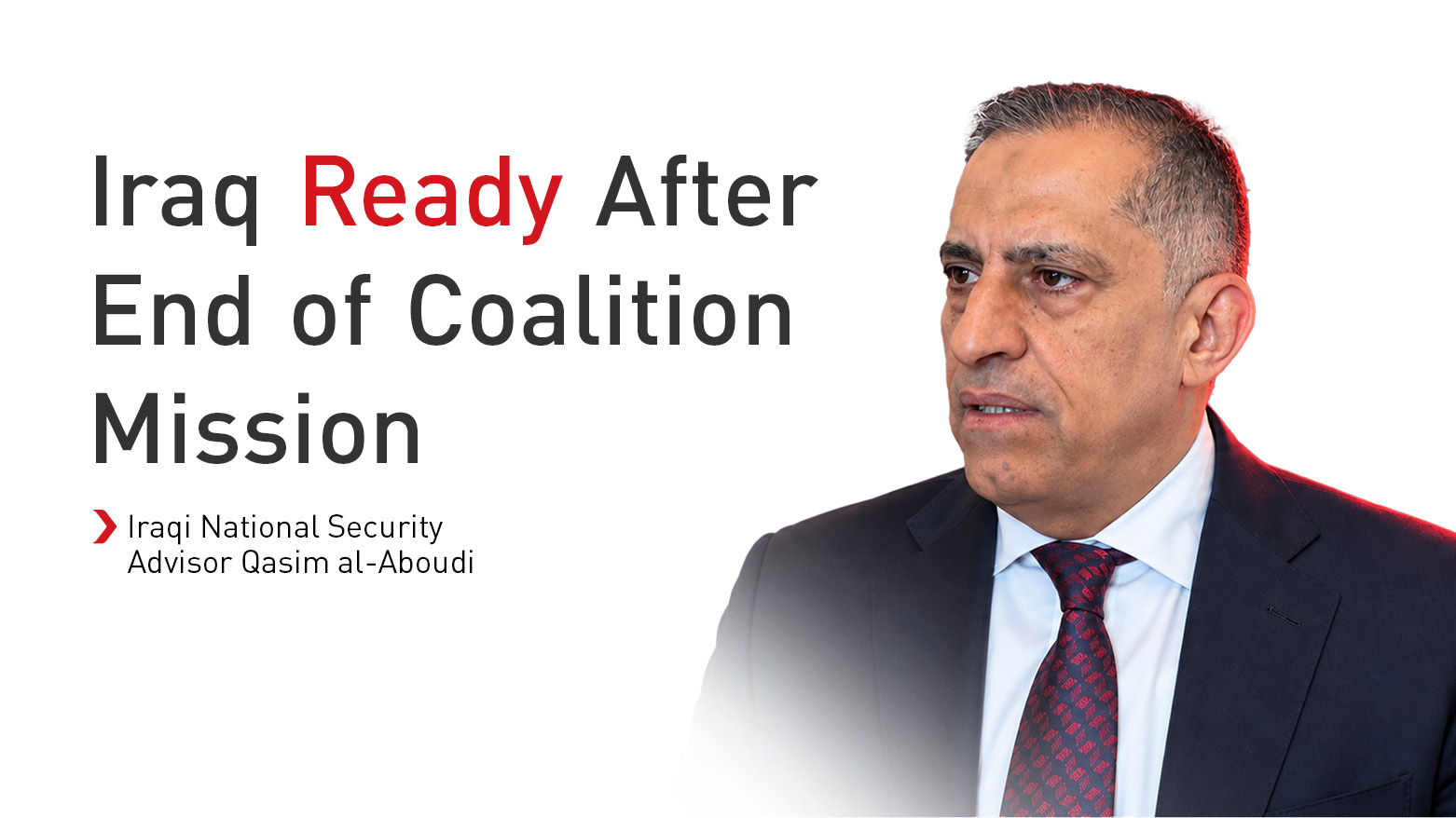
ERBIL (Kurdistan24) - Iraq is stable and its security forces are prepared for the period following the withdrawal of international coalition forces, National Security Adviser Qasim al-Aboudi told Kurdistan24 on Tuesday, while describing security coordination between Baghdad and the Kurdistan Region as being at its strongest level.
Speaking in an exclusive interview with Kurdistan24 correspondent Hoshmand Sadiq on Oct. 13, Aboudi said Iraqi authorities are continuing to review the preparedness of government and security forces to identify and address any gaps that may have emerged following the coalition's departure.
"In fact, the situation in Iraq, thank God, is calm and stable," Aboudi said.
He explained that the readiness of different security institutions is being examined on a continuous basis as Iraq adjusts to the post-coalition phase.
Aboudi said an important meeting was scheduled for 2:00 p.m. Tuesday under the supervision of Prime Minister Ali al-Zaidi to conduct what he described as a final review of the preparedness of Iraqi security forces.
The national security adviser said he personally chairs the Council of Deputies of the Security Ministries and Security Institutions, which has held a series of intensive meetings focused on national defense readiness.
"We have held intensive meetings, and detailed presentations have been made by these bodies demonstrating their readiness to defend our territory," Aboudi said.
He described the overall level of preparedness as very high.
According to Aboudi, Iraqi forces have accumulated significant experience through years of training, exercises, interaction and exchanges of expertise with members of the international coalition.
That experience, he said, has helped strengthen confidence in their ability to assume full responsibility for the country's security after the coalition withdrawal.
"In fact, there is a very high level of readiness," Aboudi said. "These forces also possess accumulated experience gained through exercises, training, interaction, and the exchange of expertise with coalition forces."
He added that the current situation was therefore reassuring.
Aboudi also emphasized the state of security relations between the federal government and the Kurdistan Regional Government.
Asked about the level of coordination with the Kurdistan Region, he said relations between Baghdad and Erbil had reached what he described as their best level.
"There is a very high degree of coordination on various files, particularly security files," he said.
Aboudi pointed in particular to cooperation on issues related to Iraq's relationship with Iran.
He said he chairs the Higher Security Committee concerned with Iraq-Iran relations and that the Kurdistan Region participates as a principal member.
"I personally chair the Higher Security Committee concerned with relations between Iraq and Iran, and the Kurdistan Region is a principal member alongside us on this committee," he said.
He described that coordination as "good, exceptional, and productive."
His remarks underscore the importance Baghdad places on federal-Kurdistan Region security coordination at a time when Iraqi forces are assuming full responsibility following the end of the coalition's military mission.
Iraq-U.S. security relations entered a new phase this year after Baghdad and Washington agreed to conclude the military mission of the international coalition.
On Sept. 30, U.S. forces evacuated their final military base in Erbil, formally bringing the coalition's mission in Iraq to an end.
Aboudi's comments suggest that the federal government is seeking to demonstrate that the withdrawal has not produced a security vacuum.
At the same time, his emphasis on repeated readiness assessments indicates that Iraqi authorities are continuing to monitor the transition closely rather than treating the process as complete simply because coalition forces have departed.
The meeting chaired by Prime Minister Zaidi on Tuesday is expected to provide another review of the country's security posture and the preparedness of the institutions now carrying full responsibility for national defense and internal security.
For Aboudi, the combination of institutional readiness, accumulated operational experience and closer coordination with the Kurdistan Region provides grounds for confidence in the post-coalition period.
His message was that Iraq has entered the new phase in a position of stability, while continuing to test and strengthen the mechanisms intended to protect that stability.