U.S. Veterans Advocate Urges Continued Support for Kurdistan Region
IAVA Director Jerritt Lynn argues that continued U.S. support for the Kurdistan Region and Peshmerga serves Washington's security and strategic interests.
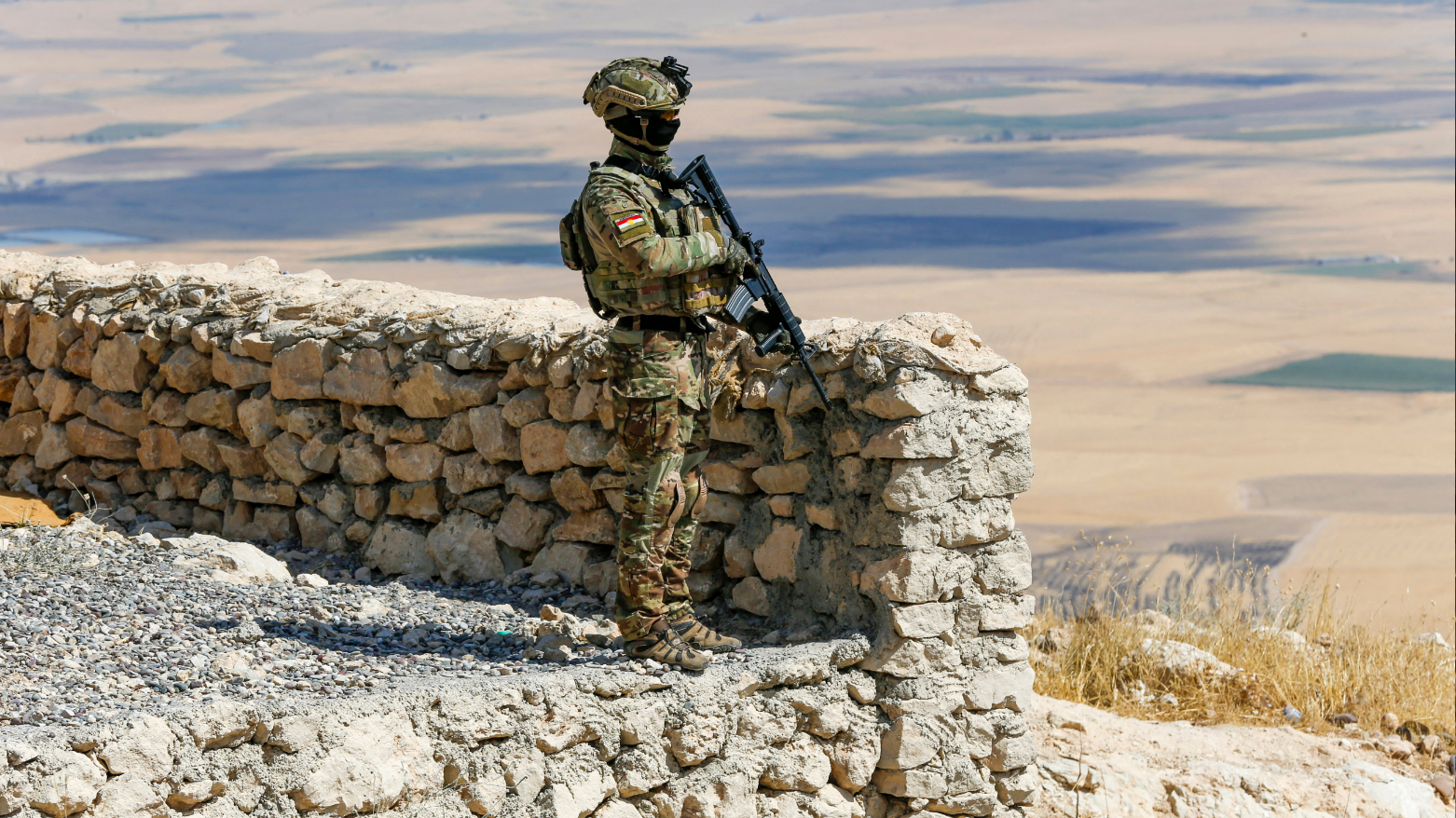
ERBIL (Kurdistan24) - The United States should continue providing financial and material support to the Kurdistan Region and its Peshmerga forces because the partnership serves American security interests as well as its obligations to a longstanding wartime ally, a senior U.S. veterans advocate has argued.
Jerritt Lynn, Director of Membership and Communications at Iraq and Afghanistan Veterans of America (IAVA), made the case in an opinion article published by We Are The Mighty on Oct. 16.
"Supporting the Kurdistan Region is not charity; it is an investment in American interests," Lynn wrote.
The publication stated that the views were those of the author and did not necessarily represent the positions of organizations or entities mentioned in the article.
Lynn framed the U.S.-Kurdish relationship within a broader argument about the importance of local wartime allies to American military strategy. He drew a comparison with foreign assistance received by American forces during the Revolutionary War, arguing that the United States itself achieved independence partly through outside military and financial support.
He said similar partnerships have remained important throughout U.S. history, with American forces relying on local militaries, militias and other partners to pursue security objectives abroad.
For Iraq, Lynn traced the relationship with the Kurds to 1991, when international safe zones and no-fly zones established after the Gulf War helped create conditions for the development of the Kurdistan Regional Government.
He then pointed to the 2003 Iraq War, arguing that the Peshmerga provided fighters, knowledge of local terrain and close cooperation with U.S. Special Operations Forces during the campaign against Saddam Hussein's government.
Hundreds of Peshmerga were killed during Operation Iraqi Freedom, Lynn wrote, while the Kurdistan Region remained comparatively stable through the conflict.
He placed particular emphasis on the later war against ISIS.
After the group captured large areas of Iraq and Syria in 2014, U.S. forces returned to Iraq as part of the international campaign against ISIS. The Peshmerga became one of Washington's major local partners.
Lynn wrote that more than 1,300 Peshmerga were killed during the campaign and credited Kurdish forces with playing an important role in the territorial defeat of ISIS in Iraq by December 2017.
For Lynn, that history creates both a moral and strategic argument for maintaining the relationship.
He warned that withdrawing support from local allies after relying on them during conflict can damage Washington's credibility with other governments and forces considering cooperation with the United States.
His argument comes as the U.S. military presence and security relationship in Iraq undergo changes.
Lynn said U.S. troops were withdrawn from Iraq again in September and argued that Washington should continue supporting Kurdish forces even as its direct military role changes.
He also said U.S. funding mechanisms for the Kurdish military are set to end beginning in 2027 and that a memorandum of understanding between the U.S. Department of Defense and the Kurdistan Regional Government's Ministry of Peshmerga Affairs expired in September 2026.
In Lynn's assessment, those changes risk weakening the Kurdistan Region's capacity to provide security and act as a reliable American partner.
He placed that concern within the wider regional conflict involving the United States and Iran.
According to Lynn, the Kurdistan Region has faced more than 600 drone and missile attacks against military and civilian facilities during the conflict, resulting in casualties and infrastructure damage.
He argued that other U.S. partners in the Middle East, including Saudi Arabia, Kuwait, Qatar, Bahrain and Jordan, have also faced security and political consequences from the conflict.
Lynn's broader concern is that governments hosting or cooperating with U.S. forces are continually assessing the costs and benefits of those relationships.
"How this plays out," he argued, will influence whether other partners continue to regard Washington as dependable.
He also pointed to competition with China, saying governments could increasingly consider alternative strategic relationships if they conclude that cooperation with the United States carries substantial risks without dependable long-term backing.
The article did not argue that American support should remain unchanged indefinitely. Rather, Lynn's central contention was that Washington should recognize the strategic value of partners that have repeatedly fought alongside U.S. forces before reducing the mechanisms that sustain them.
His argument also rests heavily on the Peshmerga's record over more than two decades of U.S. military involvement in Iraq.
Lynn described the Kurds of Iraq as among Washington's most dependable regional partners and said their support during both the Iraq War and the campaign against ISIS demonstrated the practical value of local alliances.
He concluded by returning to the historical comparison with America's own dependence on allies during its struggle for independence.
For Lynn, the lesson is that even a major military power rarely advances its interests entirely on its own.
In the Middle East, he argued, Washington must consider not only the immediate cost of supporting partners such as the Kurdistan Region, but also the longer-term consequences for American credibility if forces that fought alongside U.S. troops conclude that the relationship ends when the battlefield changes.