IRGC Claims It Downed US MQ-9 Drone Over Strait of Hormuz
Iran's IRGC says it used a new system to shoot down a U.S. MQ-9 drone over the Strait of Hormuz amid heightened military tensions with Washington.
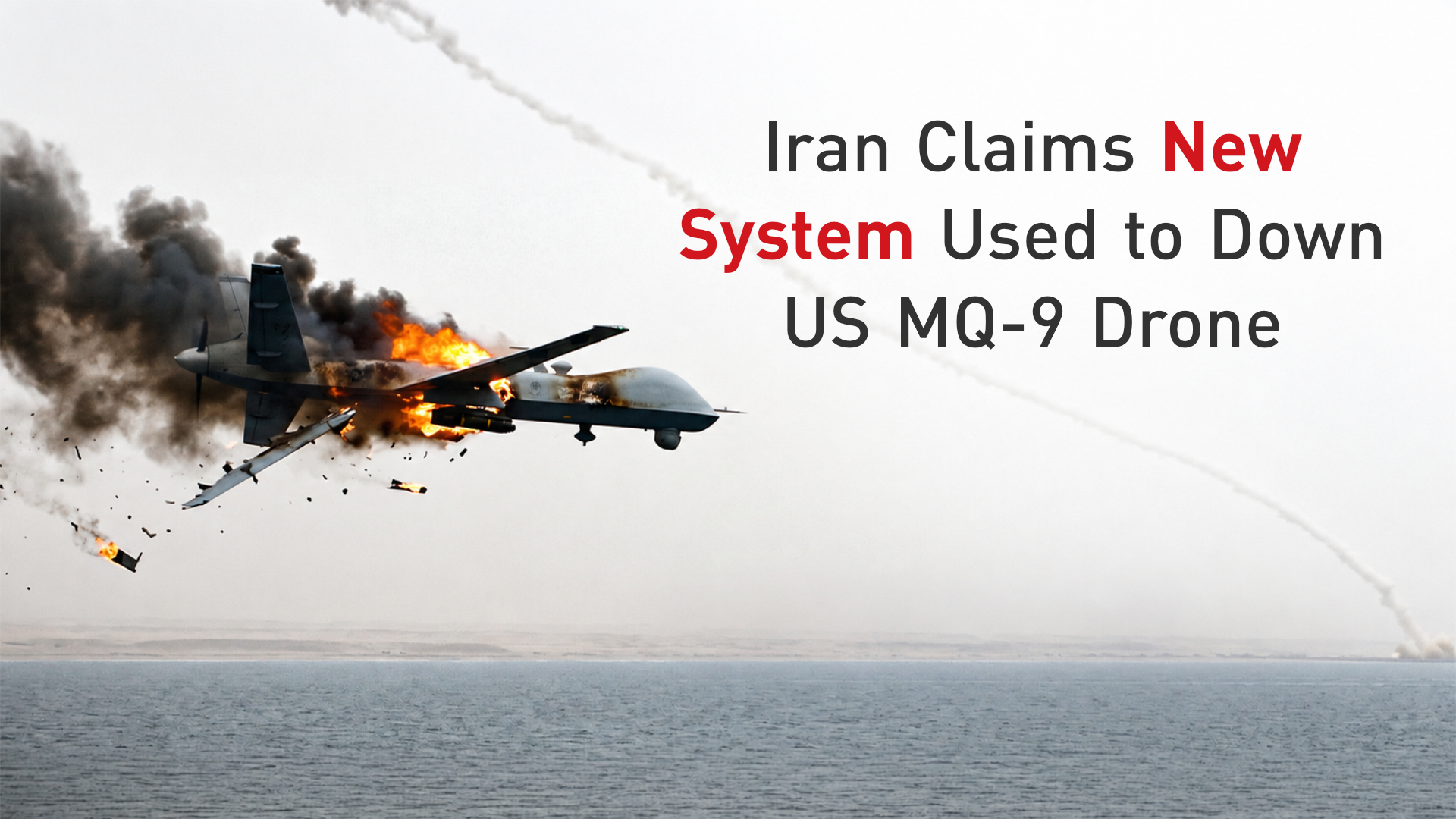
ERBIL (Kurdistan24) - Iran's Islamic Revolutionary Guard Corps said Tuesday that it had shot down a U.S. MQ-9 drone over the Strait of Hormuz using what it described as a new and advanced system, amid continuing military tensions between Tehran and Washington around the strategic Gulf waterway.
The IRGC said the incident occurred in the early hours of Oct. 20 and that its Aerospace Force detected, tracked and brought down the American unmanned aircraft.
The claim was announced by the IRGC and was not accompanied in the supplied material by confirmation from the U.S. military.
According to the Iranian force, the MQ-9 was the 54th American unmanned aircraft it has downed.
The IRGC did not provide further technical details about the system it said was used in Tuesday's operation, beyond describing it as new and advanced.
The reported incident comes during a period of intensified confrontation between Iran and the United States, particularly in and around the Strait of Hormuz.
The strategic waterway has become a focal point of military and maritime tensions during 2026, with U.S. and Iranian naval and air forces coming into direct contact on several occasions.
Hormuz is one of the world's most important energy shipping routes, making any military activity in or above the strait significant beyond the immediate U.S.-Iran confrontation.
Escalation in the area carries the risk of disrupting commercial shipping and energy supplies while increasing the possibility of a wider regional military confrontation.
The reported drone incident also comes as the United States moves to accelerate development of new long-range weapons.
Separately, the U.S. Air Force has requested $806 million from Congress for fiscal year 2027 to complete testing of its Hypersonic Attack Cruise Missile, or HACM, and prepare the infrastructure and supply network needed for production.
According to budget information cited in Kurdistan24 reporting, approximately $273 million would go toward production facilities and suppliers.
Defense contractor Raytheon is expected to receive around $412 million, including funding for missile components, completion of the design and long-lead materials that must be ordered before full production begins.
Nearly $89 million is allocated for testing, including early prototypes and additional flight tests, while another $32.6 million would support engineering and program management.
The U.S. Air Force expects HACM production to begin during fiscal year 2027.
The missile is designed as an air-launched hypersonic cruise weapon for striking distant targets, with the F-15 expected to become its first carrier aircraft.
Washington plans to spend approximately $3.12 billion on the program through fiscal year 2031.
The development effort began amid U.S. concerns over advances by Russia and China in hypersonic weapons and reflects Washington's effort to expand its own long-range strike capabilities.
The HACM program is separate from Tuesday's claimed drone shootdown and there is no indication in the supplied material that the two developments are operationally connected.
Together, however, they illustrate the broader military environment in which the Hormuz confrontation is unfolding: Iran says it is deploying new systems against advanced U.S. aircraft, while Washington is investing heavily in next-generation strike technology.
For now, the central development remains an Iranian military claim.
The IRGC says it tracked and destroyed an MQ-9 above the Strait of Hormuz. Without confirmation from Washington in the material available, the circumstances of the incident, including the drone's mission and exact location, remain unverified.