Türkiye to Keep Troops in Syria, Iraq Until Borders Secure
Türkiye will keep troops in Syria and Iraq until border security is ensured, Defense Minister Yasar Guler told AFP, adding the PKK must fully dissolve.
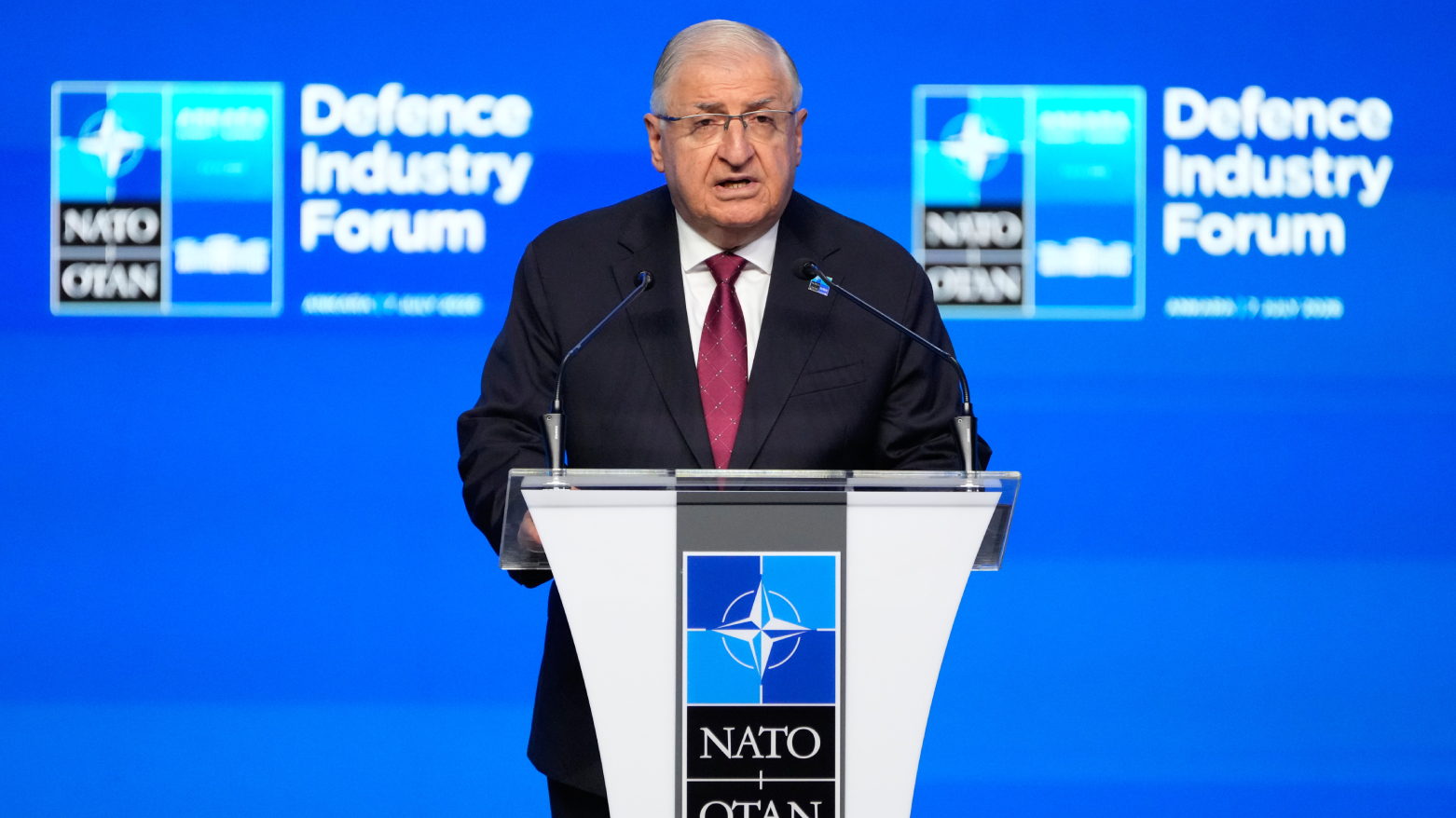
ERBIL (Kurdistan24) - Türkiye will keep its troops in Syria and Iraq until border security with its two neighbors is fully ensured, Defense Minister Yasar Guler told AFP in an interview published Tuesday.
“We are maintaining our military presence in Iraq and Syria,” Guler said in a written answer to AFP’s questions. “When we assess that the necessary conditions have been met in terms of regional and border security, the status of our base areas and our presence in the region will be reconsidered.”
For years, Türkiye has maintained troops in Syria and Iraq to contain the threat along its borders from the extremist group ISIS.
Over the past two years, the situation has shifted with the emergence of a new Ankara-allied government in Syria following the fall of Bashar al-Assad, and with Türkiye’s push to draw a line under its decades-long conflict with the PKK.
Since Assad’s fall, Guler said, Türkiye has established “close coordination in the field of security” with the new Syrian government.
Turkish troops, he added, are working to “strengthen the capacity” of the Syrian military and “to ensure the security of our borders.”
The minister set out the conditions for any change. “Once the terrorist threat in the region has been completely eliminated, border security has been ensured, and state authority has been fully and uniformly established throughout Syria without exception, the status of our forces will be reassessed,” he said.
When the Assad regime fell, Türkiye had between 16,000 and 18,000 troops in Syria, according to a Turkish official.
There has been no reliable figure since, although a Turkish official said last month that talks were under way to determine the legal status of the troops in Syria.
Guler declined to discuss future plans. “At this stage it would not be appropriate to make a prior assessment regarding deployment or base plans that have not been made public,” he said.
He added: “Issues related to the future posture of the Turkish armed forces in Syria will be addressed by taking into account Syria’s sovereignty and territorial integrity, the mutual understanding of the two countries, the security conditions on the ground and the evolution of the terrorist threat.”
“Turkish troops have also long operated in Iraq, regularly conducting cross-border operations and air raids on PKK hideouts while maintaining their own bases there, a presence that has strained ties between Ankara and Baghdad. Troops have been based there since 2015, and they now number between 800 and 1,000,” an Iraqi security source told AFP.
Guler did not disclose figures for Iraq or Syria, saying troop numbers are assessed in proportion to what is needed on the ground.
“It would not be accurate to assess our military presence in Iraq and Syria solely on the basis of personnel numbers.Our force structure and posture on the ground are shaped according to needs,” linked to threat levels, border security and developments on the ground, he said.
As the PKK process has advanced, the group’s militants destroyed weapons at a symbolic ceremony last year. This month, they withdrew from four key bases in Iraq, a move confirmed by Turkish intelligence.
For lasting success, Guler said, the PKK must “fully implement their decision to dissolve,” while Türkiye continues “meticulously monitoring the next phases of the process” and does not drop its guard.
“The progress of the process doesn’t mean security measures have been relaxed,” he said, adding that troops will continue to “take the necessary measures” against any situation viewed as a security threat.
Türkiye is also closely watching Iraq’s own efforts “to disarm militia groups and bring them under state control,” Guler said, as he hailed recent successes in the Sinjar region.
Iraq has set a June 30 deadline for pro-Iran factions to hand over their weapons to the state, following the end of the US-led coalition’s mission there.
After the Sinjar push, Türkiye said last month that it would “gradually” hand control of its Bashiqa base, near the city of Mosul, to Baghdad, although no timeline was given.
Looking ahead, Guler said Türkiye would continue to support Iraq and plans “to elevate military and security cooperation between the two countries to a higher level” in the coming period.