France Imposes New Paris Curfew as PM Blames Far-Left Groups
France’s prime minister accused far-left groups of plotting an uprising and vowed heavy security for Saturday protests as Paris imposed a new curfew overnight.
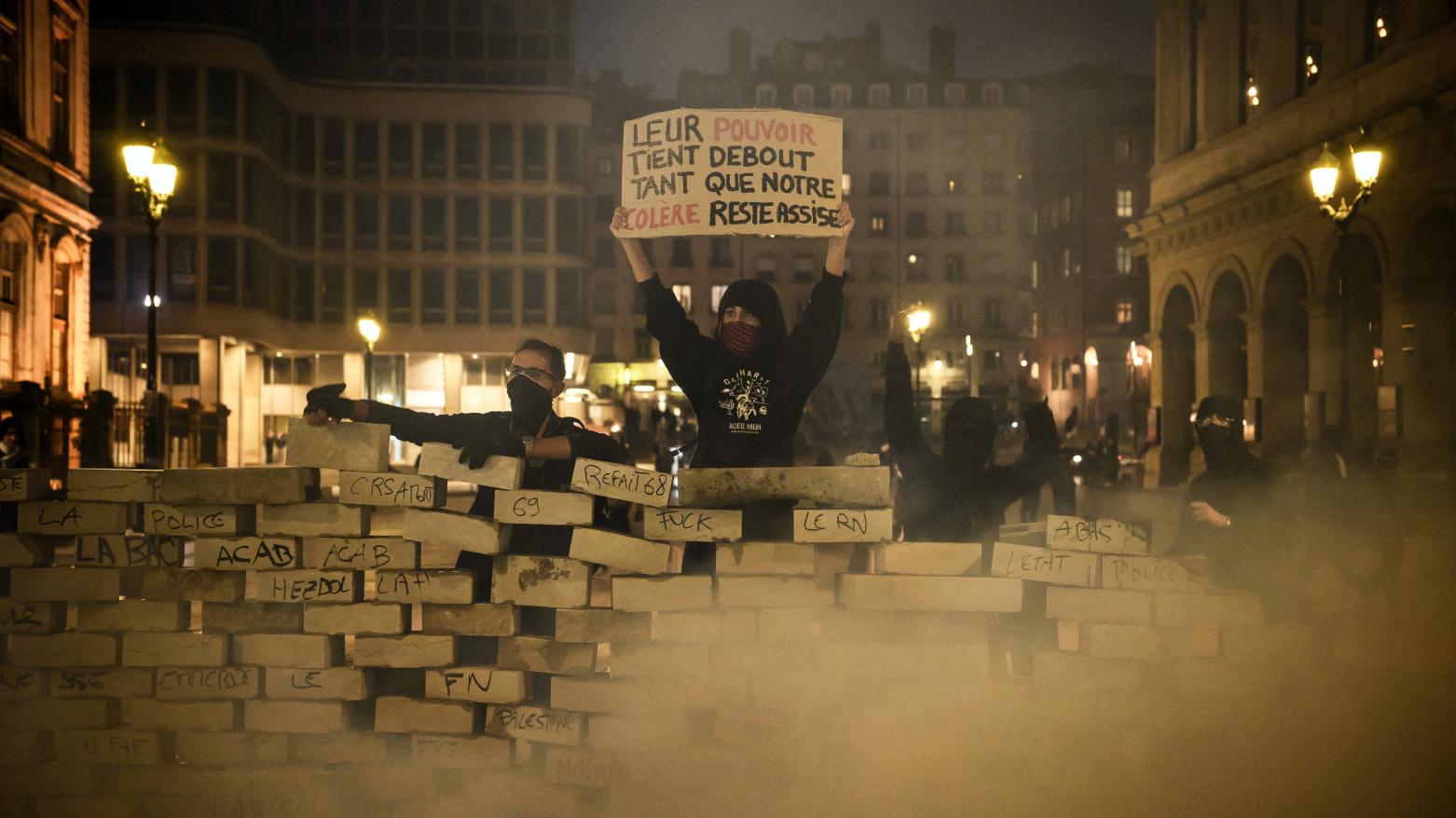
ERBIL (Kurdistan24) - French Prime Minister Sebastien Lecornu accused “far-left groups” of drawing up “a plan for rebellion” on Tuesday, and promised a heavy security presence for new protests planned for Saturday, as police in Paris imposed a fresh curfew overnight.
Speaking during a question session at the National Assembly, Lecornu said: “We will not allow small rebellious groups to march on the Elysee Palace and Matignon,” a reference to the seats of the presidency and the prime minister’s office.
French police announced a curfew in parts of Paris, including La Republique square, from shortly before midnight Tuesday until Wednesday morning.
A separate police order bans any unauthorized gathering from Tuesday evening until 6 a.m. Wednesday, particularly around the Elysee Palace, the National Assembly, the Senate, the Champs-Elysees and train stations.
Curfews first took effect Monday, running between 8 p.m. and 10 p.m. in parts of Paris and in major cities. During the night, a helicopter flew over part of central Paris, using a powerful searchlight to monitor compliance with the restrictions.
The government faces sharp criticism after violence and looting on the sidelines of mass demonstrations Saturday against the rising cost of living.
The unrest was the most serious in recent years and came just six months before the presidential election, in a country that is raising growing concern in financial markets because of its debt and instability.
French President Emmanuel Macron acknowledged “failures” in the handling of the protests. Political blocs in the National Assembly agreed to set up an inquiry commission into the violence and the measures taken to maintain order.
Lecornu also admitted before the Assembly that the Oct. 17 deployment “was not mobile enough,” on a day of widespread violence and looting.
“The interior minister gave instructions to local authorities. Deployment next Saturday will be heavy,” he said.
Interior Minister Laurent Nunez said security forces would be reinforced compared with Oct. 17. “We will of course reinforce the security deployment compared with what it was on Oct. 17, and the methods of intervention will be reviewed, as will the size of the forces involved and the action, to confront these groups and counter them,” he said.
He spoke of organized groups that “scatter security forces in a very carefully planned way.”
Images of the clashes and of burned or vandalized public buildings spread around the world.
Several countries, including the US, China and Germany, issued guidance urging their citizens in France to be cautious.
In connection with the burning of the Limoges city hall in central-western France on Saturday, a man was arrested Tuesday.
A source familiar with the case told AFP the man is on a list of people who “may harm state security” and is known to belong to the far left. The investigation was handed to the police counterterrorism sub-directorate.
The crisis is taking on an increasingly political character, with far-right National Rally candidate Marine Le Pen leading opinion polls by a wide margin.
The National Rally denounced the government’s “impotence” and accused the radical-left France Unbowed party of seeking to ignite a “civil war.”
The far-right party presents itself as the party of order, hoping to widen its electoral base ahead of the presidential vote.
Facing accusations from the right and far right that the authorities have been soft on the violence, the government is seeking to show strength, especially with new demonstrations expected Saturday and in the coming weeks.
Green Party leader Marine Tondelier voiced reservations about these “exceptional measures,” while Paris Mayor Emmanuel Gregoire, a Socialist, urged that the curfew not become the norm.
The Justice Ministry announced Monday evening that 2,513 people had been placed in police custody and 123 jailed.
The French crisis is drawing wide comment abroad. UN High Commissioner for Human Rights Volker Turk on Tuesday condemned “all acts of violence” in demonstrations over recent days in several European countries, including France, and called on all parties to “calm tensions.”
“The large-scale demonstrations under way in Albania, Belgium, France, Italy and Portugal raise human rights concerns,” Turk said in a statement. “I condemn all acts of violence and call on all parties concerned to calm tensions and prevent any new acts of violence.”
US President Donald Trump found in the violence in France an opportunity to sharpen his rhetoric against immigration and Islam ahead of the US midterm elections. At a rally in Kansas, he opened his speech with a lengthy segment on France, which he said is “being overrun, looted and burned by migrants, jihadists and communists.”
Stephane Sirot, a historian specializing in social movements, saw in the unrest the expression of long-held anger. “Anger dating back several years is surfacing today” over the cost of living, difficulties in public services, the climate and other issues, he said. He added: “The violence, looting and vandalism embody the problems of an increasingly divided society.”