KRG Delegation Visits EU Institutions to Strengthen Humanitarian Cooperation
The delegation included Delavar Ajgeiy, the Kurdistan Regional Government’s (KRG) representative to the EU, and Srwa Rasoul, director general of the Joint Crisis Coordination Center.
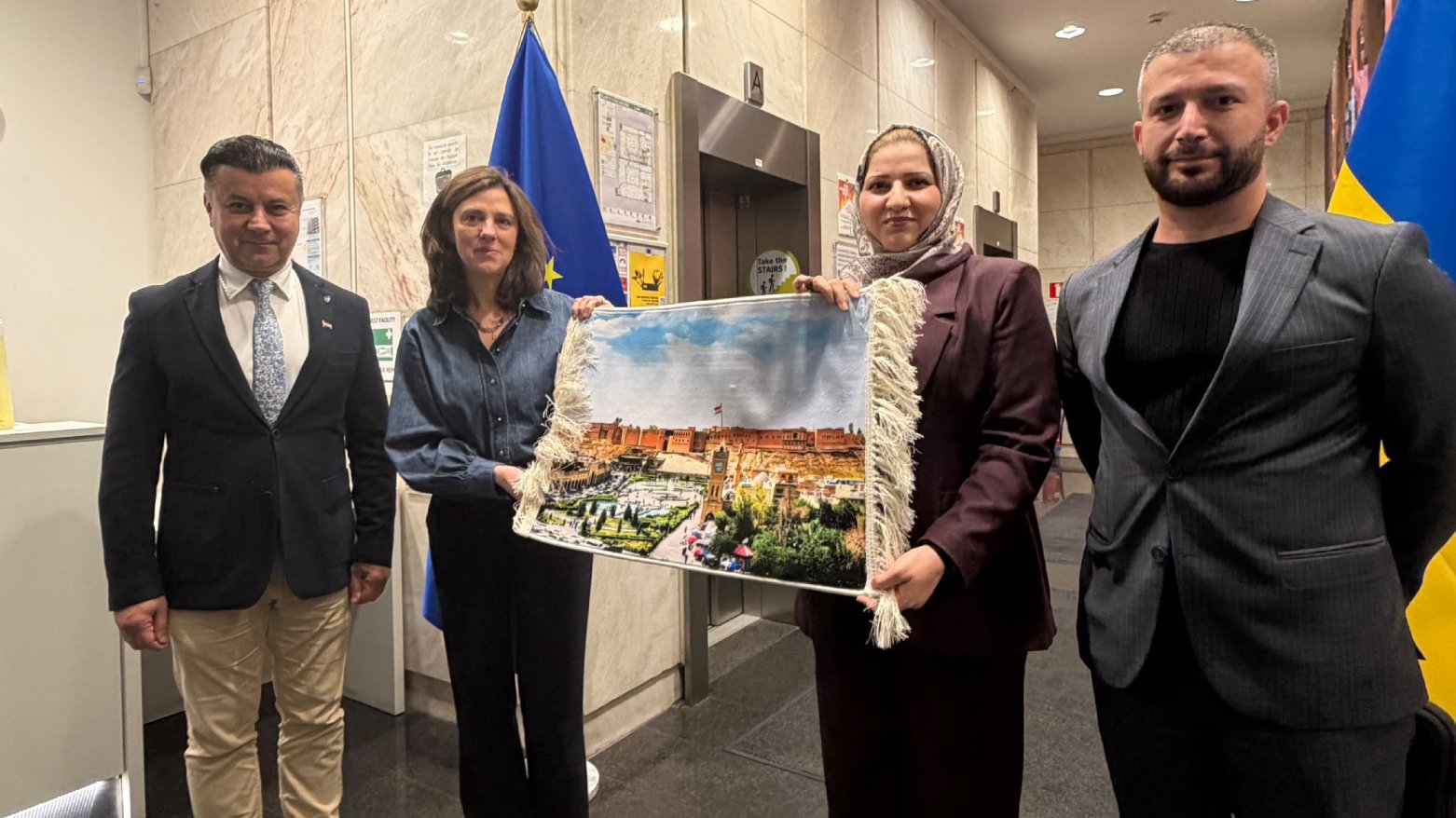
ERBIL (Kurdistan24) – A delegation from the Kurdistan Region has visited two key European Union (EU) institutions in Brussels to strengthen cooperation in humanitarian assistance, crisis management, and disaster response.
The delegation included Delavar Ajgeiy, the Kurdistan Regional Government’s (KRG) representative to the EU, and Srwa Rasoul, director general of the Joint Crisis Coordination Center.
During a visit to the EU’s humanitarian aid headquarters, the delegation met with the deputy director responsible for humanitarian assistance in the Middle East and Africa. Discussions focused on the importance of continued EU support for refugees and internally displaced people (IDPs) living in the Kurdistan Region.
The delegation also called for sustained European humanitarian assistance to help the region address the challenges and pressures associated with hosting displaced populations.
On the same day, the officials visited the EU Emergency Response Coordination Centre (ERCC) to learn about its operational mechanisms, coordination systems, and modern approaches to managing crises and disasters.
The discussions highlighted the role of advanced technology and information and monitoring systems in improving responses to natural and human-made emergencies, including floods, earthquakes, and displacement crises.
Both sides also emphasized the potential for expanded cooperation in exchanging expertise, adopting technological advances, strengthening institutional capacities, and improving preparedness for emergencies.
The visit aims to deepen institutional ties between the Kurdistan Region and the EU while enhancing the region’s capacity to coordinate humanitarian assistance and respond more effectively to crises and disasters.