KDP Official Says Iraq Budget Draft 'Punishes' Kurdistan Region
KDP Politburo member Hemin Hawrami called Iraq's latest draft budget the country's worst and urged Kurdish lawmakers to unite against its passage.
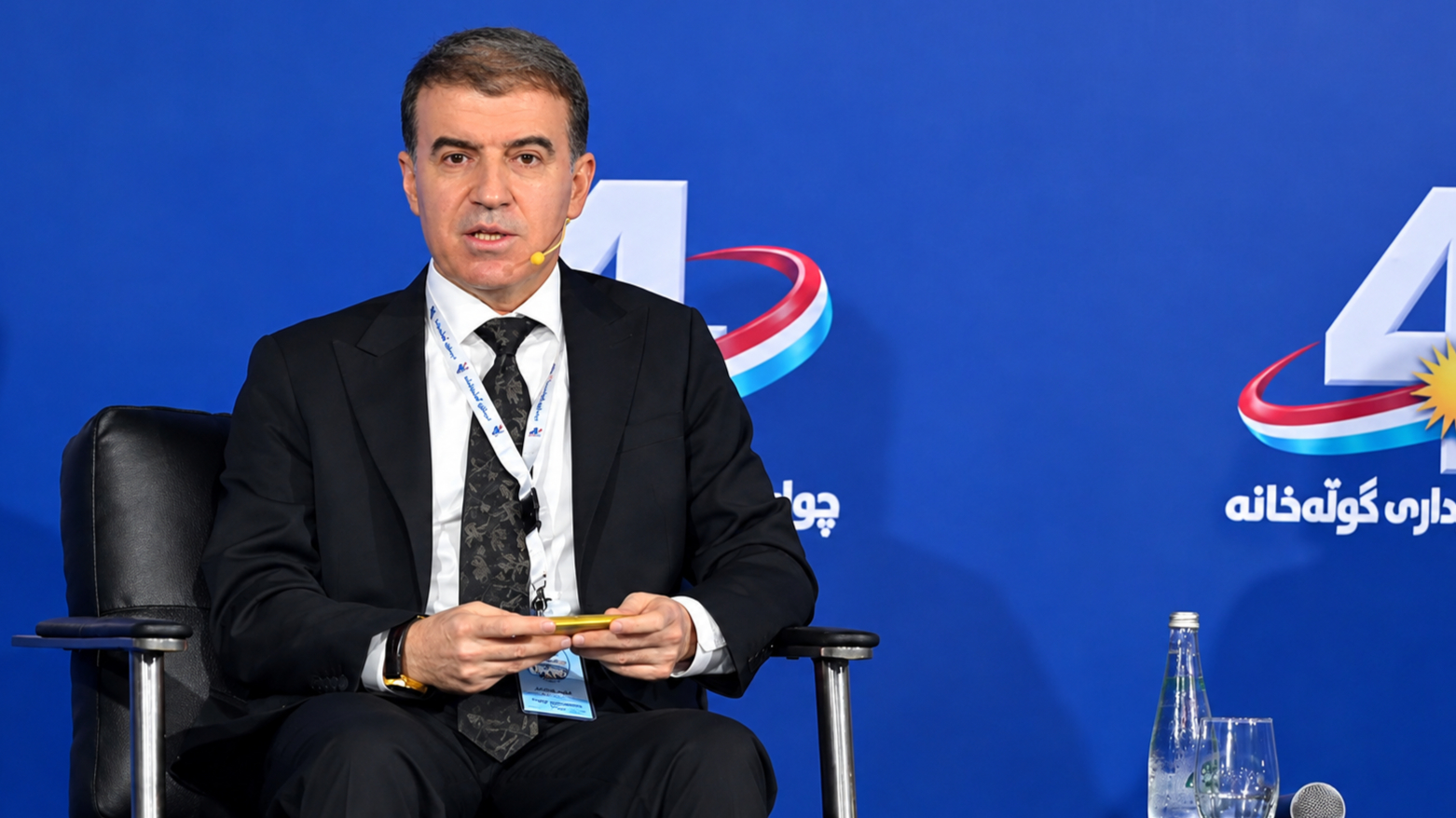
ERBIL (Kurdistan24) - Hemin Hawrami, a member of the Kurdistan Democratic Party Politburo, sharply criticized Iraq's latest draft budget on Saturday, describing it as the "worst" in the country's budget-making history and calling on Kurdish lawmakers in Baghdad to form a united front against its passage.
Speaking at the Fourth Gulakhana Meeting on Oct. 24, Hawrami said information from the Kurdistan Region's negotiating delegation indicated that technical talks over the budget had effectively reached an impasse.
"According to the latest information from the negotiating delegation, the draft prepared for this year is the worst draft budget in the history of Iraq's budget-making process," he said.
Hawrami argued that the draft amounted to punishment of the Kurdistan Region and said the latest meeting of the Kurdistan Regional Government Council of Ministers had concluded that further technical negotiations alone would not resolve the dispute.
His description of the budget as punitive reflected his political assessment; the source material does not include a response from the federal government or details of the draft's specific provisions.
Hawrami called on Kurdish representatives in the Iraqi parliament to establish what he described as a Kurdistani alliance to prevent the budget from passing in its current form.
The budget dispute formed part of a broader argument by Hawrami about pressures facing the Kurdistan Region, including constitutional questions, relations with Baghdad and instability across the wider Middle East.
He warned that efforts to amend the Iraqi Constitution could affect the federal status of the Kurdistan Region.
"The current efforts to amend the Iraqi Constitution are intended to target the Kurdistan Region's federal status," Hawrami said, urging political parties in the Region to develop a common position on protecting its constitutional status.
He also raised concerns over Article 140 of the Iraqi Constitution, saying senior Iraqi officials did not recognize the provision and believed it had expired.
According to Hawrami, those officials question how Article 140 can now be implemented.
The source material does not identify the officials he was referring to or provide their response.
Hawrami also tied domestic political questions to the need to restore the Kurdistan Region's own institutions.
He said the results of the Oct. 20, 2024, Kurdistan parliamentary election should be implemented and constitutional institutions re-established.
"The election results must be acted upon and the constitutional institutions must be re-established, because failure to do so will increase the threats facing the Kurdistan Region," he said.
Beyond Iraq, Hawrami devoted part of his remarks to changes in the global political order.
He argued that the post-Cold War period of U.S.-dominated unipolarity had ended and that the world was moving toward an uncertain multipolar system.
Hawrami said international influence could no longer be measured only through military strength, pointing instead to economic and technological power.
He cited Taiwan's role in global microchip production as an example of how technological dependence can give an actor significant international weight.
Power, he argued, is increasingly dispersed rather than concentrated solely in the United States, Europe or China, while the West is weakening and the East is gaining influence.
Hawrami also described the current international environment as one of heightened instability.
He said there were 61 active wars between states around the world and argued that international institutions had weakened while competition among major powers had intensified.
That figure was presented by Hawrami during his remarks and is not independently substantiated in the source material.
He also highlighted artificial intelligence and technological change as forces reshaping political and security calculations.
Turning to the Middle East, Hawrami said the region was experiencing crises of legitimacy, identity and sovereignty, with questions increasingly being raised about political authority and the legitimacy of those in power.
His central message, however, returned repeatedly to the Kurdistan Region.
Hawrami argued that political forces in the Region should cooperate more closely in response to disputes over the federal budget, possible constitutional changes and broader regional instability.
For him, the immediate priorities are preventing passage of what he considers an unacceptable budget, protecting the Kurdistan Region's constitutional status and restoring the Region's elected institutions.