WHO Launches First Ebola Vaccine Trial in Congo’s Bunia
WHO chief Tedros announced the first clinical trial of an Ebola vaccine in the DR Congo, where over 9,700 cases and 4,600 deaths make this the worst outbreak.
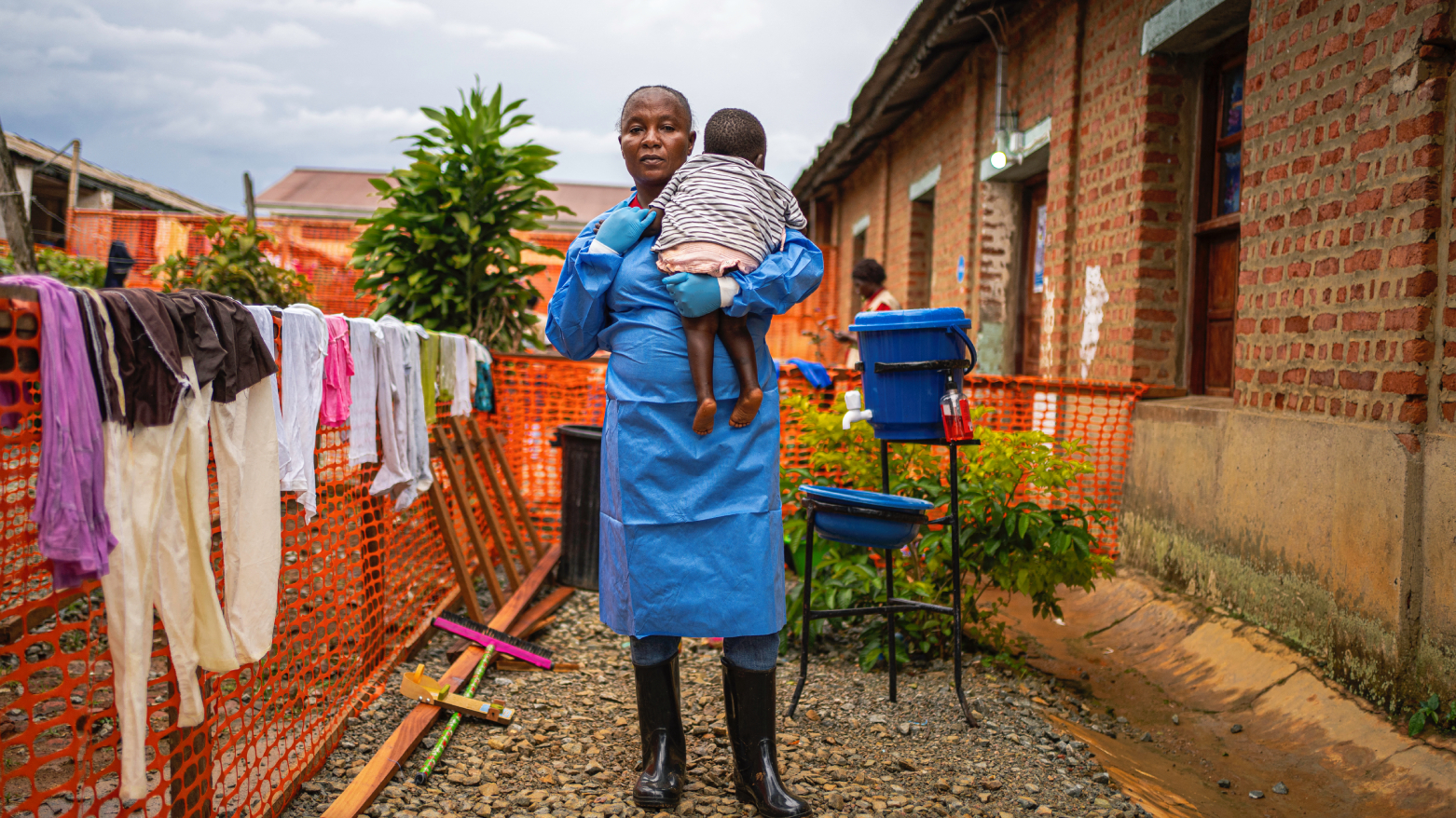
ERBIL (Kurdistan24) - World Health Organization (WHO) Director-General Tedros Adhanom Ghebreyesus announced on Friday the start of the first clinical trial of a vaccine against the Ebola virus, aimed at confronting the outbreak in the Democratic Republic of the Congo.
“Science gives us hope,” Tedros said on the social media platform X. “Today, in Bunia in the Democratic Republic of the Congo, the first participants received a vaccine in a new trial against Ebola called Tomayni, which means ‘hope’ in Swahili.”
The trial began with the first dose of the Ervebo vaccine in the city of Bunia, capital of Ituri province in the northeast of the Democratic Republic of the Congo, which is the epicenter of the outbreak.
The outbreak is the worst in the history of the Democratic Republic of the Congo. Cases have exceeded 9,700, while deaths have passed 4,600.
There are no approved vaccines or treatments against the Bundibugyo strain of the Ebola virus, which is causing the current epidemic.
Tedros said: “This trial will help us understand whether any of the candidate vaccines designed to fight the Bundibugyo virus is effective.” He added that the existing Ervebo vaccine will also be tested in parallel.
Ervebo, approved for use against the more widespread Zaire strain of Ebola, will undergo a large-scale clinical trial in the Democratic Republic of the Congo to determine whether it provides cross-protection against the Bundibugyo strain.
Tomayni is a unified experimental framework that allows the safety, efficacy and immune-response capability of several vaccines to be tested. The trial will use a “ring vaccination” approach, which involves vaccinating contacts considered most at risk of infection. It will include pregnant women and children aged 12 and above.
Preparations are also under way to include two vaccines designed specifically for the Bundibugyo strain, which are currently undergoing more limited, early-stage clinical trials. One is being developed at the University of Oxford. The other is being developed by the US group Moderna and uses messenger RNA technology.
With no approved vaccine or treatment yet available against the strain driving the outbreak, the Tomayni trial marks the first step in testing whether any candidate can offer protection.