Lula Wins Fourth Term in Brazil, Bolsonaro Seeks Vote Annulment
Brazil's Lula wins a fourth presidential term with 51.8% of the vote, while Flávio Bolsonaro disputes the runoff and vows to seek its annulment in court.
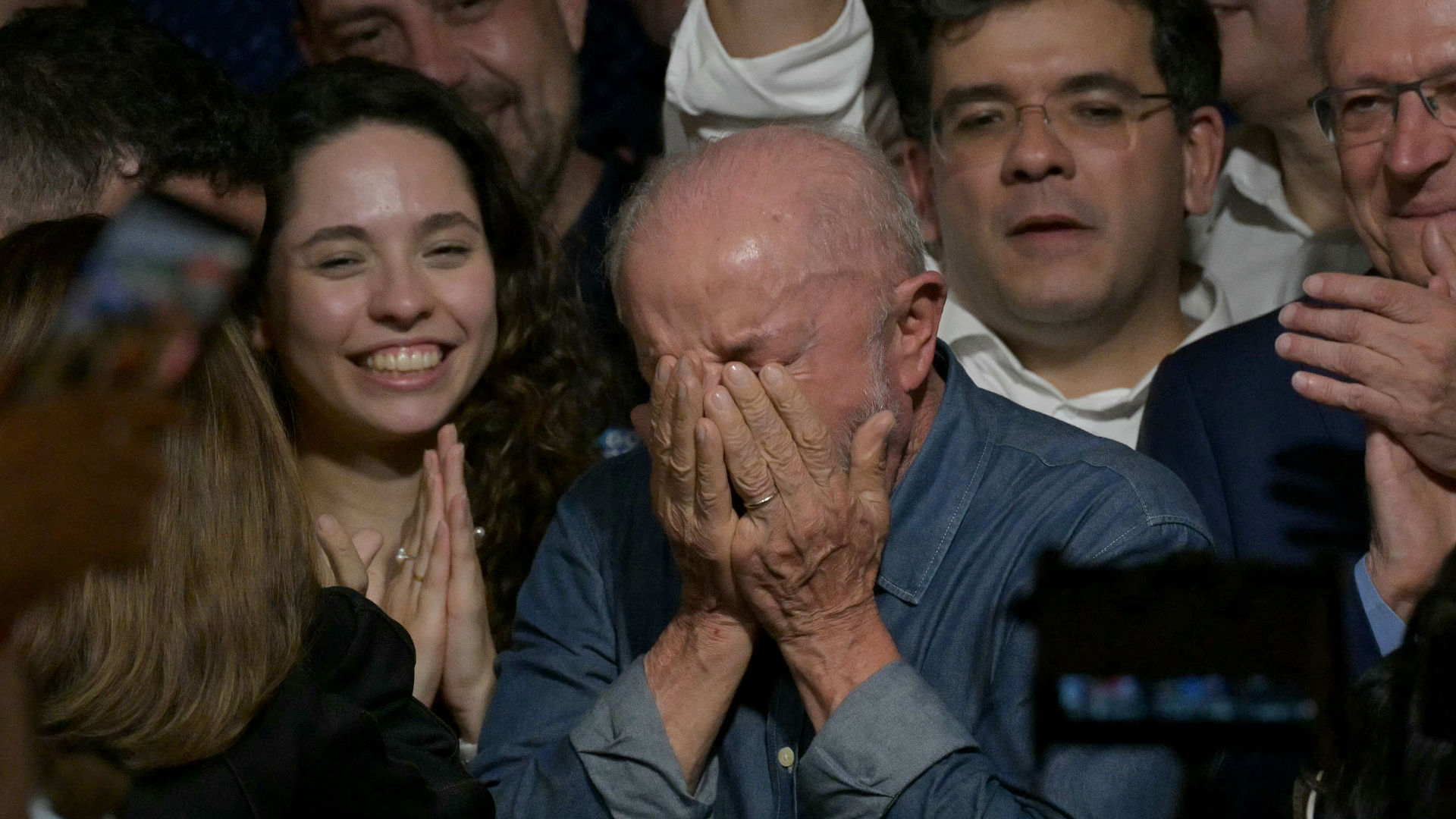
ERBIL (Kurdistan24) - Brazilian President Luiz Inácio Lula da Silva secured an unprecedented fourth term on Sunday, Oct. 25, overturning a first-round defeat to beat right-wing Senator Flávio Bolsonaro in a closely contested runoff that his opponent has refused to recognize.
Brazil's electoral court declared Lula the winner after all votes were counted. The 80-year-old incumbent secured 51.8 percent against Bolsonaro's 48.2 percent, a margin of approximately 4.4 million votes. The result gives Lula another four years in office but has also prompted his defeated rival to threaten a legal challenge.
Bolsonaro, 45, said he would seek to annul the election over a last-minute court decision to extend voting by two hours. The dispute followed a tense election day and brought renewed attention to Brazil's political divisions, four years after Bolsonaro's father, former President Jair Bolsonaro, lost to Lula.
The outcome carries implications beyond Brazil, Latin America's largest economy. Lula's victory runs against a succession of conservative electoral gains across the region, including in Argentina, Chile, Colombia and Peru, where right-wing political movements have received support from US President Donald Trump.
The result also leaves Lula facing considerable domestic opposition, with nearly half of participating voters backing Bolsonaro and a Congress dominated by the political right.
The controversy surrounding the election began shortly before polling stations were scheduled to close. Lula's campaign complained that disruptions to public transportation in several cities had prevented some voters from reaching polling stations. Flávio Bolsonaro also requested additional voting time in areas affected by heavy rainfall.
A Supreme Court decision subsequently extended voting nationwide by two hours, although the order arrived after some polling stations had already closed.
The Associated Press reported that at one location in Rio de Janeiro, voting machines had been switched off and could not be restarted. It remained unclear how many ballots were cast during the additional hours.
Despite having requested an extension in certain areas, Bolsonaro condemned the nationwide decision as unacceptable and called it a "dirty trick."
Speaking in Brasília after the result was announced, he rejected the outcome and declared his intention to request that the election be annulled. The electoral court's official count nevertheless confirmed Lula's victory.
Lula, who turns 81 on Tuesday, attributed his comeback to voters who had mobilized in defense of democracy. Addressing supporters, he pledged to govern the entire country, including those who had voted against him.
The victory was particularly notable because Bolsonaro had led the first round by more than 2.2 million votes. According to Agence France-Presse (AFP), no candidate who finished behind in the opening round had recovered to win the presidential runoff since Brazil restored direct presidential elections in 1989.
Following that setback, Lula's Workers' Party intensified its public rallies and online campaigning. Supporters organized large demonstrations against the return of Bolsonaro family rule, while the campaign expanded its presence across social media platforms.
Digital outreach became central to the contest, including a WhatsApp network established by lawmaker André Janones that attracted approximately 10.8 million followers during the second-round campaign.
Voter participation also improved. The abstention rate fell from 21 percent in the first round to 19 percent in the runoff, according to AFP.
The campaign brought disagreements over the influence of technology companies. Lula's team accused Meta, which owns WhatsApp, Facebook and Instagram, of favoring Bolsonaro through algorithmic manipulation.
Meta rejected the allegation but acknowledged that technical problems had mistakenly deactivated some advertisements belonging to Lula's campaign. Following his victory, Lula called for greater regulation of social media companies.
Celebrations erupted across Brazil as the results became clear. Thousands of supporters wearing the red colors of Lula's Workers' Party gathered along São Paulo's Paulista Avenue, while fireworks and car horns accompanied celebrations in Rio de Janeiro.
Lula joined supporters from a vehicle, speaking through a megaphone and thanking them for their efforts.
AFP correspondent Esteban Rojas reported that many supporters regarded the result as a defense of democratic institutions.
Anna Zanatta, 43, who grew up during Brazil's military dictatorship, described the victory as a moment of relief and celebration. She associated Lula's reelection with the preservation of freedoms established after military rule ended in 1985.
Other demonstrators celebrated the defeat of a candidate who had promised to secure the release of his imprisoned father.
Jair Bolsonaro, who governed Brazil from 2019 to 2022, is serving a 27-year prison sentence for attempting a coup following his electoral defeat to Lula.
His son presented himself during the campaign as a more moderate conservative alternative, attracting support from established right-wing voters and Brazilians frustrated with the incumbent administration.
Those frustrations remain substantial despite improvements in several economic indicators under Lula.
His administration has overseen reductions in inflation and unemployment and policies that have lifted millions of people out of hunger. Nevertheless, many voters continue to struggle with household expenses and concerns about public security.
In Rio de Janeiro, Tereza Cristina Ramos, a 68-year-old retiree who supported Bolsonaro, told AFP that everyday necessities had become increasingly difficult to afford, with meat beyond the reach of many households.
Lula's political career has included earlier presidential terms beginning in 2003, reelection in 2006 and a return to power following the 2022 election.
He was previously imprisoned for more than 18 months in connection with corruption proceedings, but the charges against him were subsequently annulled on procedural grounds.
He will now enter another term facing a right-dominated Congress, which could complicate efforts to advance his political agenda. By the time the term ends in 2030, Lula will be 85.
International reactions to the election crossed ideological lines.
Mexico's left-wing President Claudia Sheinbaum congratulated Lula and welcomed the outcome as a victory for democracy. Chilean President José Antonio Kast and Ecuadorian President Daniel Noboa, both politically aligned with the right, also offered congratulations while emphasizing continued regional cooperation.
European Commission President Ursula von der Leyen welcomed Lula's reelection on Monday, describing it as a victory for democratic governance and multilateral cooperation. She expressed the European Union's commitment to maintaining close relations with Brazil on international trade, climate policy and the rules-based global order.
Relations with Washington also featured prominently in the campaign. Lula presented national sovereignty as a central issue in response to commercial and diplomatic pressure from the Trump administration.
For Lula, the immediate challenge is governing a deeply divided country while his defeated rival contests the legitimacy of the election. Bolsonaro has announced his intention to seek annulment, but no judicial decision invalidating the result has been reported.
(With reporting from AFP correspondents Facundo Fernández Barrio, David Salazar, Lucia Lacurcia and Esteban Rojas, and The Associated Press.)