Syria Reopens Jordan Border Crossing as Neighbors Seek to Ease Tensions
Amman expresses regret over civilian deaths in airstrikes that Damascus condemned as a violation of its sovereignty
ERBIL (Kurdistan24) — Syria reopened its main border crossing with Jordan on Wednesday as the two countries moved to ease tensions following Jordanian airstrikes in southern Syria that Damascus said killed seven people, including three children.
The reopening of the Nassib crossing, known as Jaber on the Jordanian side, followed diplomatic efforts to contain the fallout from the strikes, which marked the most serious dispute between the neighbors since the ousting of longtime Syrian ruler Bashar al-Assad in December 2024.
Mazen Alloush, a senior Syrian customs official, told the state news agency SANA that passenger and commercial traffic through the crossing would return to normal from Wednesday morning.
Jordan sought to defuse the dispute on Tuesday, reaffirming its respect for Syria and expressing sorrow over civilian casualties. The diplomatic outreach came after Damascus accused Amman of violating Syrian sovereignty through strikes carried out in response to a deadly gun attack on a church in Jordan.
In a joint statement, Jordanian Foreign Minister Ayman Safadi and his Syrian counterpart emphasized Jordan's “full respect for Syria's sovereignty... and security,” while expressing “sorrow and grief over the death of innocent civilian victims.”
The two ministers also discussed the strikes against locations identified in the statement as sites belonging to the Islamic State (ISIS) group, also known as Daesh.
Jordanian government spokesman Mohammad al-Momani said preliminary assessments indicated that more than 20 ISIS fighters had been killed and a large weapons depot belonging to the group destroyed.
Amman maintained that the operation had been coordinated with Damascus, but Syrian authorities denied that prior coordination had taken place.
Syria's Foreign Ministry condemned the strikes as an “unacceptable violation” of its airspace, describing them as a breach of national sovereignty and the principles of good-neighborliness.
The Syrian Civil Defence agency reported that seven people were killed in the raids. Five victims, including a woman and three children, died in the village of Al-Taf in Daraa province, near the Jordanian border, while two others were killed elsewhere in southern Syria.
“We were asleep when the missile hit us. My mother, my older brother and his three children — two boys and a girl — were killed,” Nassouh al-Salim told AFP in Al-Taf.
An AFP reporter saw a large crater in the family's destroyed home, with schoolbooks, clothing and furniture scattered across the rubble.
Syrian Emergencies and Disaster Management Minister Raed al-Saleh said Tuesday that the dispute was being addressed through diplomatic and legal channels, with the aim of securing justice for the victims.
A government source told SANA that a joint Syrian-Jordanian security committee would meet in the coming days to discuss operations against ISIS, signaling that security cooperation could continue despite the disagreement over the airstrikes.
The dispute followed a deadly attack last week in which gunmen opened fire during a funeral service at a Greek Orthodox church in Jordan's Karak governorate, killing nine people and wounding 25.
Jordanian authorities said on Monday they had arrested three Jordanians suspected of involvement in the attack. Two of the suspects are brothers, while the third is related to them by marriage. Authorities said the suspects were hospitalized after being wounded in a shootout with security forces.
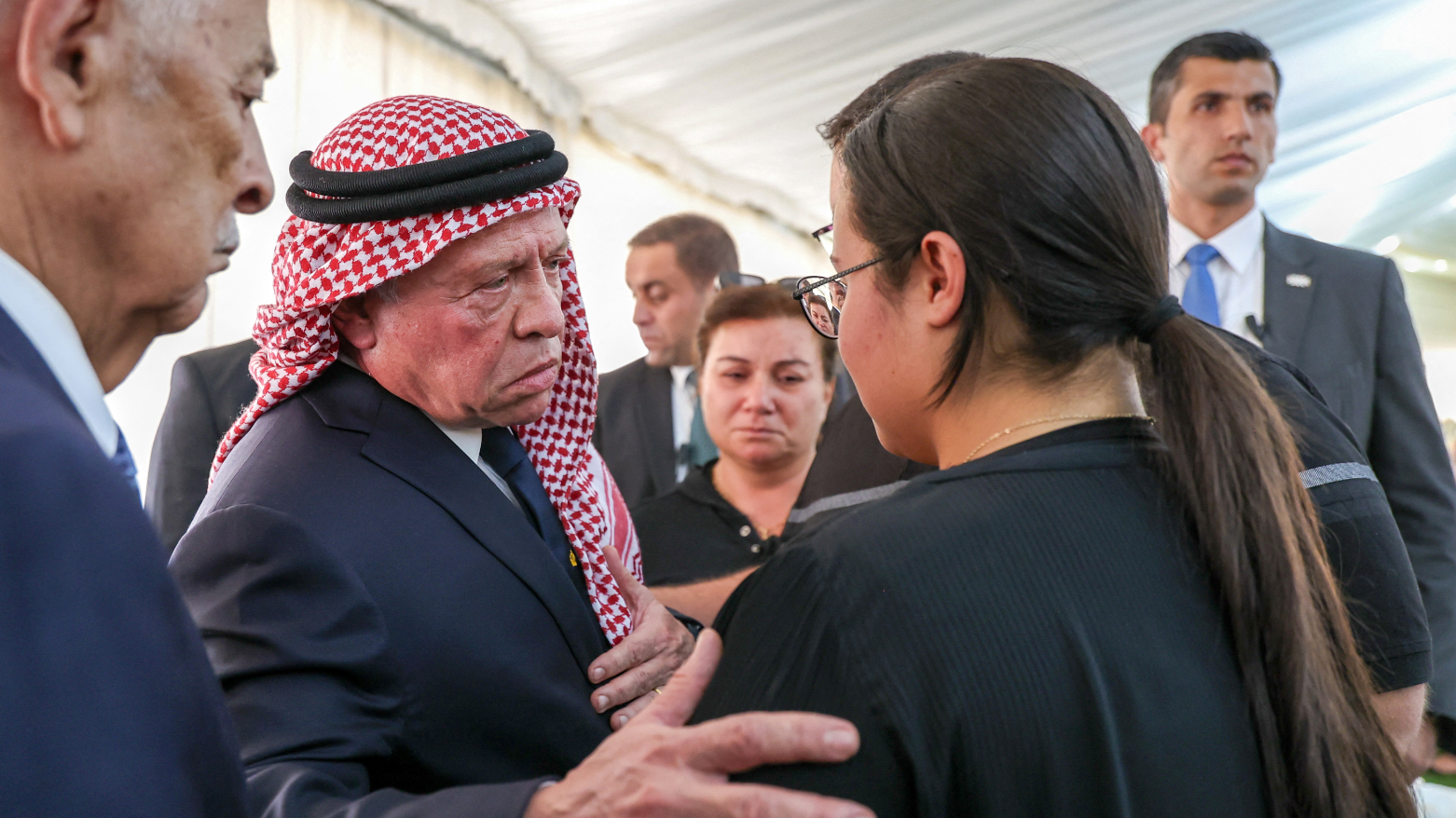
Jordanian King Abdullah II vowed that those responsible would face justice, saying that “no proponent of dark ideologies that divide Jordanians will be tolerated.”
The attack struck a community in Karak, which has a significant Christian population in the predominantly Muslim country. Christians account for an estimated two to three percent of Jordan's population.
The Islamic State group lost its territorial stronghold in Syria in 2019, but remnants remain active and periodically claim attacks, primarily against Syrian security forces.
The group has also operated in parts of Daraa province, underscoring the continuing security challenges along the Syrian-Jordanian border.
The reopening of the crossing and plans for renewed security talks suggest that both governments are seeking to prevent the dispute from escalating, even as questions remain over civilian casualties and the coordination of cross-border military operations.