What Do Israel’s Exit Polls Show for Netanyahu and Opposition?
Israel exit polls give the opposition 52 Knesset seats to Netanyahu’s 50, with Likud largest. Eisenkot cites 'complete lack of confidence in the premier'.
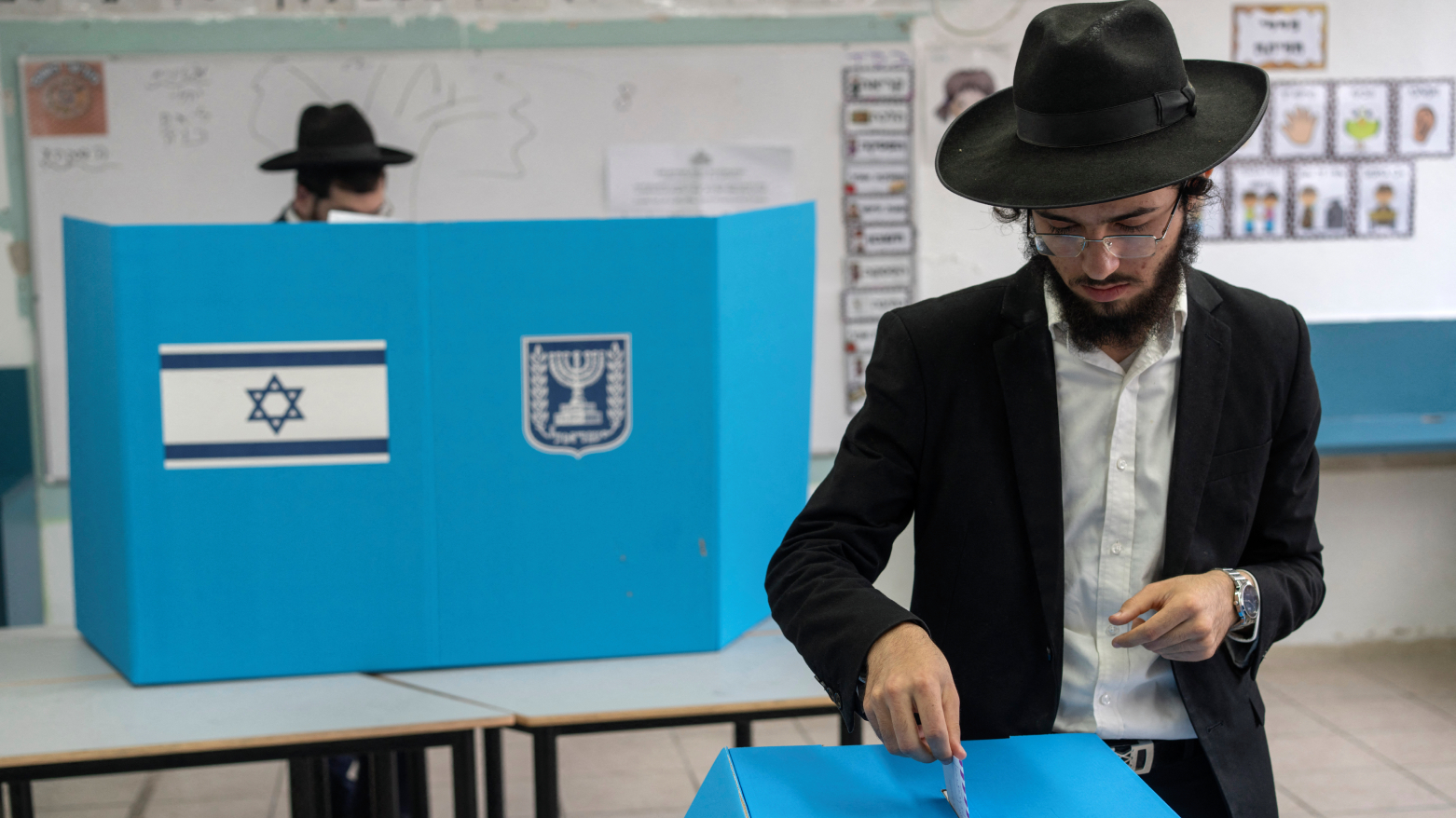
ERBIL (Kurdistan24) - The first exit polls from Israel’s elections gave the opposition bloc a slight edge over Prime Minister Benjamin Netanyahu’s camp as voting ended on Tuesday, but left it short of an outright majority in the 120-seat Knesset.
The country’s main pollsters, Channels 11, 12, and 13, projected that the opposition bloc would win 52 or 53 seats and Netanyahu’s bloc 50. Netanyahu’s Likud would nonetheless be the largest single party in parliament, with 24 or 25 seats.
In the last election, Likud won 32 seats, which enabled it to cobble together a coalition with smaller far-right parties after Netanyahu’s traditional allies balked at the corruption cases the prime minister was facing.
This time, those mainstream right-wing parties have by and large vowed to work with main challenger Gadi Eisenkot’s Yashar party to form an opposition coalition capable of unseating Netanyahu.
The exit polls also showed gains for Israeli Arab parties, whose voter base turned out in high numbers. The two Arab-majority groupings, Raam and the Joint List, are projected to win 17 or 18 seats between them.
Raam and the Joint List do not belong to the opposition bloc, but they have expressed openness to supporting it. Tuesday’s poll was marked by high turnout, with many voters saying they saw it as pivotal for the country’s future.
After the poll results were released, Eisenkot, the main election challenger to Netanyahu, said the initial exit polls from the pivotal vote showed a “complete lack of confidence” in the veteran premier.
“The initial exit poll results indicate a complete lack of confidence in Netanyahu and the October 7 government,” Eisenkot said.
Israel’s current opposition chief, Yair Lapid, said Netanyahu’s bloc had suffered a “crushing defeat.”
Left-wing leader Yair Golan said the public had “fired the Netanyahu government.”
Tuesday's poll was marked by high turnout, with many voters saying they saw it as pivotal for the country's future.
The following is a party-by-party breakdown of the projected seat count in the first exit polls:
Pro-Netanyahu camp -
Likud, right-wing, led by Benjamin Netanyahu: 24 or 25
Otzma Yehudit, far-right, led by Itamar Ben Gvir: 6 or 7
United Torah Judaism, Ashkenazi ultra-Orthodox, led by Yaakov Asher: 6 or 7
Shas, Sephardic ultra-Orthodox, led by Aryeh Deri: 6 to 8
Religious Zionism, far-right, led by Bezalel Smotrich: 6
Opposition camp -
Yashar, centrist, led by Gadi Eisenkot: 21 to 23
Beyahad, centre-right, led by Naftali Bennett: 12 to 14
The Democrats, left-wing, led by Yair Golan: 9 or 10
Yisrael Beiteinu, secular right, led by Avigdor Lieberman: 7 to 9
Arab parties -
Raam, moderate Islamist, led by Mansour Abbas: 7
Joint List, far-left, led by Yousef Jabareen: 10 or 11