Netanyahu's Bloc Leads Israel Election Count but Falls Short of Majority
Eisenkot vows to form a government as Arab parties emerge as potential kingmakers in a tight race
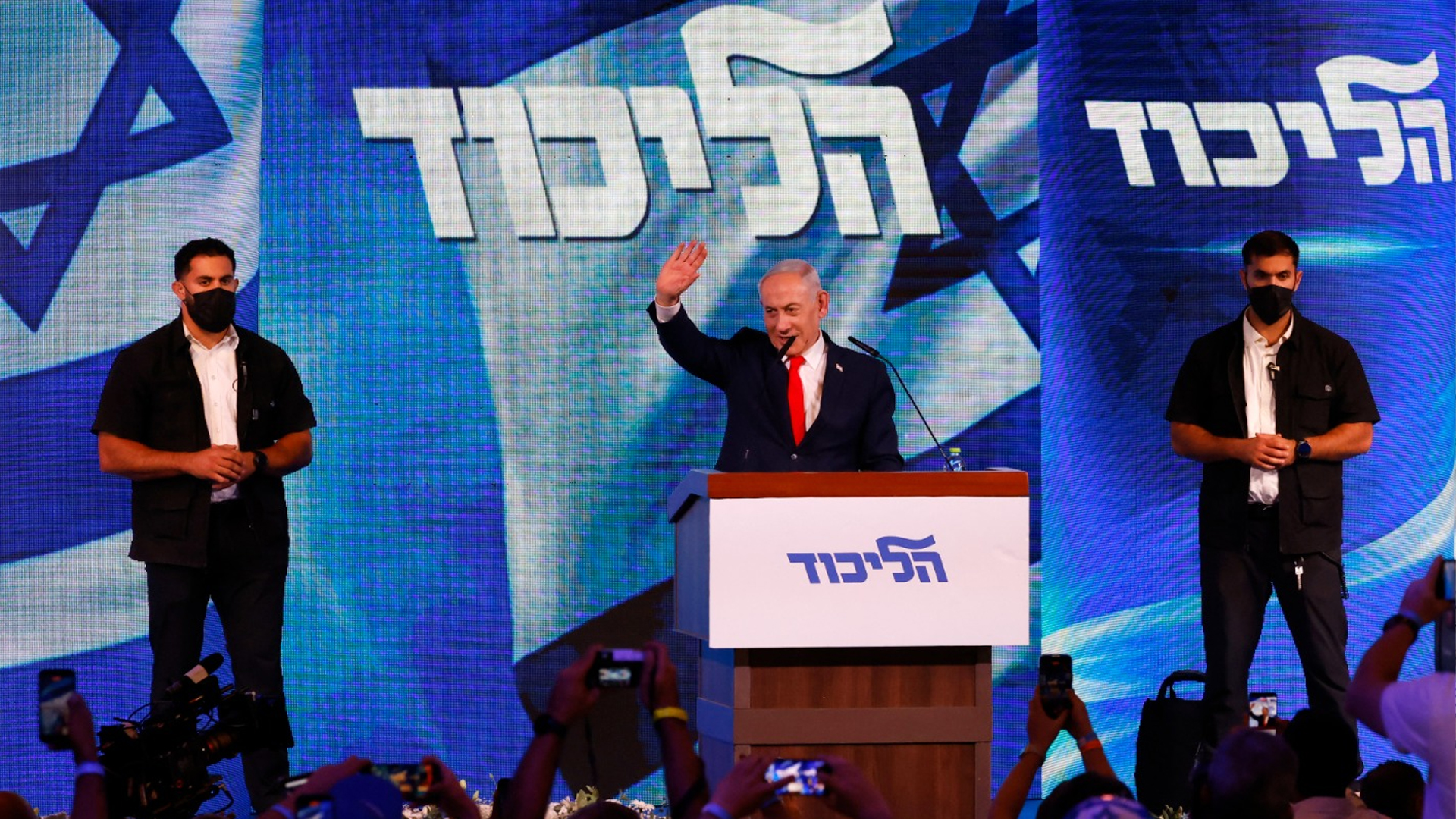
ERBIL (Kurdistan24) — Israeli Prime Minister Benjamin Netanyahu's Likud-led bloc secured 55 seats in the latest election count, falling short of a parliamentary majority, while opposition leader Gadi Eisenkot's bloc won 49 seats, leaving Arab parties with 16 seats in a potentially decisive position.
The results point to a difficult coalition-building process, with neither major bloc securing the 61 seats needed for a majority in Israel's 120-seat parliament, the Knesset.
Although the Arab-led parties oppose Netanyahu, opposition lawmakers have repeatedly ruled out forming a government with them, complicating Eisenkot's path to power.
Eisenkot, a former Israeli military chief of staff seeking to end Netanyahu's long tenure, declared early Wednesday that voters had chosen change and pledged to move quickly to form a new government.
“The people have spoken against the continuation of Netanyahu's rule,” Eisenkot told supporters, adding that another election would be a mistake given the high turnout.
He also warned Netanyahu against using security concerns for political purposes, amid the prime minister's intensified warnings during the final days of the campaign that Israel could launch another attack on Iran.
“Netanyahu, don't you dare use Israel's security for your political needs,” Eisenkot said.
Exit polls initially gave the opposition bloc a narrow advantage on Tuesday night, but subsequent projections shifted, with major Israeli television networks eventually showing the two camps on roughly equal footing.
The latest count placed Netanyahu's bloc ahead in seats, while leaving the broader opposition with a potential numerical advantage if Arab parties were included.
Ofer Cassif, a lawmaker from the Joint List, said the results meant Eisenkot's bloc faced a choice between pursuing a government arrangement or risking another election.
“More elections would be a gift to Netanyahu. The ball is in the hands of the change bloc,” Cassif told Army Radio.
The election, the first general vote since Hamas's Oct. 7, 2023, attack on Israel, recorded turnout of 77.7 percent, the highest since 1999.
Netanyahu's political future was at stake as opponents continued to blame his government for the security failures surrounding the attack and for refusing to establish an independent commission of inquiry.
At Eisenkot's election-night gathering in Tel Aviv, supporters initially celebrated the early exit polls before uncertainty grew as the projections changed.
“I have a lot of hope, and if Gadi doesn't become prime minister, it will undoubtedly be very difficult,” said Noa Ayal, a 31-year-old soldier who said she had completed more than 360 days of reserve duty.
Ohad Ben Ami, a former hostage held in Gaza, criticized the government over the Oct. 7 attack and the handling of efforts to secure the hostages' release.
“Three years ago, the government abandoned us,” he said, arguing that an Israeli citizen should never have spent a year and a half in Hamas tunnels while potential deals for securing the hostages' release remained available.
Netanyahu, meanwhile, addressed supporters in Jerusalem after keeping them waiting until after 3 a.m. Wednesday. He vowed to form a government but stopped short of directly declaring victory, as his supporters remained hopeful that the final results would favor Likud.
Some Netanyahu supporters argued that a change in government would be risky amid the ongoing regional conflict and the need to maintain close ties with Washington.
The election outcome leaves Israel facing prolonged coalition negotiations, with the Arab parties' seats potentially determining whether Eisenkot can assemble a governing majority.
However, opposition divisions over cooperation with Arab lawmakers remain a major obstacle.
With neither bloc holding the numbers required to govern independently, the coming negotiations will determine whether Eisenkot can translate the opposition's combined strength into a viable government or whether Israel faces another election.