Kurdistan Region Strengthens Security Coordination with Baghdad, Advances Weapons Control
Interior Minister Rebar Ahmed highlights intelligence cooperation with Iraq’s federal government as Erbil continues efforts to regulate unlicensed weapons and preserve regional stability
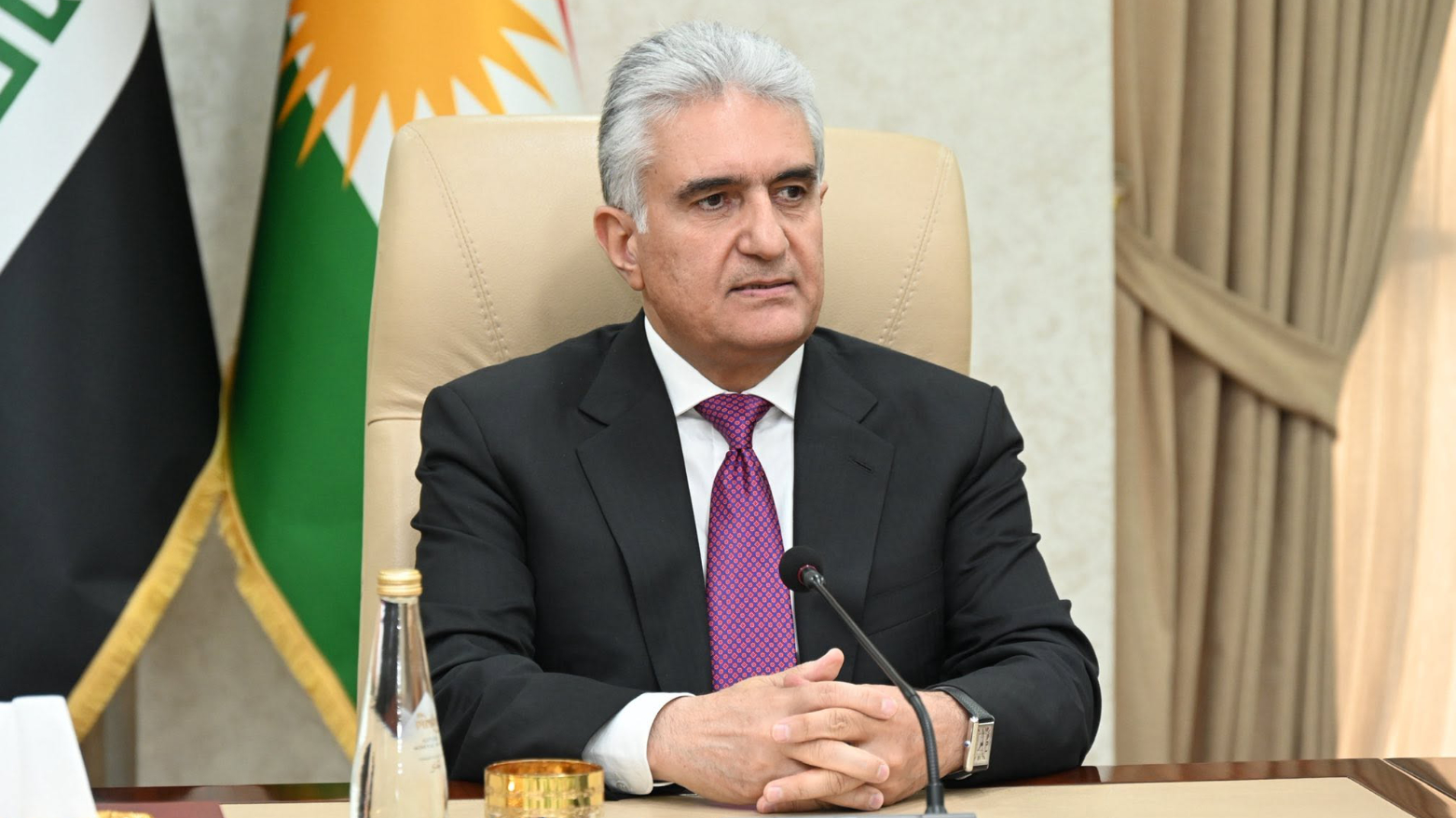
ERBIL (Kurdistan24) — The Kurdistan Region continues to strengthen security and intelligence cooperation with Iraq’s federal government while advancing efforts to regulate unlicensed weapons, Interior Minister Rebar Ahmed said on Thursday, highlighting Erbil’s commitment to public safety, institutional coordination, and regional stability.
Speaking to the Iraqi state-owned News Agency (INA), Ahmed said security and intelligence coordination between Erbil and Baghdad remained ongoing, particularly following the completion of the formation of the new federal government and parliamentary approval of the interior and defense ministers.
“Joint coordination with Baghdad is continuing,” Ahmed said, adding that the Kurdistan Regional Government (KRG) maintained good relations with federal security and intelligence institutions.
The minister also reaffirmed that the Kurdistan Region’s campaign to control and regulate weapons was proceeding under a dedicated regional law, while the KRG continued to participate actively in Iraq’s Higher Committee for Weapons Control.
The initiative forms part of broader efforts to strengthen the rule of law, reduce the risks associated with unlicensed firearms, and ensure that weapons are regulated through legal and institutional mechanisms.
Kurdistan Region prioritizes security and stability
The Kurdistan Region has maintained a distinct security environment within Iraq, supported by its regional security institutions, coordination among official agencies, and continued efforts to prevent instability.
Erbil and other major cities in the Region have remained important centers for diplomatic missions, international organizations, businesses, and investment, making public safety a central priority for the KRG.
Unlike several other parts of Iraq, where the presence of armed factions operating outside the full control of state institutions remains a significant security and governance challenge, the Kurdistan Region’s security framework is built around its recognized governmental and security institutions.
Maintaining that framework and preventing the proliferation of unauthorized weapons remain important elements of the Region’s approach to public order.
The KRG’s latest weapons-control efforts are intended to reinforce that approach by bringing firearms under a clearer legal framework and strengthening the authorities’ ability to regulate their possession and use.
Since last year, the Ministry of Interior has expanded its campaign to register and regulate weapons held by civilians. The ministry has established several registration centers and set a designated period for the surrender of heavy and medium weapons, seeking to reduce the risks associated with unauthorized armaments and improve community safety.
The campaign complements the KRG’s broader security policies and aligns with efforts by Iraq’s federal government to bring weapons under the authority of official institutions.
Erbil and Baghdad expand security cooperation
Security and military coordination between Erbil and Baghdad has also made progress in recent years, particularly in addressing security gaps in disputed territories outside the Kurdistan Region’s administration.
The two sides have established several joint operations rooms and formed two joint brigades tasked with confronting the remnants of the Islamic State (ISIS), whose activities continue to pose a security threat in parts of Iraq.
Cooperation in these areas is intended to improve intelligence sharing, coordinate operations, and prevent militants from exploiting gaps between federal and regional security forces.
The arrangements are particularly important in areas where the absence of continuous coordination between security forces could create opportunities for ISIS cells to reorganize or carry out attacks.
Ahmed’s latest remarks underscore the KRG’s intention to maintain working security relations with Baghdad while continuing to implement its own legal measures to regulate weapons and protect public safety.
For the Kurdistan Region, the combination of institutional security, weapons regulation, and cooperation with federal authorities remains central to preserving stability, protecting residents, and maintaining an environment conducive to economic activity and international engagement.