Iran Says Three Oil Tankers Caught Fire After Hitting Mines in Strait of Hormuz
IRGC claims vessels ignored warnings and used an unauthorized maritime corridor as the strategic waterway remains at the center of the conflict between Tehran and Washington
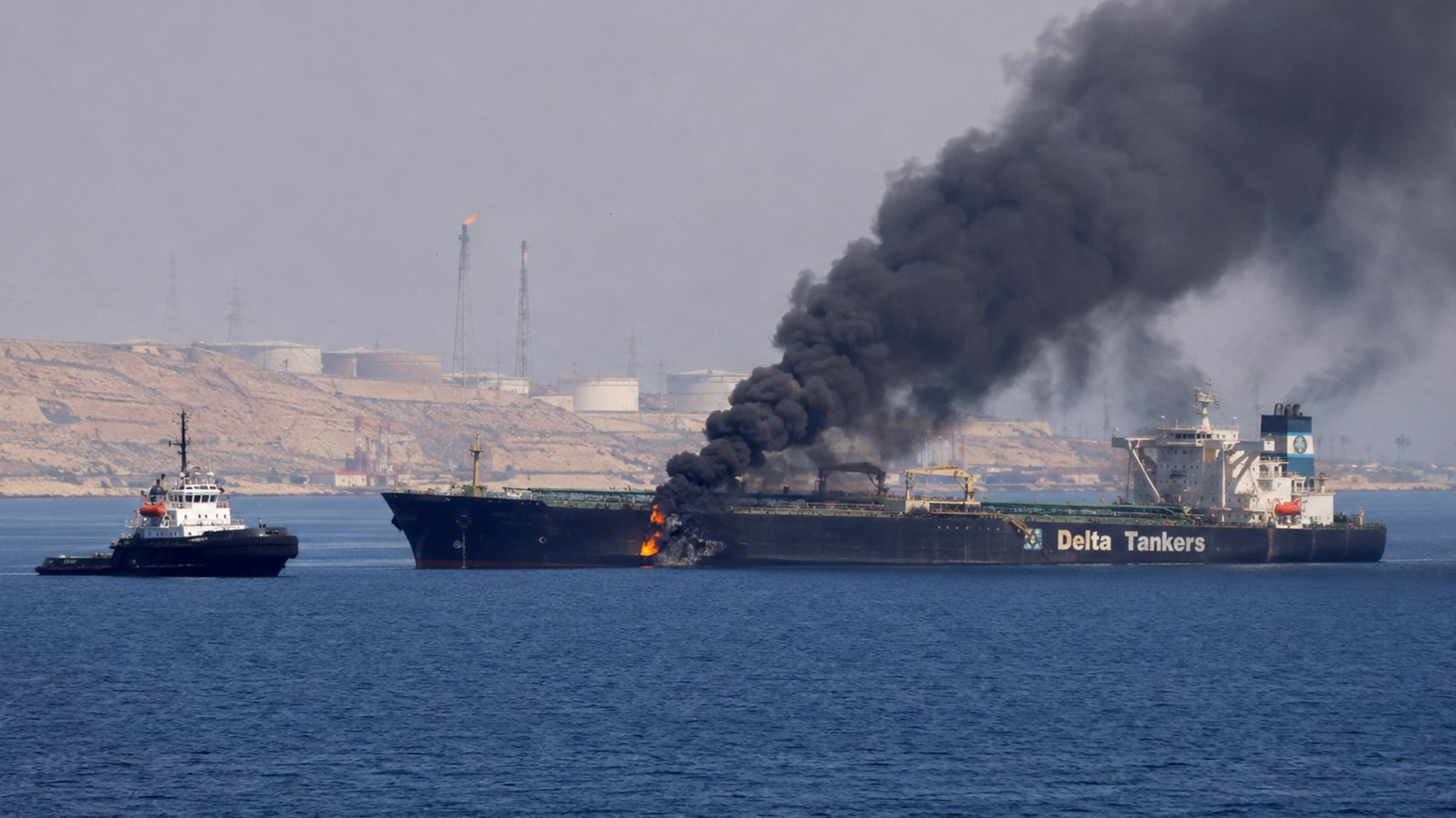
ERBIL (Kurdistan24) — Iran’s Islamic Revolutionary Guard Corps (IRGC) said on Thursday that three oil tankers had caught fire after striking mines while attempting to cross the Strait of Hormuz, though the timing of the incidents, the vessels’ identities, and the extent of any damage or casualties remained unclear.
In a statement, the IRGC said the tankers had attempted to navigate what it described as an unauthorized southern route through the strategic waterway over the previous 24 hours.
The force alleged that the vessels had switched off their radar and navigation systems and ignored warnings from the IRGC Navy before striking mines. It did not identify the ships or specify which countries’ flags they were flying.
The claims could not immediately be independently verified.
Earlier on Thursday, the United Kingdom Maritime Trade Operations (UKMTO) agency said it had received a report of a vessel on fire in the Strait of Hormuz.
The agency provided no immediate details about the cause of the fire or possible casualties, and it was not clear whether the incident involved one of the three tankers cited by Iran.
In a separate statement, the IRGC said its naval electronic warfare unit had captured a US MQM-170 reconnaissance drone during what it described as an offensive operation in the western Strait of Hormuz. The statement did not provide further details about the drone or independently verifiable evidence of its capture.
The latest claims come amid heightened military tensions between Iran and the United States, with maritime access through the Strait of Hormuz emerging as a central point of confrontation.
Strait of Hormuz at the center of the conflict
The Strait of Hormuz connects the Gulf to the Gulf of Oman and is one of the world’s most important energy transit routes. Before the current conflict, roughly one-fifth of global oil and gas consumption passed through the waterway, making disruptions to commercial shipping a major concern for energy markets and importing countries.
Since the conflict began on Feb. 28, Iran has severely restricted maritime traffic through the strait. The United States has responded by imposing a blockade on Iranian ports, further intensifying the dispute over navigation and access to the Gulf.
Iran’s armed forces have repeatedly accused US Central Command (CENTCOM) of encouraging commercial vessels to use a southern corridor near the Omani coast that Tehran considers unauthorized.
In its latest statement, the IRGC warned shipowners and crews against using that route, asserting that it had been mined. It also criticized CENTCOM’s public messaging regarding navigation through the waterway.
The allegations raise concerns over the safety of commercial vessels operating in an area where military confrontation, navigation restrictions, and competing maritime instructions have created significant risks for international shipping.
Drone claims add to military tensions
The reported capture of the MQM-170 drone follows a separate IRGC claim that its Aerospace Force intercepted and destroyed a US-made MQ-1 drone east of the Strait of Hormuz, near the coastal town of Sirik in Iran’s southern Hormozgan province.
Iranian media reported that the force described the incident as the 14th MQ-1 drone it had intercepted and destroyed. The US military had not publicly confirmed the reported loss of the drone at the time of publication.
The two claims concern different drone models and separate alleged incidents. Neither statement, on its own, establishes the circumstances of the reported events.
The developments come as Washington and Tehran remain locked in a confrontation that began with US and Israeli strikes against Iran on Feb. 28. The conflict has threatened regional security, disrupted maritime traffic, and heightened concerns over energy supplies.
Although diplomatic efforts and ceasefire initiatives have sought to halt the fighting, disagreements over Iran’s nuclear program, sanctions relief, maritime access, and the US blockade of Iranian ports continue to complicate negotiations.
Iran has proposed reopening the Strait of Hormuz as part of a broader arrangement involving the lifting of the US blockade and other measures, but the prospects for an agreement remain uncertain.
Any further attacks on commercial shipping or military assets in the strait could increase the risk of renewed confrontation and further disrupt one of the world’s most critical routes for international energy trade.