China’s Fleet Now Outnumbers US to 400
The Wall Street Journal, citing official US figures, says China’s fleet is about 35% larger than the US Navy by hull count, though the US still leads in tonnage and carriers
ERBIL (Kurdistan 24) - In 1998, a Macau-based company paid $20 million for a rusting, unfinished Soviet-era aircraft carrier abandoned in a Ukrainian shipyard, saying it wanted to turn the Varyag into a floating casino. The Wall Street Journal reported that the casino story was a ruse, and that China, whose navy had never built or operated a carrier, spent 15 years turning the hulk into a working warship.
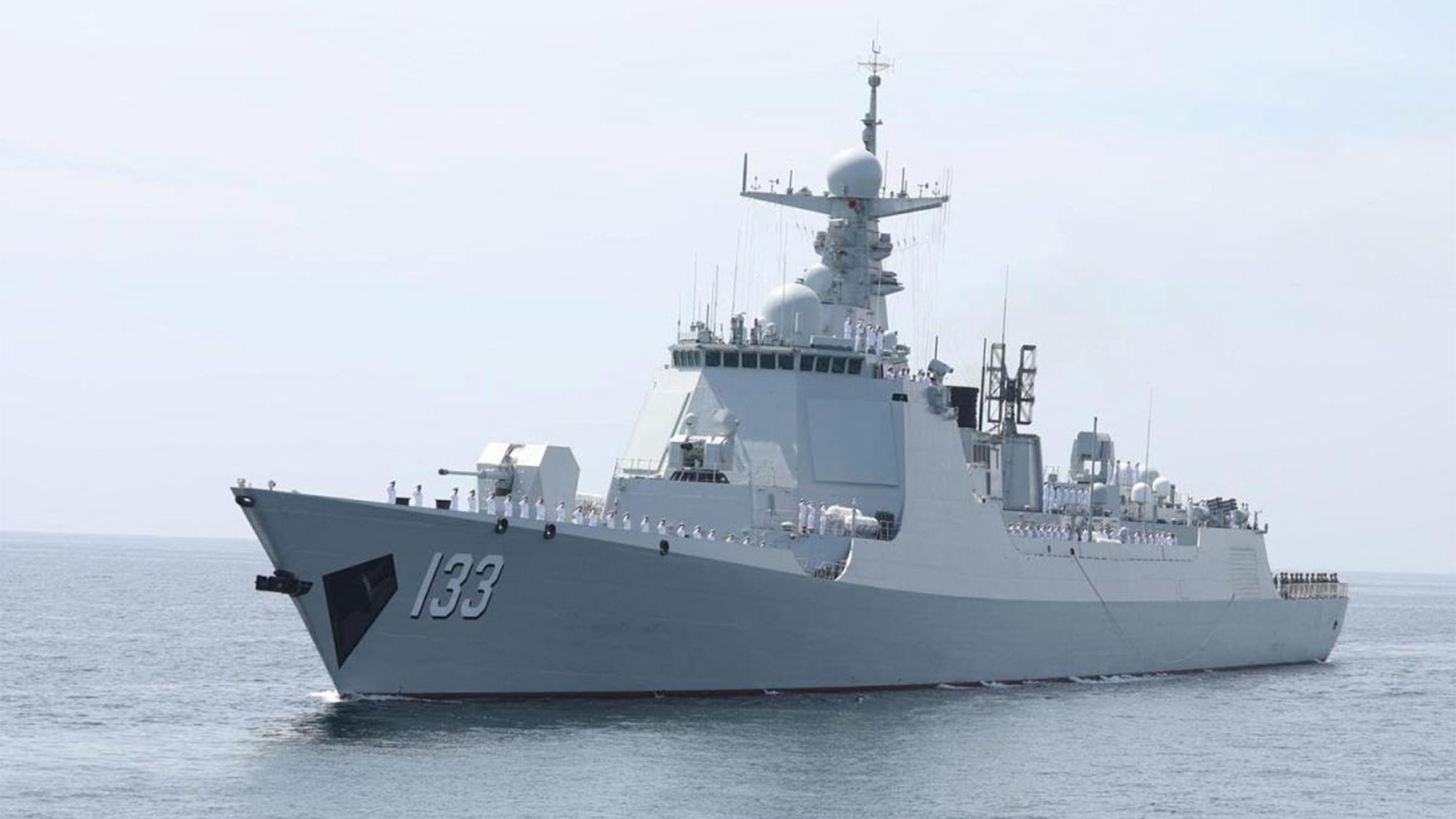
Today China has three aircraft carriers, with a fourth that Western experts believe will be nuclear-powered, and the world’s largest navy, with a battle force of more than 400 ships and submarines, according to official US numbers seen by the Journal. That would make its fleet about 35 percent larger than the roughly 290-ship US Navy by hull count, one of the largest peacetime naval buildups in modern history. The US Navy still leads by tonnage, which means its ships are bigger on average. The Pentagon’s public figure is lower: its annual report credits China with more than 370 battle force ships and projects 435 by 2030.
The buildup rests on industry. China’s shipyards produced 52.6 percent of the world’s cargo-carrying ships by gross tonnage in 2025, against 0.01 percent for the US, according to S&P Global Market Intelligence data cited by the Journal. Clarksons Research separately put China’s share of global new orders at 63 percent last year.
On Changxing Island near Shanghai, two neighboring shipyards build commercial gas carriers and container ships beside warships.
Satellite images from May 10 showed two amphibious ships, two cruisers, three destroyers and two frigates under construction or maintenance at the same time. Since 2020 China has added 71 major warships and submarines, 19 of them last year, the Journal said, citing US data.

The ships are getting bigger and sailing farther. Ten Type 055 vessels, which the US classifies as cruisers because of their size and firepower, have joined the fleet since 2020. In early 2025 one of them, the Zunyi, looped around Australia and held live-fire drills about 5,000 miles from China’s coast, forcing commercial flights to divert. In June 2025, China sent two carriers into the West Pacific at once for the first time, and a J-15 fighter from one tailed a Japanese patrol craft for 40 minutes, at one point within 150 feet. A Chinese carrier also sailed beyond the island chain that includes Guam for the first time last year. The newest carrier, the Fujian, entered service on November 5, 2025, with electromagnetic catapults, a system only the US had used before. A Pentagon report in December said China plans six more carriers by 2035 for a total of nine, against the 11 the US operates. Some analysts doubt that pace.
Analysts also noted surprises. In June, a new class of submarine, likely nuclear-powered, appeared at the Jiangnan shipyard, which was not known for building such boats, analyst Thomas Shugart told the Journal. US officials expect Chinese submarines to operate routinely in the Indian Ocean and Arctic approaches by 2040, and possibly in the Atlantic. “They’re building a world-class navy,” Shugart said.
The US is struggling to keep up. A Navy Department report said the shipbuilding budget has doubled in two decades yet the Navy has no more ships than in 2003. Programs for frigates, cruiser life extensions and littoral combat ships have foundered. Michael Studeman, who retired in 2023 as head of the Office of Naval Intelligence, said America suffers from “sea-blindness” and that Chinese leader Xi Jinping is more Mahanian than any American leader since Theodore Roosevelt, a reference to the naval strategist Alfred Thayer Mahan. Xi told party leaders in 2013 it was time to make China a “maritime great power.” President Donald Trump has said he wants future US carriers to return to steam catapults, though the Navy had received no formal order when the plan was announced in October 2025.
The core of China’s mission is the first island chain, the arc of Japan, Taiwan and the Philippines. Security officials told the Journal that about six navy ships operate around Taiwan at all times and roughly three times as many in the South China Sea. A State Department spokesman said the US will uphold freedom of navigation, and the White House said President Trump is restoring American shipbuilding. China’s Ministry of Defense did not respond to the Journal’s request for comment.