Wildlife Photographer Spots Rare Lynx in Kurdistan's Berwari Bala Area
Wildlife photographer Ahmed Edni reports a rare lynx sighting near Binavi and calls for protection as Kurdistan expands biodiversity conservation efforts.
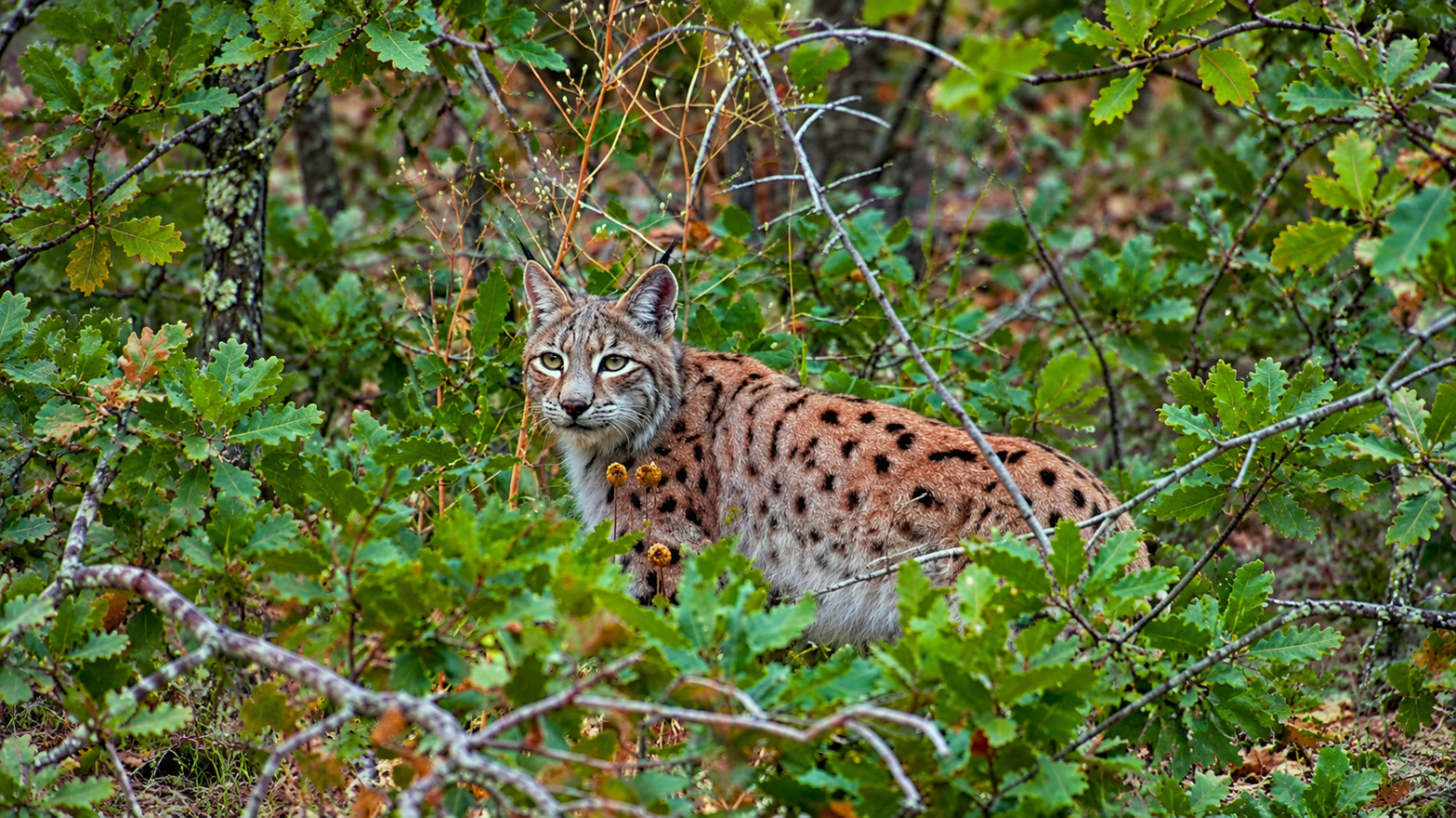
ERBIL (Kurdistan24) - A wildlife photographer from Berwari Bala has appealed to residents of the Kurdistan Region to protect a wild lynx after encountering the elusive animal near the village of Binavi, describing it as a shared natural treasure whose survival should be safeguarded.
Ahmed Edni, a wildlife photographer, said he spotted the animal on Nov. 2, 2026, while traveling to Binavi to photograph the area's natural scenery. What began as an ordinary photography trip turned into an unexpected encounter on a road running through forested terrain.
Edni said the lynx was on the main road when he approached in his car. After he stopped, the animal crossed to the other side and moved into the woodland, where it briefly remained behind a rock.
"The area there is entirely forested, but fortunately, it stopped behind a rock," he recalled. Edni said he immediately reached for his camera and tried to cross the road to get close enough for a picture, mindful of how seldom he encounters an opportunity to photograph such wildlife.
His account does not establish whether he ultimately obtained a photograph. He identified the animal as a lynx, known in Arabic as "al-Washaq"; the genus Lynx includes several species, but the precise species was not established in his statement.
More than the excitement of the encounter, Edni wanted to draw attention to the animal's vulnerability. He used his message to Kurdistan24 to urge people not to hunt or harm it.
"Through Kurdistan24 television, I appeal to citizens: the life of this animal is at risk. I hope people refrain from killing it and that it is protected, because it is a national treasure and belongs to all Kurds," he said.
The appeal comes as conservation groups, researchers and local volunteers are working to record and protect the wildlife found across the Kurdistan Region's mountains, forests and other habitats.
Documenting Kurdistan's Wildlife
On Oct. 20, Prime Minister Masrour Barzani attended the official launch of the Kurdistan Biodiversity Project, a Climate.KRD initiative of the Kurdistan Foundation, founded by Areen Masrour Barzani in 2024. The project aims to assemble scientific records of the Region's wildlife and plant life into a publicly accessible database.
Organizers reported documenting 2,252 species across 19 biodiversity hotspots in Erbil, Duhok, Sulaimani and Halabja. Those records include 1,408 plant species and 844 animal species, among them 60 mammal species, 310 birds, 63 reptiles, 48 fish, nine amphibians and 354 butterflies.
Eight scientists, field researchers and wildlife specialists are contributing observations and photographs. The information is being compiled at biodiversity.krd to support research, environmental education and conservation planning, while helping researchers track the distribution of species over time.
The project also includes plans for a dedicated scientific publication, "Mammals of the Kurdistan Region," intended to complement the digital records. Edni's sighting underscores the interest that uncommon encounters can generate, although his report alone is not a verified scientific record for the database.
Protection Beyond the Camera
Local conservation initiatives have also emphasized the importance of leaving wild animals in their natural habitats. In September, young volunteers used their own funds to release around 400 wild birds on Mount Maqloub, where repeated fires had damaged habitats. The volunteers urged hunters and visitors to help protect the birds after their release.
Another group of young people returned two Chukar partridges to the wild near Dore village in the Barzan area. Known locally as "kew," the birds have a place in Kurdish cultural traditions as well as the mountain environment.
Kurdistan24 has also documented a long tradition of wildlife protection in Barzan, where local environmentalists have described community rules against damaging forests and hunting animals dating back generations. Those efforts connect protection of the landscape with a sense of responsibility to the communities that live alongside it.
The pressures on wildlife remain substantial. Solin Saadi, head of the Natural Environment Department at the Kurdistan Regional Government's Environmental Protection and Improvement Board, has warned about habitat degradation associated with rising temperatures, drought, forest fires and armed conflict. She has also stressed that unauthorized hunting and wildlife trade can lead to legal action.
Predators, including wildcats and other mammals found in Kurdistan, form part of the ecosystems that conservation measures seek to maintain. Protecting them requires more than documenting sightings; it also depends on limiting hunting and preserving the places where they live.
For Edni, the encounter near Binavi offered a brief glimpse of an animal he rarely had a chance to approach. His lasting message was not about securing an unusual photograph, but about ensuring that the next person to see a lynx in Kurdistan finds it alive and undisturbed.