Soran Police Seize Felled Timber, Arrest 27 Over Illegal Logging
27 people have been arrested in Soran for illegal tree cutting as delayed kerosene distribution and high fuel prices increase pressure on Kurdistan's forests.
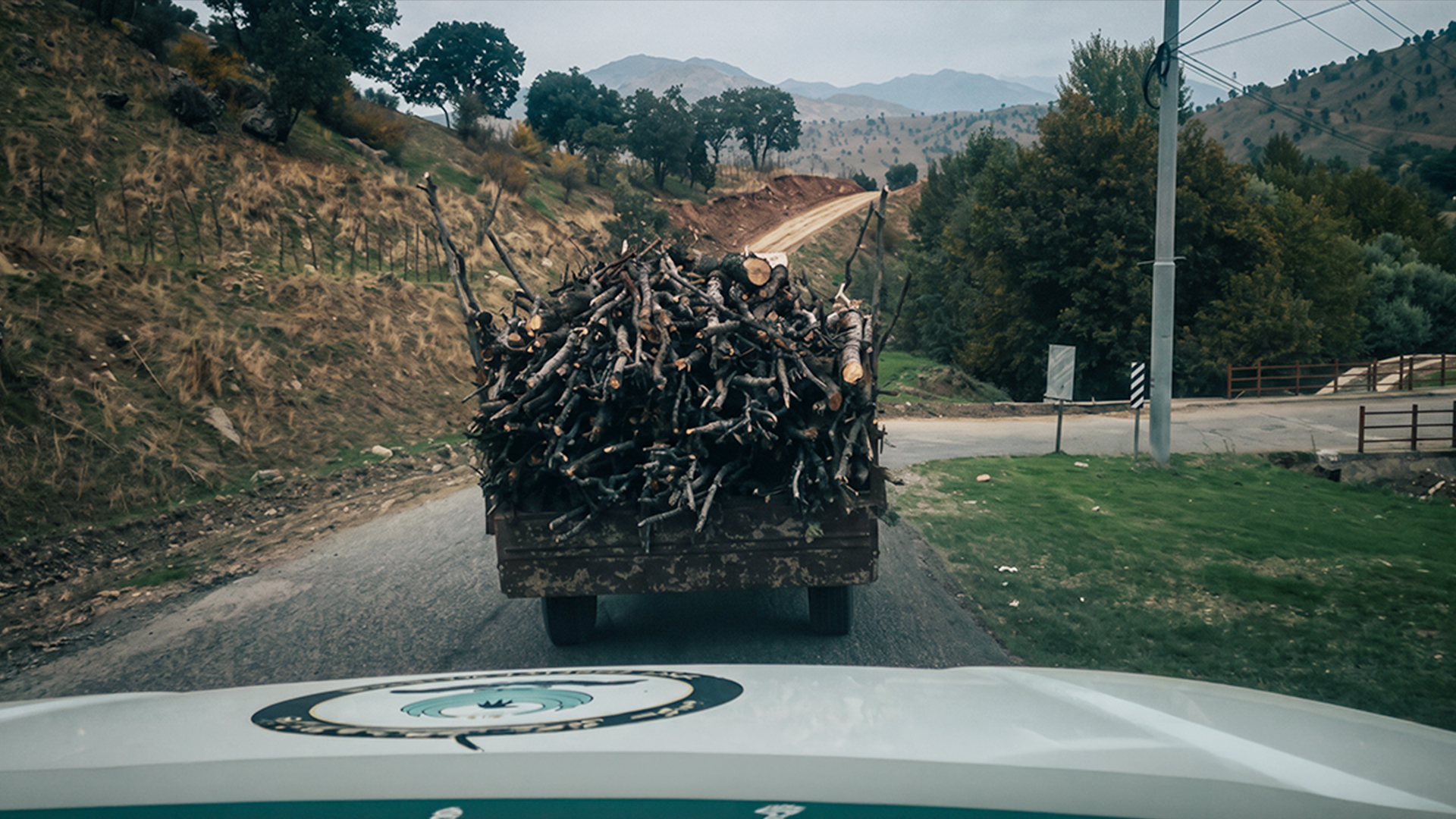
ERBIL (Kurdistan24) - Police in the Soran Independent Administration have arrested 27 people since the beginning of autumn for cutting down living trees, as delays in kerosene distribution and rising heating fuel prices place additional pressure on residents of the Kurdistan Region's mountainous districts.
The Soran Forest and Environment Police confirmed the arrests on Tuesday, Nov. 3, 2026, saying legal measures had been taken against those detained.
Officers have also confiscated large quantities of felled timber during field operations aimed at preventing further damage to the area's forests.
Kurdistan24 correspondent Bakr Sulaiman reported that households in mountainous communities have faced difficulties obtaining heating fuel as temperatures decline ahead of winter.
He said delays in kerosene distribution by Iraq's federal government, together with market prices exceeding 300,000 Iraqi dinars per barrel, have contributed to renewed tree cutting in the area.
Police said the arrests involved the cutting of living trees, rather than the collection of already fallen wood.
The reported damage includes hundreds of mature trees, which are particularly valuable to the local environment because established woodland cannot be quickly replaced once removed.
The forest police warned that anyone found cutting trees illegally faces serious legal consequences and urged residents to help protect the Region's natural surroundings.
The report did not identify those arrested, specify the exact locations of the alleged offenses or provide details of individual court decisions.
Forest Protection and Enforcement
The Kurdistan Region's forest legislation, adopted in 2012, restricts cutting, damaging or exploiting forest trees without authorization from the Ministry of Agriculture and Water Resources.
Forest and Environmental Police are among the agencies responsible for monitoring violations, seizing illegally harvested timber and referring suspects to the judiciary.
In May 2026, the Kurdistan Regional Government's (KRG) Ministry of Interior issued nine directives intended to strengthen environmental enforcement.
They provided for joint patrols involving police, security personnel and forest protection officers, while addressing encroachments on forests, public lands and water resources.
The measures also authorized fines of up to eight million dinars for environmental violations and prohibited burning agricultural residues. That maximum is part of the wider enforcement framework; authorities have not said what penalties, if any, have been imposed on the 27 people arrested in Soran.
Illegal logging is not confined to one district.
In April 2023, Kurdistan24 reported the arrest of 16 people in Duhok over suspected tree cutting. Authorities seized timber and chainsaws during operations in Atrush, where approximately 3,000 trees were reported to have been felled.
Earlier incidents included the arrest of 65 people in Sulaimani in 2018 and the prosecution of a man accused of cutting about 3,000 trees in Duhok.
Restoration Efforts and Winter Pressures
Alongside policing, the KRG has pursued tree planting and other measures designed to protect the natural environment.
Prime Minister Masrour Barzani launched the Erbil Green Belt Project in October 2025 with a long-term target of planting approximately seven million trees around the capital to address dust storms, desertification and high temperatures.
Government reporting put the number of saplings planted in the project's first phase at approximately 700,000 by May 2026.
Separately, the KRG has reported establishing firebreaks across roughly 34 million square meters to help protect forests and agricultural land from wildfires.
New industrial and investment developments are also required to allocate at least a quarter of their land to green spaces, under the government's stated environmental measures. Its Runaki electricity initiative, meanwhile, has allowed thousands of neighborhood diesel generators to be taken out of service, reducing a separate source of local pollution.
In October, the prime minister attended the launch of the Kurdistan Biodiversity Project, which documented 2,252 plant and animal species across 19 ecological hotspots. The research highlights the range of natural habitats that forest protection measures seek to preserve.
For authorities, the challenge is to enforce restrictions on cutting living trees while addressing the fuel shortages and costs reported in mountain communities. The 27 arrests show enforcement is underway, but the pressure on local woodlands may persist unless residents can access dependable heating supplies.
Kurdistan24 journalist and news writer Lavin Omer contributed to this report.