Iraq’s Foreign Minister: War May Break Out Again
Fuad Hussein tells Al Jazeera the Hormuz losses reached about $60 billion, that Washington asked Baghdad to close all but two Iran border crossings, and that disarming factions must come through dialogue
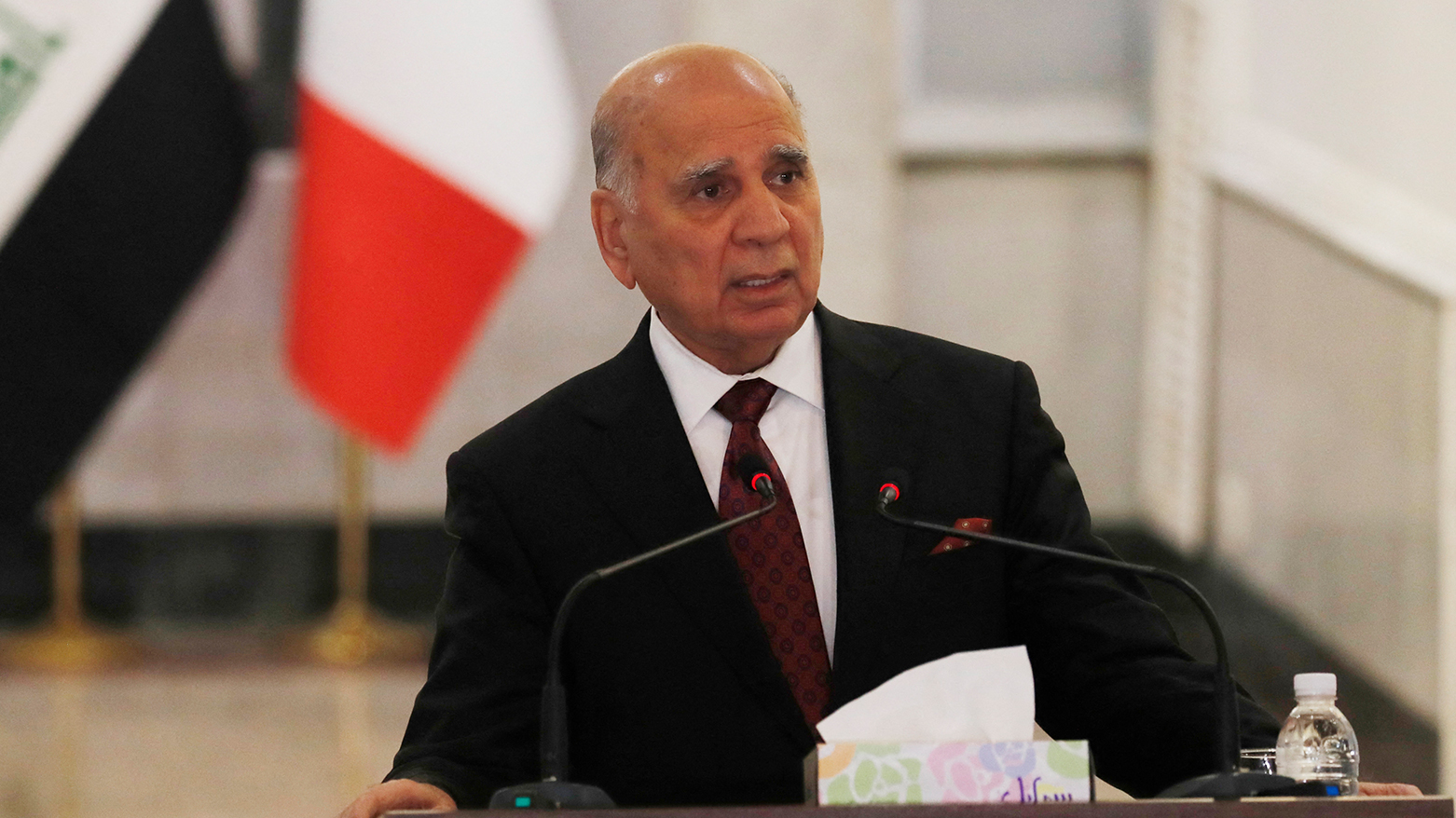
ERBIL (Kurdistan 24) - Iraqi Deputy Prime Minister and Foreign Minister Fuad Hussein told Al Jazeera that the current situation suggests war could break out again in the region, and that Iraq suffered losses of about $60 billion after oil exports through the Strait of Hormuz were halted. He said Iraq has since resumed exports through the strait after an understanding reached with Washington and Tehran.
Hussein said
Washington formally asked Iraq to close all of its land borders with Iran except two crossings.
He said Baghdad told Iran it welcomes friendship and an alliance, but rejects any interference in Iraq’s internal affairs. He said Iraq has information that certain foreign parties are using Iraqi territory to launch attacks against neighboring countries. On Saudi Arabia, he said Iraq is trying to resolve its differences through frank dialogue.
On armed factions, he said bringing weapons under state control must be achieved through dialogue and not through armed conflict. He said the prime minister has reached an understanding with four groups on the weapons file, and that Asa’ib Ahl al-Haq and Kata’ib Sayyid al-Shuhada have agreed to arms control. He said talks with Harakat al-Nujaba and Kata’ib Hezbollah continue, and that Iraq is consulting Iran on the groups’ weapons.
Hussein also said groups from the terrorist organization ISIS have positioned themselves on the Syrian side of the border with Iraq. He said a four-party committee of Iraq, Syria, Jordan and Türkiye has been set up to fight ISIS in Syria, and that Iraq is taking military measures on its borders with Syria to prevent infiltration by ISIS elements and to fight drug smuggling.
The remarks follow others Hussein made this week. He told Dijlah TV on Thursday that the possibility of renewed US strikes on Iran is “not a secret,” and he warned Iraqi armed groups against joining any Iranian retaliation, saying a new war would be a “disaster” for Iraq, according to Al Jazeera. Prime Minister Ali al-Zaidi told President Donald Trump by phone on Thursday that Baghdad will not let its territory be used to attack neighboring countries. The $60 billion figure matches what Hussein said in Rome last month and what al-Zaidi has cited. Oil accounts for about 90 percent of Iraq’s federal budget, and about 90 percent of its exports normally pass through Hormuz. Iraq was exporting about 3.5 million barrels a day before the war and had to halt most production and fall back on limited exports by truck and pipeline via Syria and Türkiye. Its foreign currency reserves have shrunk by about $20 billion. Iraq is one of the few countries Iran has allowed to pass freely through the strait, Al Jazeera reported, and Hussein told RFE/RL in September that exports had resumed in recent weeks but that he feared a new war would close the strait again.
Al-Zaidi’s plan sets June 30, 2027, as the deadline to bring all weapons under state control. Asa’ib Ahl al-Haq announced in June that it would hand its weapons to the state, and Laith al-Khazali of the group became deputy prime minister on October 15, according to Iraqi media. Kata’ib Sayyid al-Shuhada declared its adherence to the plan on October 1, with conditions. Hussein told reporters in Washington in September that three of seven groups negotiating had accepted, and al-Zaidi later said five had agreed. Kata’ib Hezbollah and Harakat al-Nujaba have refused to disarm, and Kata’ib Hezbollah said in a recent statement that no line or geography will limit its strikes. Relations with Saudi Arabia have been strained since US-Saudi strikes on pro-Iran armed groups in Iraq earlier this year, and a visit by al-Zaidi to Riyadh was delayed before he went on October 14, according to Iraqi media. Hussein discussed more visits with his Saudi counterpart, Prince Faisal bin Farhan, Anadolu reported.