London Conference Brings Kurdish Doctors Together to Discuss AI and Cancer Care
Kurdish medical experts in London discuss AI's role in healthcare, advances in cancer treatment, early screening and the need for doctors' clinical judgment.
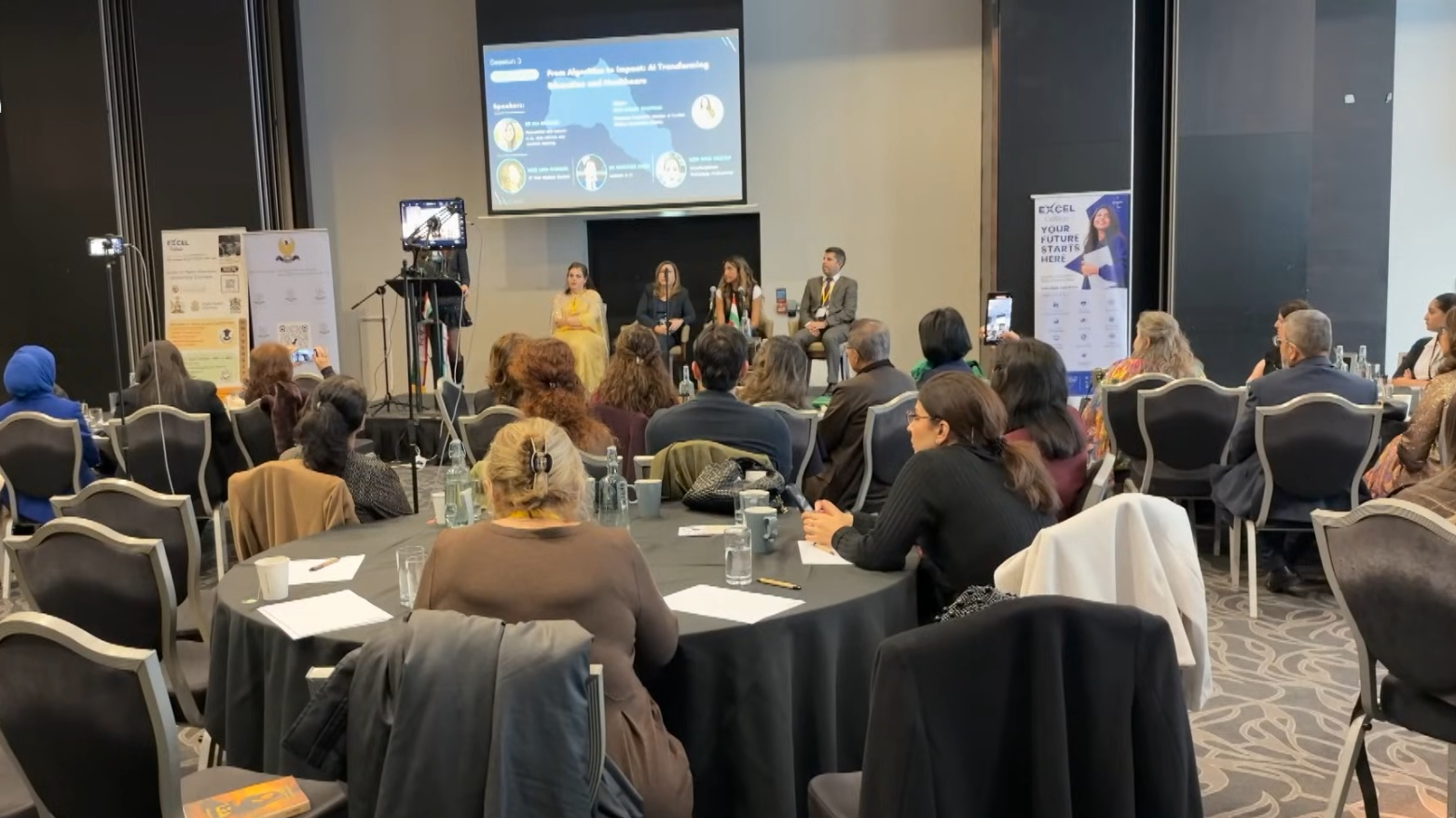
ERBIL (Kurdistan24) - Artificial intelligence could help doctors detect disease sooner, reduce administrative work and improve communication with patients, but it cannot replace the clinical judgment of medical professionals, a Kurdish specialist said during a medical and scientific conference in London.
Lara Shwana, who specializes in the use of artificial intelligence in medicine, told Kurdistan24 correspondent Dilovan Emadaldin that AI offers opportunities for healthcare, particularly when doctors help develop and evaluate the technology. She also cautioned against relying on AI systems to diagnose personal medical conditions without professional assessment.
The remarks came at a seasonal conference of the Kurdistan Medical and Scientific Confederation, where Kurdish doctors, researchers, students and other specialists discussed technological developments and advances in patient care. Cancer treatment, screening and the availability of medical services in the Kurdistan Region were among the subjects addressed.
AI 'an Assistant, Not a Replacement'
Asked whether AI could eventually take over the work of doctors, Shwana said she did not believe it would.
"I don't think it will ever replace doctors as a whole," she said, explaining that medical professionals must still assess the information provided by technology and apply clinical reasoning when making decisions about patients.
Shwana expects AI to take on more administrative duties, including managing appointment bookings, following up referrals and drafting letters during consultations. Reducing that workload, she argued, could allow doctors to devote more attention to patient care.
She also pointed to the technology's potential to help identify abnormalities on medical images, including signs of cancer, more quickly. Such applications, she stressed, should operate alongside clinicians rather than independently of them.
Her confidence in the technology was accompanied by a warning about the risks of using publicly available AI systems for personal health advice.
Shwana said an AI response might encourage someone to recognize a possible medical concern and consult a doctor. However, inaccurate or exaggerated information could also frighten people into believing they have illnesses they do not have.
She warned that repeatedly asking ChatGPT to determine whether someone has particular medical conditions could become dangerous, especially when the answers are treated as diagnoses.
For medical practitioners, she said, adapting to technological change will be increasingly important. Doctors who do not learn how AI tools work risk falling behind as these systems become more widely integrated into healthcare, even though the responsibility for clinical decisions remains with professionals.
Cancer Treatment
The conference also examined changes in cancer care. Dr. Mohammed Baqi, a cancer specialist, told Kurdistan24 that his presentation addressed new treatments for cancers of the esophagus, stomach and pancreas, including medications introduced over the previous year and developments in radiotherapy.
Baqi explained that treatment goals vary according to the type and extent of cancer. Some therapies are intended to cure the disease, while others aim to control it and extend patients' lives when a cure is unlikely.
He highlighted targeted therapy, in which treatment is selected using particular characteristics or receptors identified in a patient's tumor. The approach, he said, makes it possible to match certain medicines more closely to specific cancers rather than treating all patients in the same way.
Baqi emphasized the importance of detecting cancer early. In his account, treatment is generally more likely to be curative when the disease is identified at an earlier stage, although options differ among patients and cancer types.
Medical advances over the past decade have improved the ability to identify tumors precisely and offer a broader range of treatments, he said, contributing to better outcomes and longer survival for patients.
Screening, Access and Kurdish Medical Cooperation
Baqi also discussed screening programs in the United Kingdom, including those for breast, cervical and bowel cancer, as well as assessment pathways for people at increased risk of other cancers.
He distinguished organized screening from undergoing repeated scans without a medical indication. There is no single general test that can reliably reveal cancer cells anywhere in the body, he said, and unnecessary CT scans can expose patients to radiation without a clear benefit.
People with a family history of particular cancers may need closer surveillance and medical advice, he added, while anyone noticing concerning changes in their body should seek professional assessment.
Turning to cancer services in the Kurdistan Region, Baqi rejected the suggestion that a shortage of capable specialist doctors was the principal reason some patients sought treatment abroad.
"We have many highly qualified specialists in Kurdistan who are extremely capable and do very good work," he said.
The more significant obstacles, he explained, have involved access to medicines, diagnostic equipment and laboratory tests needed to identify tumors accurately and determine appropriate treatment. He said improvements in recent years mean many patients can now receive care within the Region.
The conference also offered Kurdish students opportunities to learn from experienced professionals. Pharmacy student Lank Salah told Kurdistan24 that participation had helped her gain knowledge and connect with fellow students and people further along in their careers.
"As a student, I participated today and benefited greatly from it," Salah said.
Established in 1988, the Kurdistan Medical and Scientific Confederation has continued supporting the Kurdistan Region through different periods. This year's gathering included specialists from the Region alongside members of the Kurdish medical diaspora, creating opportunities to exchange experience and discuss developments that could benefit patients at home.
Across the discussions, the message was that technological progress and improved treatment options can strengthen healthcare, but their value ultimately depends on informed medical practice, reliable diagnosis and access to appropriate care.
Kurdistan24's correspondent in London Dilovan Emadaldin contributed to this report.