Iran Calls for Constitutional Resolution of KDP-PUK Disputes in Kurdistan Region
Iranian Foreign Ministry spokesperson Esmaeil Baqaei urges constitutional solutions to KDP-PUK disagreements and outstanding Erbil-Baghdad disputes.
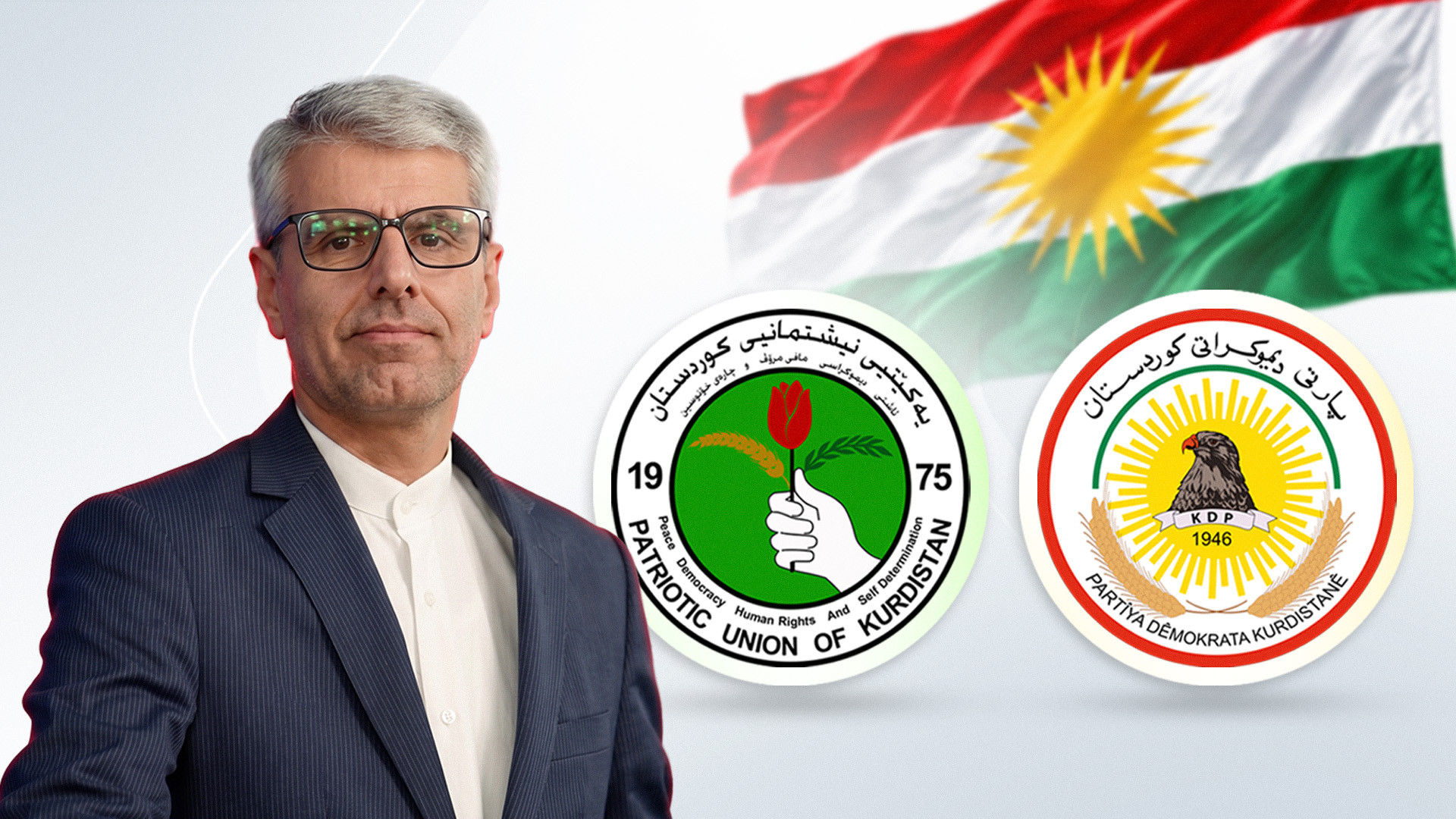
ERBIL (Kurdistan24) - Iran has expressed hope that political disagreements between the Kurdistan Democratic Party (KDP) and the Patriotic Union of Kurdistan (PUK), as well as outstanding disputes between the Kurdistan Region and Iraq's federal government, will be resolved through the constitutional framework governing the country.
Esmaeil Baqaei, spokesperson for Iran's Foreign Ministry, made the remarks during his weekly press conference on Monday, Nov. 9, 2026, responding to a question from a journalist representing Iran's official news agency about the political situation in the Kurdistan Region.
Baqaei emphasized that the Iraqi Constitution provides a legal framework for addressing political disputes, including disagreements involving the Kurdistan Region and Baghdad.
"We hope that the disagreements between them, as well as the disagreements between the Kurdistan Region and federal Iraq, will be resolved," he said, referring to the KDP and PUK.
The Iranian spokesperson further stressed that constitutional provisions should serve as the foundation for settling outstanding issues.
"As far as we are aware and based on the information available to us, the Iraqi Constitution has set out how problems and issues should be resolved. Therefore, the country's Constitution is the best basis for resolving and settling all disputed issues," Baqaei said.
His remarks come amid renewed efforts to overcome the Kurdistan Region's prolonged political impasse, following the reactivation of its parliament and President Masoud Barzani's latest appeal for reconciliation between the two major Kurdish parties.
President Barzani Calls for Political Reconciliation
Earlier on Monday, President Masoud Barzani urged the KDP and PUK to resume dialogue, resolve their differences and prioritize the interests of the people of Kurdistan over partisan considerations.
In a statement addressing recent political developments, Barzani called directly on the PUK leadership to engage in negotiations with the KDP to bring the political crisis to an end.
"On this basis, I call on our brothers in the Patriotic Union of Kurdistan to sit down together with the Kurdistan Democratic Party, resolve the problems, and bring an end to the political crisis in the Kurdistan Region," he said.
Barzani also called on other political parties to participate in the political process and work collectively toward establishing a broad-based national government that reflects the aspirations of the electorate.
His appeal came as the Region continued efforts to form its tenth cabinet following the October 2024 parliamentary elections.
Parliament Reactivated Amid Continuing Disagreements
The Kurdistan Parliament resumed its inaugural proceedings on Nov. 4, electing its presidency after more than two years of legislative inactivity.
The session was attended by 52 lawmakers, surpassing the 51-vote majority required to elect the leadership of the 100-member legislature.
Vala Farid of the KDP was elected speaker, while Rami Nouri, representing the Christian community, became deputy speaker and Mona Qahwachi, representing the Turkmen community, was elected parliament secretary.
However, the session took place amid a boycott by the PUK, the New Generation Movement and several other political factions.
The KDP maintained that the proceedings complied with parliamentary law and internal regulations, while the PUK challenged the session's legitimacy and argued that an agreement on senior political positions should precede further institutional steps.
The disagreements reflect the broader deadlock over government formation. In the October 2024 elections, the KDP secured 39 seats, the PUK won 23 and the New Generation Movement obtained 15, leaving no party with an outright parliamentary majority.
Although parliament has elected its leadership, the political negotiations necessary to form a new government remain unresolved.
International Attention to Kurdistan's Political Process
The political situation has also attracted attention from foreign diplomatic representatives.
On Nov. 7, Türkiye's Consul General in Erbil, Erman Topçu, expressed hope that Kurdish political parties would reach an agreement to form a new government during a meeting with senior KDP official Fadhil Mirani.
The European Union welcomed the reactivation of parliament and the election of its presidency, describing the developments as important for the functioning of democratic institutions.
The United States also reaffirmed its support for a strong and resilient Kurdistan Region and encouraged constructive cooperation among political actors to strengthen Iraq's institutions.
Iran's latest remarks add another regional diplomatic perspective to the continuing discussions, emphasizing the Iraqi Constitution as the basis for resolving differences both among Kurdish political parties and between Erbil and Baghdad.
With parliamentary leadership now in place but government formation still unsettled, the immediate challenge remains whether the KDP, PUK and other political forces can translate calls for dialogue into an agreement on the Region's next administration.