KRG and Iraqi Prime Ministers Discuss 2027 Budget, Oil and Salary Guarantees
KRG Prime Minister Masrour Barzani and Iraqi Prime Minister Ali al-Zaidi discuss Kurdistan's 2027 budget share, salaries, oil management and the Khor Mor attack in Baghdad.
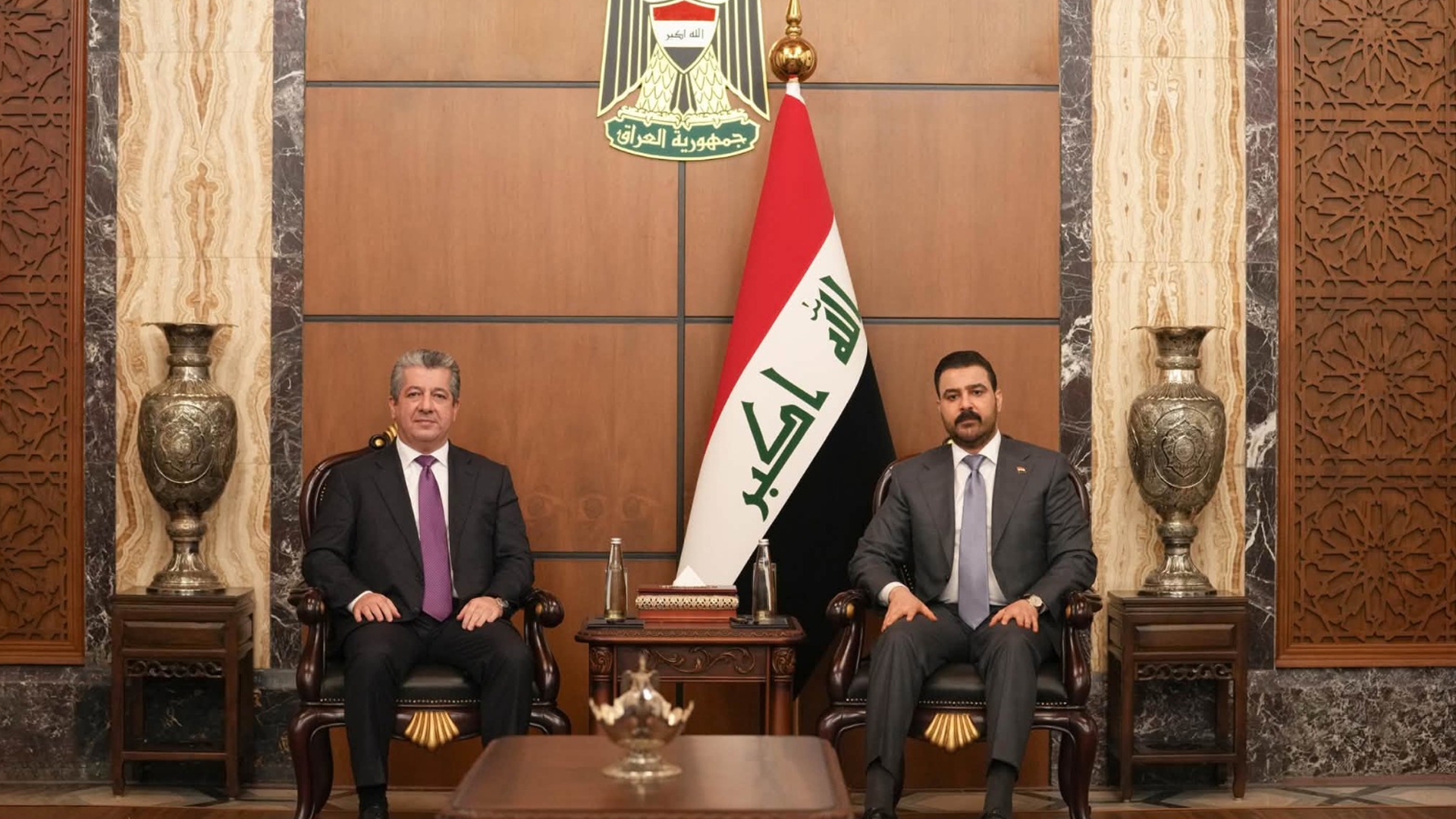
ERBIL (Kurdistan24) - Kurdistan Regional Government (KRG) Prime Minister Masrour Barzani and Iraqi Prime Minister Ali al-Zaidi met in Baghdad on Monday, Nov. 9, to discuss the Kurdistan Region's constitutional rights, its share of Iraq's 2027 federal budget and longstanding disagreements over oil, revenues and public-sector salaries.
The two leaders also condemned the attack on the Khor Mor gas field the previous night, agreeing that assaults on the Kurdistan Region's economic and energy infrastructure must be brought to an end.
Their meeting addressed several interconnected issues that have shaped relations between Erbil and Baghdad, with both sides emphasizing coordination and dialogue as the basis for a lasting settlement.
Khor Mor Attack Condemned
Prime Minister Barzani and Prime Minister al-Zaidi strongly condemned what they described as a terrorist attack against the Khor Mor facility on Sunday night. They agreed on the need to prevent further attacks targeting the Region's economic assets and energy infrastructure.
The condemnation placed the security of energy facilities alongside the financial and constitutional questions on the meeting's agenda, reflecting the importance both leaders attached to protecting infrastructure.
The statement did not announce specific security measures or identify those responsible for the attack.
Budget Share and Salary Guarantees
During discussions on the federal budget, Prime Minister Barzani stressed that the Kurdistan Region must receive a fair share of Iraq's 2027 spending plan, determined in accordance with the Constitution, the federal system and the Region's constitutional status.
The two sides discussed how the Region's allocation should be calculated and distributed in a manner that takes account of the interests of all components of Iraq.
They also stressed the importance of ensuring that Kurdistan Region employees continue to receive their salaries on the same basis as public-sector employees elsewhere in the country.
Salary payments and financial entitlements were treated as separate but related questions within the broader effort to regulate fiscal relations between the two governments.
No final budget percentage, allocation or payment mechanism was announced following the meeting.
Oil Management and Revenue Coordination
The discussions extended to the management of oil fields and the constitutional framework governing their operation. Both governments examined mechanisms for regulating the fields while respecting the provisions of Iraq's Constitution.
They also discussed arrangements for managing oil and non-oil revenues, with particular attention to coordination between the federal and KRG finance ministries.
Another priority was the long-awaited federal oil and gas law. Both leaders stressed the need to accelerate its enactment, arguing that a legal framework could help address outstanding disagreements concerning production, exports and the management of the country's oil resources.
The meeting did not establish that a final arrangement had been reached on field administration, revenue transfers or the legislation.
Iraq's Oil Production Ambitions
Prime Minister Al-Zaidi outlined plans to expand Iraqi oil production to seven million barrels per day by 2030 and ten million barrels per day by 2032.
Those targets include anticipated production of around one million barrels per day from fields in the Kurdistan Region.
The federal prime minister said the proposed growth in output would have positive consequences for economic development across Iraq. The figures were presented as future targets rather than current production levels.
At the conclusion of their discussions, the two leaders underscored the importance of maintaining joint cooperation, consultation and mutual understanding.
Their stated objective was to address outstanding disputes through sustained engagement, in ways that protect constitutional entitlements and serve citizens throughout Iraq.
While the meeting outlined a shared commitment to resolving those issues, its statement did not set out an agreed timetable or announce a comprehensive settlement.