Iraq Prepares to Encircle Jurf al-Sakhar Amid Oil-Smuggling Investigation
Iraq prepares a two-stage security operation in Jurf al-Sakhar as intelligence allegations of oil smuggling trigger investigations and political tensions.
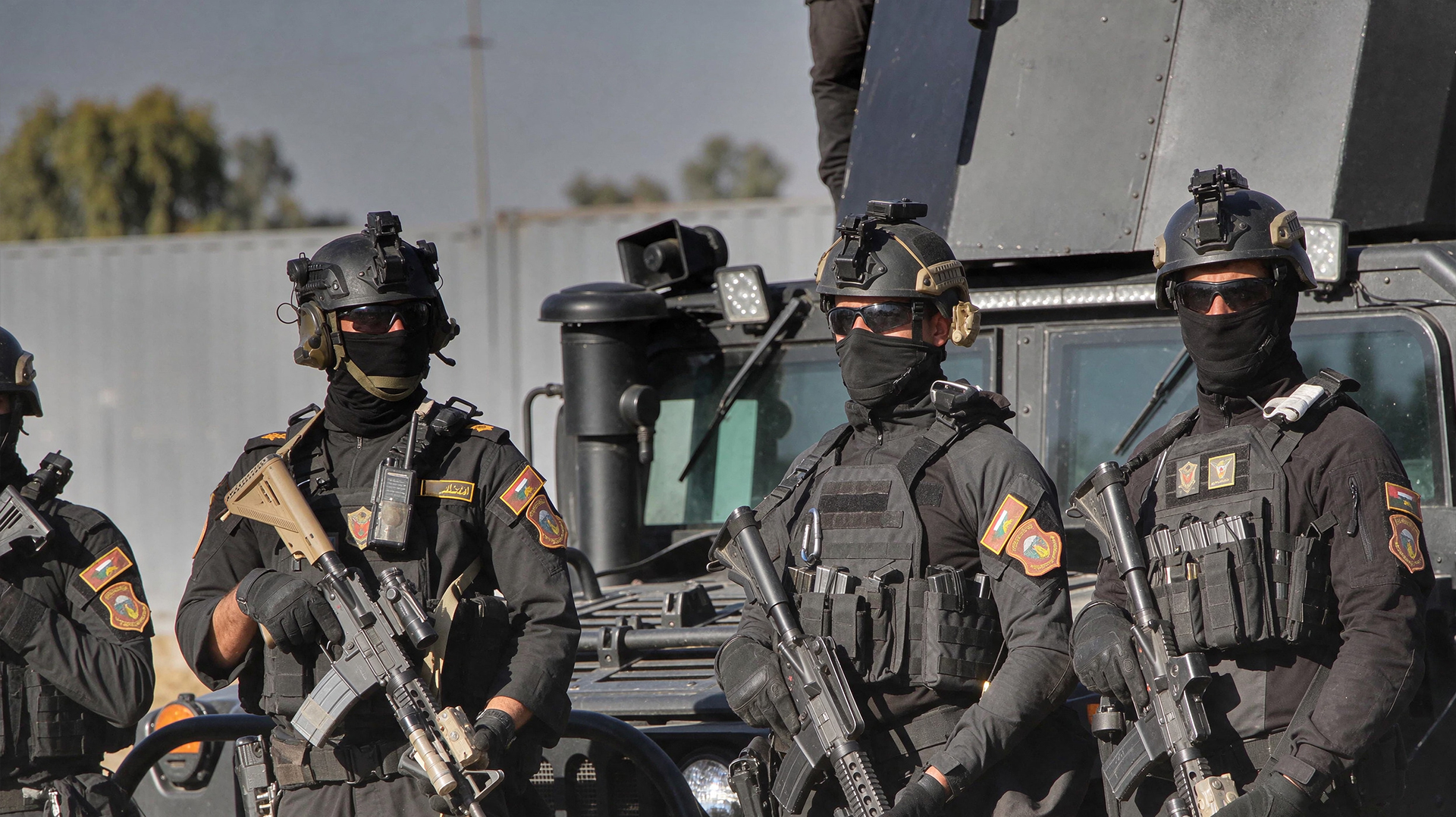
ERBIL (Kurdistan24) - Iraq's federal government has prepared a two-stage security operation to surround and enter Jurf al-Sakhar in Babil province following the disclosure of intelligence findings alleging years of oil smuggling in the heavily restricted area, according to information obtained by Kurdistan24.
Kurdistan24's Baghdad correspondent Dilan Barzan reported early Friday, Nov. 13, 2026, that forces from the Counter-Terrorism Service and Rapid Response units had been placed on heightened alert, awaiting orders to proceed amid what sources described as federal government support for a possible operation.
The reported preparations do not establish that an operation has begun. A final order or deployment timetable has not been publicly announced, while the allegations at the center of the dispute remain under investigation.
A Two-Stage Security Plan
According to Barzan, the proposed first stage would involve security forces surrounding the entrances and perimeter of Jurf al-Sakhar, followed by the entry of specialized units tasked with asserting federal authority and securing sites suspected of involvement in illicit oil activity.
The plan has been discussed with leaders of the Coordination Framework, the governing political alliance, and most of its leaders support the deployment, according to Kurdistan24's information. The reported political backing has not yet amounted to a publicly confirmed decision to launch the operation.
The preparations follow the disclosure of a 19-page intelligence assessment prepared by the Iraqi Interior Ministry's Agency for Intelligence and Federal Investigations. The document examines alleged oil theft near state pipelines between 2021 and 2026.
The controversy has raised questions about the government's ability to investigate suspected economic crimes in an area that has remained subject to tight security restrictions for more than a decade.
Iraq has prepared a two-stage plan to surround and enter Jurf al-Sakhar amid alleged oil-smuggling investigations, Kurdistan24 Baghdad correspondent Dilan Barzan reports. Counter-Terrorism and Rapid Response forces are on heightened alert. Read more: https://t.co/sWXZ7U2nbZ https://t.co/7rJRZXEctS
— Kurdistan 24 English (@K24English) November 13, 2026
Intelligence Findings Under Scrutiny
The report, obtained by Kurdistan24, draws on satellite images taken on 13 dates across five years. Analysts identified four locations and counted 105 tanker sightings across the images, including vehicles parked near suspected collection points and small refinery facilities.
At one location, photographs from October 2022 showed 21 tankers beside an oil-stained pit. Other images recorded vehicles at nearby compounds and construction or expansion of facilities that analysts believed could be used for processing or storing petroleum products.
The assessment also described structures that appeared to conceal storage areas beneath metal roofing. Its authors mapped three potential transport routes toward Baghdad province, some passing through established security checkpoints.
These observations do not, by themselves, establish how much oil may have been removed, whether all the vehicles carried illicit fuel or who authorized their movements.
The report did not calculate a financial loss and described a suspected pipeline breach rather than a confirmed finding based on an on-site inspection.
It concluded that suspected smuggling continued because the area was protected by an armed faction, but it did not name that organization.
Jurf al-Sakhar has long been identified in media reporting as an area under the influence of Kataib Hezbollah, an Iran-backed armed faction. That background does not establish that the group conducted the specific activities alleged in the intelligence document.
The assessment also conflicts with earlier statements from the Interior Ministry's Energy Police Directorate, whose chief had reported that pipeline breaches had fallen to zero. The discrepancy has not been publicly reconciled.
Read More: Intelligence Report Reveals Oil Theft from Areas Under Control of Iraqi Kata'ib Hezbollah
Government and Parliamentary Investigations
Prime Minister Ali Falih al-Zaidi ordered an investigation into the reported smuggling this week. The disclosure also prompted parliamentary scrutiny of the intelligence findings and the routes described in the file.
On Wednesday, Nov. 11, Parliament Speaker Haibat al-Halbousi met parliamentary committee heads to examine the report. Parliament also discussed separate intelligence concerning alleged oil-smuggling routes from Kirkuk and the Kurdistan Region through Iran toward Afghanistan.
The parliamentary leadership established a temporary committee headed by the chair of the Security and Defense Committee, with members drawn from committees overseeing integrity, finance, oil, legal affairs and border crossings, among others.
Its task is to follow up on the allegations and report its findings. Neither the existence of an investigative committee nor the mapping of a suspected route constitutes proof that oil was transported along it.
Babil Governor Announces Resignation
The dispute has also had political consequences in Babil. Governor Ali Turki announced his resignation on Thursday, Nov. 12, amid the controversy surrounding the intelligence assessment.
Before the announcement, Turki had publicly rejected the smuggling claims, saying a site identified in the reporting was an old fuel station used by government-affiliated security forces. He disputed the suggestion that tankers observed there were evidence of theft.
Turki later linked his decision to resign to the Jurf al-Sakhar oil-smuggling issue, without identifying perpetrators or providing a detailed account of the circumstances. His earlier denial remains relevant as investigators examine the evidence.
Jurf al-Sakhar was retaken from ISIS in 2014 but has remained difficult for outsiders to access, with many displaced residents still unable to return. That history has intensified attention to the authorities' ability to conduct an independent investigation.
For now, federal forces are reportedly preparing for possible entry, while investigators and lawmakers seek to establish whether the satellite findings reflect a sustained smuggling operation.
The central unanswered questions concern the alleged pipeline breaches, the movement of tankers through checkpoints and who, if anyone, enabled the activity.
Kurdistan24's Baghdad correspondent Dilan Barzan contributed to this report.