Iraq Sets June 2027 Deadline for State Monopoly on Weapons, Investigates Kormor Drone Attacks
Government spokesperson says Baghdad will assess demands to separate provincial budget allocations from the Kurdistan Region through constitutional and legal frameworks
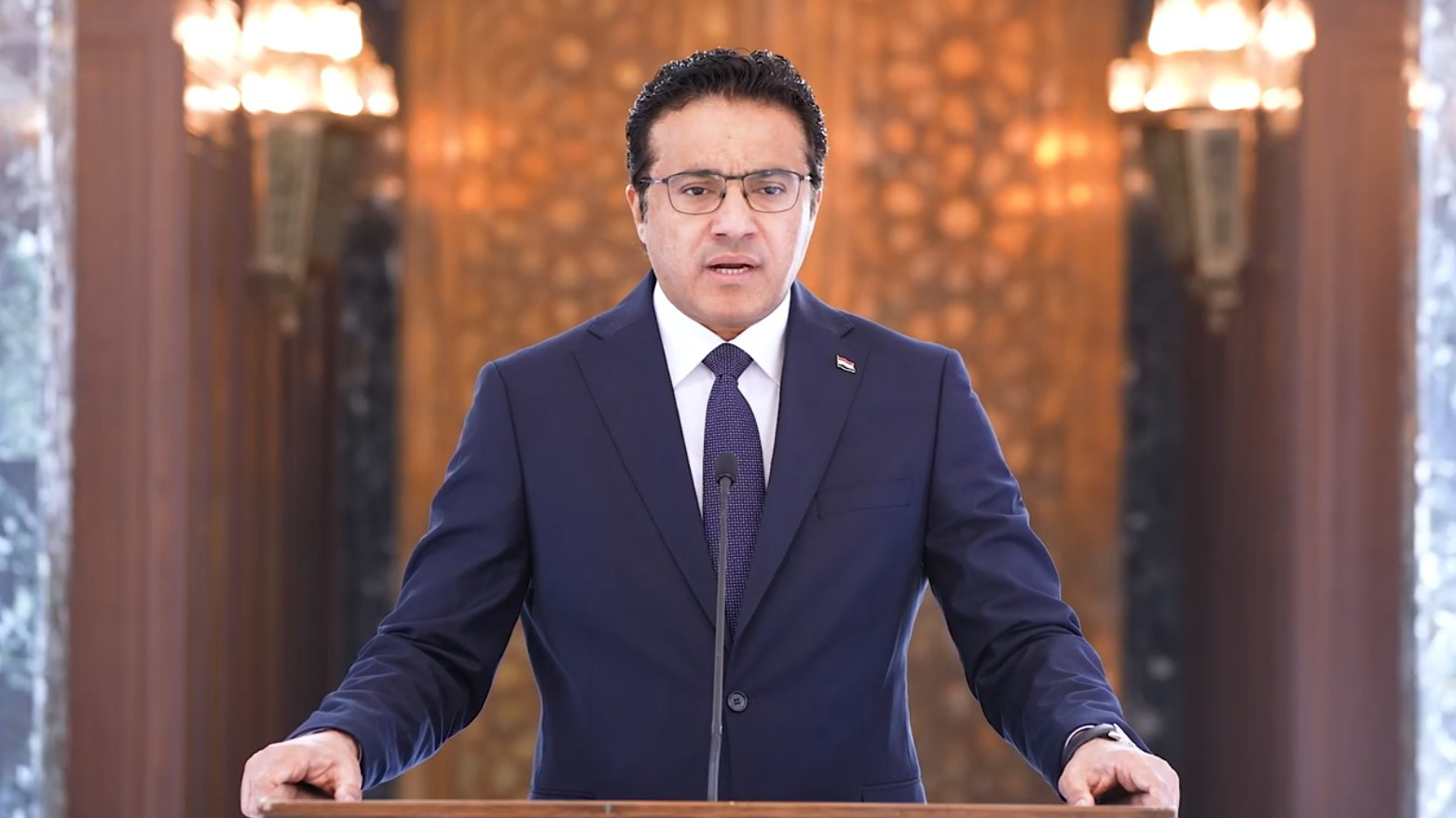
ERBIL (Kurdistan24) — The Iraqi government has set June 2027 as the deadline for bringing all weapons under state control, while a high-level security committee is investigating repeated drone attacks on the Khor Mor field in the Kurdistan Region, government spokesperson Haider al-Aboudi said on Sunday.
Speaking in an interview with Dijlah TV on Nov. 15, 2026, al-Aboudi said the investigation into the attacks on the strategic gas facility in Chamchamal was being conducted under the direct order of the prime minister, with authorities examining technical and intelligence evidence to identify those responsible.
He described the attacks as dangerous, stressing that they carried both security and political dimensions.
"The timing and location of the attacks, as well as the parties that benefit from targeting the field, are being examined," al-Aboudi said, adding that the investigation committee was working to establish the origin of the drones and hold those responsible accountable.
He emphasized that protecting the country's oil and gas infrastructure was a matter of national security and that negligence would not be tolerated.
Responding to a question about reports of 12 drone attacks targeting the Khor Mor gas field over the past year, the spokesperson confirmed that the incidents were under detailed investigation by the high-level committee.
The repeated attacks have raised serious concerns over the security of critical energy infrastructure in the Kurdistan Region, particularly as Khor Mor remains a major source of natural gas for electricity generation in the Kurdistan Region and other parts of Iraq.
Baghdad Addresses Kurdistan's Budget Dispute
In another part of the interview, al-Aboudi addressed political disagreements between the Kurdistan Democratic Party (KDP) and the Patriotic Union of Kurdistan (PUK), acknowledging deep divisions between the Kurdistan Region's two main political parties.
He said the federal government was aware of the tensions and hoped the parties would resolve their differences.
Regarding demands to separate provincial budget allocations from the Kurdistan Region's budget, he stressed that Baghdad would approach the issue strictly through constitutional and legal considerations rather than political rivalries.
"The federal government deals with this issue from a constitutional perspective. If there is a clear constitutional and legal basis, it will be examined, not on the basis of political disputes," he said.
His remarks come amid continuing disagreements between Erbil and Baghdad over budget allocations, public-sector salaries, oil revenues and the constitutional distribution of financial responsibilities.
The question of provincial budget allocations has also become politically significant amid divisions within the Kurdistan Region, with Baghdad maintaining that any changes to the existing financial arrangements must have a clear legal and constitutional foundation.
Iraq Accuses Kataib Hezbollah of Oil Smuggling in Jurf al-Sakhar, Vows to Restore State Control
al-Aboudi said the armed group Kataib Hezbollah was involved in oil smuggling operations in Jurf al-Sakhar, north of Babil province, adding that the area could soon be returned to the control of official security forces.
He said a government investigation committee had cross-checked its findings against reports from federal intelligence and investigative agencies, confirming that the information was consistent. He said the committee had inspected six sites in Jurf al-Sakhar and documented evidence of oil smuggling before submitting its findings to Prime Minister Ali al-Zaidi.
According to al-Aboudi, the investigation encountered provocations during the inspections, prompting al-Zaidi to convene an emergency security meeting, remove several security commanders in Babil from their positions, hold them fully accountable, and refer the oil-smuggling case to the judiciary.
He directly identified Kataib Hezbollah as the group involved, saying the area under its control contains three branches of the strategic Basra-Haditha oil transportation pipeline, two of which connect to the Baghdad-Dora facilities and the third to the Musayyib district.
Al-Aboudi added that the government was determined to complete the investigation and restore Jurf al-Sakhar to the authority of official security forces, describing the state's monopoly on weapons as one of the longstanding challenges facing successive Iraqi governments.
Al-Aboudi also reiterated that the federal government was continuing its efforts to bring weapons under state control and restrict the activities of armed groups across Iraq.
He identified June 2027 as the deadline for completing the process of collecting weapons and ensuring they remain exclusively in the hands of the state.
The spokesperson warned that no group or political entity would be allowed to undermine the sovereignty of Iraqi territory or the Kurdistan Region.
The government's stated deadline comes amid persistent concerns over the presence and activities of armed factions outside the full control of state institutions, as well as repeated attacks on strategic infrastructure and security targets.
The issue of placing all weapons under state authority has remained a central challenge for successive Iraqi governments, particularly given the influence of armed factions and the complex security environment across the country.
For the Kurdistan Region, the security of energy facilities such as Khor Mor and preventing armed groups from threatening its territory remain particularly important concerns.