Kataib Hezbollah May Have Been Involved in Khor Mor Attack, Al-Monitor Reports
Al-Monitor raises a possible Kataib Hezbollah link to the Khor Mor attack as Iraq confronts the faction over oil smuggling and control of weapons.
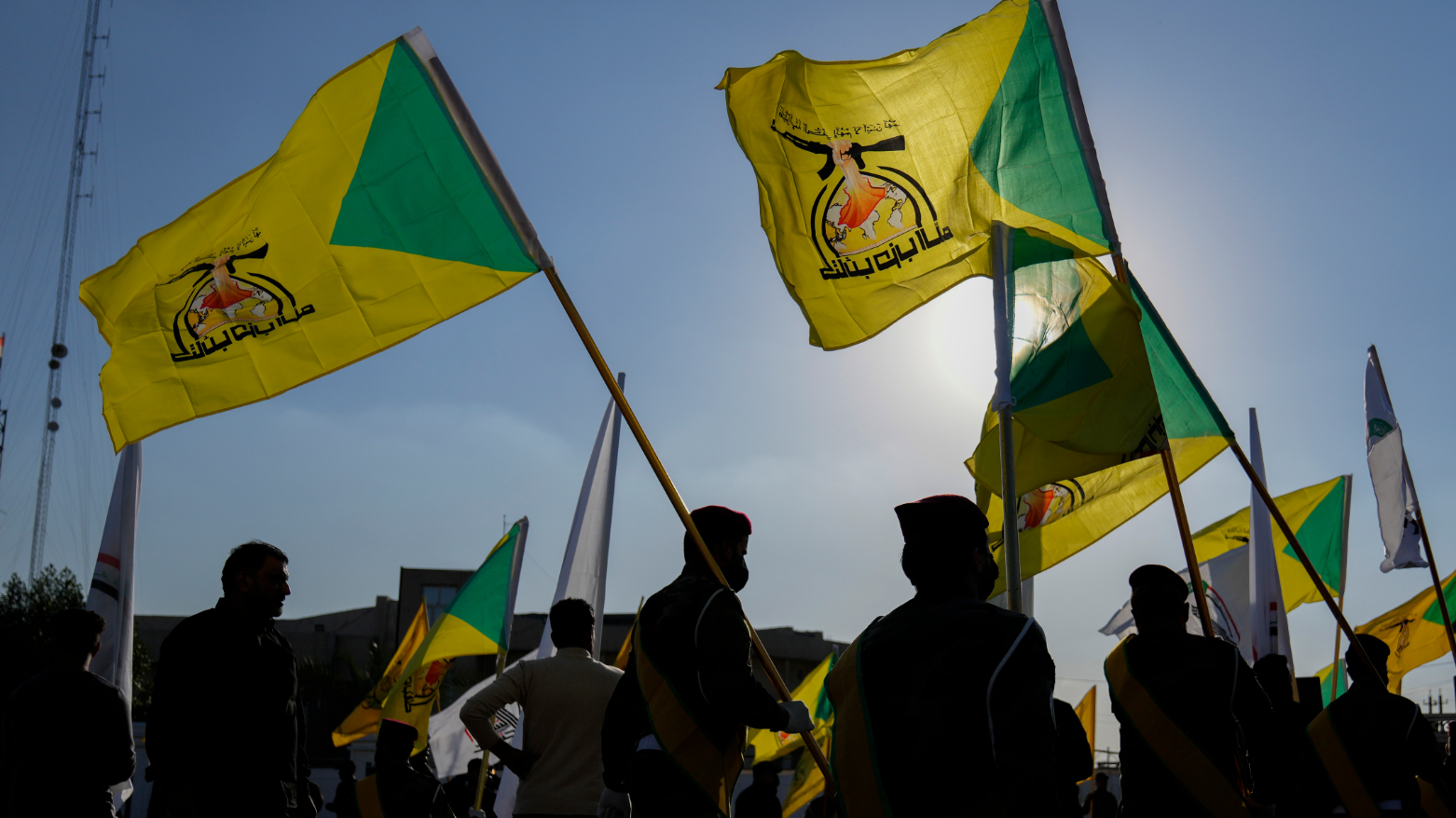
ERBIL (Kurdistan24) - An analysis published by Al-Monitor has raised the possibility that Iraq's Kataib Hezbollah or an associated armed faction was involved in the Nov. 8 drone attack on the Khor Mor gas field in the Kurdistan Region, as an increasingly public confrontation between Baghdad and the Iran-backed group tests the federal government's authority over armed factions.
In a Nov. 15 report, Al-Monitor journalist Shelly Kittleson examined mounting tensions between Iraqi Prime Minister Ali al-Zaidi and Kataib Hezbollah, linking the unresolved Khor Mor attack to disputes over government contracts, suspected oil smuggling in Jurf al-Sakhar and efforts to place weapons exclusively under state control.
The suggestion of possible involvement is not a finding of responsibility. No group has publicly claimed the Khor Mor attack, and Iraqi investigators have yet to announce who launched the drones or ordered the strike.
Kataib Hezbollah has denied oil-smuggling allegations against it and accused the prime minister's office of conducting a politically motivated campaign.
Statement Prior Khor Mor Attack
Kittleson's analysis drew attention to a statement issued on Nov. 7, one day before Khor Mor was attacked, by Kataib Hezbollah security chief Abu Mujahid al-Assaf.
The statement warned against publicly airing damaging information and referred to the Khor Mor field and alleged incitement to target it to extort the United Arab Emirates.
The reference is significant because Khor Mor is operated by a consortium led by UAE-based Dana Gas and supplies natural gas essential to electricity generation in the Kurdistan Region.
However, a reference to the facility before the attack does not, on its own, establish advance knowledge of the operation, involvement in planning it or responsibility for carrying it out.
The Nov. 8 strike caused a fire and disrupted gas production, leading to a sharp reduction in electricity generation.
Regional reporting cited Iraqi security sources who believed drones had approached from areas east of Khurmatu.
That reported direction has not been established as a confirmed launch site, and it does not identify the attackers.
The facility has been targeted repeatedly in recent years. Kurdish authorities have previously accused Iran-linked armed factions of attacks on the Region, but the latest incident remains under investigation.
Iraqi government spokesperson Haider al-Aboudi said a high-level committee was examining technical and intelligence evidence, including drone origins and the parties that might benefit from targeting the field.
Those inquiries are separate from the investigation into alleged oil theft in Jurf al-Sakhar.
The convergence of the two files nevertheless adds to the political pressure surrounding the government's relationship with Kataib Hezbollah.
Airport Contracts and an Escalating Confrontation
Kittleson identified a Nov. 7 decision by Prime Minister al-Zaidi to cancel three service contracts at Mosul International Airport as another flashpoint.
The prime minister cited unspecified links to armed groups and directed that the contracts be offered to international companies.
The affected contracts, according to the Iraqi News Agency, concerned Sky Plus, which leased airport counters; Sama al-Matar, which operated parking facilities; and Al-Faisal al-Shamikh, which provided taxi services. The order did not publicly establish that any named company had committed a crime.
Kataib Hezbollah and its political wing, Harakat Huqooq, subsequently criticized al-Zaidi, questioning his wealth and alleging past ties to Iran-aligned factions.
Hamdi Malik, founder of Iraqi Monitor and an associate fellow at the Washington Institute, told Al-Monitor that the airport decision, reported circulation of an arrest warrant involving a son of a Kataib Hezbollah leader and accompanying political pressure appeared designed to isolate the faction.
Malik said Kataib Hezbollah seemed to regard the prime minister as responsible for the pressure campaign.
The group's own allegations have included claims that al-Zaidi was involved in the Khor Mor attack to pressure the UAE, allegations for which no substantiating evidence was presented in the available reporting.
Jurf al-Sakhar: the Central Test
The most immediate confrontation concerns Jurf al-Sakhar, also called Jurf al-Nasr, in Babil province south of Baghdad.
The area has remained heavily restricted since it was retaken from ISIS in 2014 and has long been identified with Kataib Hezbollah's influence.
Al-Monitor described the town as strategically important to the faction, both because of its position near Karbala and because of its connection to routes linking Iraq with Syria.
The report said two Popular Mobilization Forces (PMF) brigades associated with Kataib Hezbollah were deployed around al-Qaim on the Syrian border, while another was stationed in Jurf al-Sakhar.
An Iraqi intelligence assessment alleging organized oil theft placed the town under renewed scrutiny.
Reports examined by Kurdistan24 described suspected pipeline interference, petroleum facilities, tanker movements and possible transport routes, including allegations concerning shipments toward Iran and Afghanistan.
Those allegations required on-site investigation; images of tankers and facilities alone could not identify the operator of any illicit activity.
On Nov. 11, Parliament Speaker Haibat al-Halbousi directed a parliamentary inquiry. Prime Minister al-Zaidi subsequently established a high-level government committee, which visited the area on Nov. 13.
Kurdistan24's reporting on the visit raised questions about restrictions imposed on accompanying security personnel and the methods used to inspect suspected pipelines.
Such reports highlighted the practical difficulties facing investigators entering territory where regular federal forces have limited access.
Government Accusations and Kataib Hezbollah's Denial
On Nov. 15, government spokesperson al-Aboudi went further than earlier intelligence assessments by explicitly accusing Kataib Hezbollah of involvement in petroleum smuggling in Jurf al-Sakhar.
He said investigators had visited six sites and documented tampering and indications of illicit activity, with findings that corresponded to information collected by federal intelligence agencies.
According to al-Aboudi, three branches of the Basra-Haditha strategic oil pipeline pass through territory controlled by the faction.
Al-Zaidi ordered suspects referred to the judiciary and removed nine security and administrative officials following the investigation.
Security commanders were instructed to tighten oversight and accept responsibility for violations within their areas.
Kataib Hezbollah rejected the accusations.
In a statement, it said the inspection team had found no violations of oil pipelines and that the facilities photographed were fuel-storage tanks and a small processing installation used to supply military vehicles, generators and equipment.
The group maintained that the facilities were openly visible and located more than five kilometers from the pipeline.
It accused the government of fabricating allegations to force it to surrender its weapons and of acting under American and Gulf pressure.
These claims directly conflict with the government's stated findings; neither account amounts to a court judgment establishing criminal responsibility.
Security Forces Prepare, but No Assault Confirmed
The confrontation has moved beyond public accusations.
A security source told Kurdistan24 that Counter-Terrorism Service and Rapid Response forces had completed preparations for possible entry into Jurf al-Sakhar following a high-level meeting of Iraqi commanders.
The source also said al-Zaidi had set Friday as a deadline for Kataib Hezbollah to permit the entry of federal forces.
The government has not publicly confirmed that a combat operation has begun, and preparations should not be confused with a completed deployment.
At a separate security meeting, officials reviewed penalties for negligent officers, called for faster execution of arrest warrants and emphasized stronger protection for oil pipelines and other facilities.
Al-Zaidi said the state would not leave Iraqi territory available for smuggling and theft.
The central dilemma is whether the government can enforce access and legal accountability in the area without setting off clashes with a heavily armed faction embedded in Iraq's broader security landscape.
Why Disarmament Is More Complicated Than a Deadline
Kataib Hezbollah emerged after 2003 with Iranian support and later contributed fighters to the PMF, which Iraq recognized as part of its state security apparatus.
The wider organization now numbers more than 200,000 registered personnel, according to Al-Monitor.
That formal status does not necessarily produce a unified chain of command.
The PMF contains multiple factions with different affiliations, and the distinction between official service and allegiance to armed-group leadership is at the center of Baghdad's efforts to consolidate control.
The government's stated deadline for bringing weapons under state authority is June 2027. Kataib Hezbollah has said it will not surrender what it describes as the weapons of the resistance or abandon its position over Jurf al-Sakhar.
Al-Monitor quoted an unnamed Iraqi official who doubted that the remaining resistant factions would relinquish weapons and territory voluntarily.
The official anticipated a possible confrontation, but that assessment was not an announcement of a government decision to use force.
Successive governments have also encouraged armed factions to take part in electoral politics, hoping that institutional influence would lessen their reliance on independent weapons and territorial control.
Kataib Hezbollah's relationship with Harakat Huqooq demonstrates the overlap between armed and political activity, without proving that political participation has replaced military power.
Wider Oil Investigations and Unresolved Disappearances
The Jurf al-Sakhar dispute is part of a broader effort to tackle petroleum theft. Iraq's Federal Integrity Commission said it recorded 152 cases and 76 intelligence reports concerning oil smuggling from 2024 to 2026, including cases still being investigated and others referred to courts.
Kurdistan24 has also reported that the government is examining suspected smuggling routes linked to Kirkuk and Basra.
The existence of these inquiries does not establish that all the alleged networks or individuals identified in reports are responsible for crimes.
Jurf al-Sakhar also carries a longstanding humanitarian dispute. Its original Sunni residents remain displaced, and Al-Monitor recalled allegations concerning hundreds of people who disappeared at checkpoints during the campaign against ISIS.
Former parliament speaker Mohammed al-Halbousi has previously raised questions about their fate and alleged that Kataib Hezbollah might hold information about them.
The disappearances remain unresolved.
A Test for Baghdad and the Kurdistan Region
The Khor Mor investigation and the Jurf al-Sakhar confrontation involve different alleged crimes, but both expose the challenge of determining who controls armed activity and whether state institutions can establish responsibility.
Kittleson's Al-Monitor analysis raises the possibility of a Kataib Hezbollah connection to Khor Mor without establishing one.
Separately, Baghdad has directly accused the faction in the oil-smuggling case, and the group has denied the charge.
What happens next depends on evidence emerging from the investigations, the courts' handling of suspected smuggling and the government's ability to implement its security directives.
For the Kurdistan Region, identifying those responsible for the gas-field attack remains essential.
For Baghdad, Jurf al-Sakhar has become an immediate measure of whether its promise to bring weapons and territory under state authority can be carried out without armed conflict.