Sulaimani Separation Campaign Is Political Pressure, Not Popular Demand, Analyst Says
Analyst Sherwan Shamirani rejects Sulaimani separation, warning that party disputes and weakened institutions risk inviting external interference in Kurdistan.
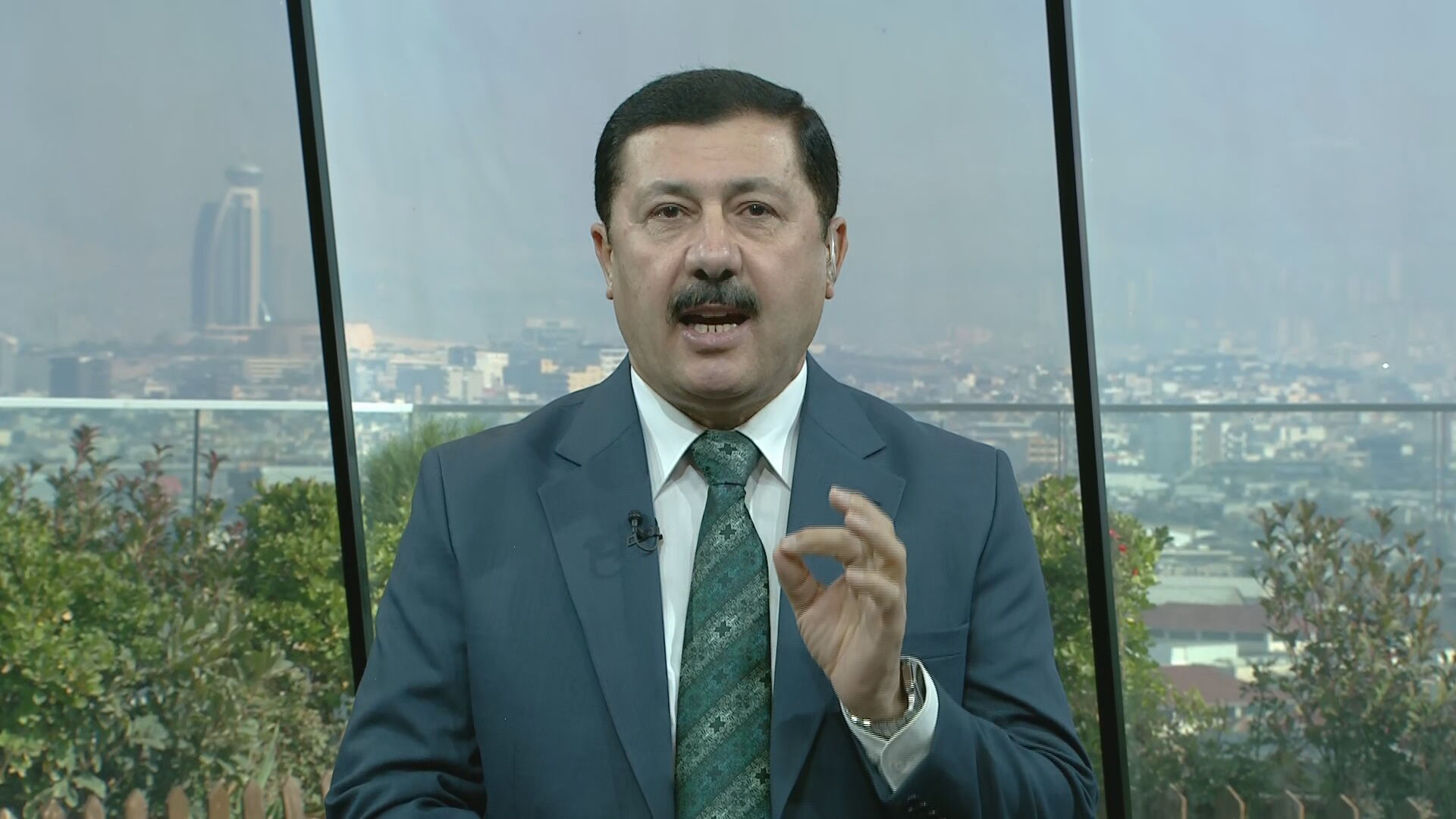
ERBIL (Kurdistan24) - Political analyst Sherwan Shamirani said on Monday, Nov. 16, 2026, that proposals to separate Sulaimani from the Kurdistan Region reflect mounting pressure between rival political parties rather than an established popular demand, warning that prolonged institutional paralysis risks inviting outside intervention in Kurdish political affairs.
Speaking to Kurdistan24 amid controversy over a signature campaign seeking separate regional status for Sulaimani, Shamirani said the dispute arose against a backdrop of strained relations between the Kurdistan Democratic Party (KDP) and the Patriotic Union of Kurdistan (PUK), along with the inability of regional institutions to function effectively.
He rejected partition on historical and national grounds but said he did not believe the Kurdistan Region faced an imminent breakup. The current tensions, he predicted, would eventually pass.
Shamirani argued that partisan allegiance had increasingly displaced a broader sense of national responsibility, encouraging people to view questions affecting the whole Kurdistan Region primarily through the interests of individual parties.
"All parties in Kurdistan must understand that a political party is a tool for serving the nation and liberating Kurdistan, not that the nation should become a servant of the party," he said.
He linked that criticism to the petition campaign and efforts to involve Baghdad in disputes between Kurdish political forces. The analyst pointed to the Kurdistan Region's recognition under Iraq's Constitution as a single federal region, saying the powers associated with that status were secured through decades of Kurdish political struggle.
"When the institutions of the Kurdistan Region are rendered ineffective and fail to perform their duties, people turn to outside parties," Shamirani said.
Using the analogy of a house, he argued that Kurdish institutions needed an orderly and principled internal system to prevent disputes from creating openings for outside interference.
He criticized unilateral contacts and private negotiations between Kurdish political parties and Iraqi actors conducted outside the Region's constitutional and legal institutions.
Although Baghdad is the capital of Iraq and the federal Constitution is a political reality, he said, Kurdish parties should not abandon their national responsibilities or allow their disagreements to undermine the Region's collective position.
Grievances Do Not Require Division
Shamirani stressed that residents' grievances in Sulaimani deserved attention, even as he rejected the proposal to split the Region.
He described separation as historically and nationally unacceptable and characterized the campaign as a political reaction or bargaining instrument rather than evidence of a settled public demand.
The controversy has prompted a wider debate over whether dissatisfaction with governance requires changes to the Region's boundaries or reforms to how its institutions operate.
On Sunday, 80 academics, writers, legal experts and civil society activists issued an appeal opposing the proposed separation.
They argued that problems involving governance, distribution of resources and political disputes should be addressed through reform, equal rights and dialogue rather than new borders.
The signatories also cautioned that a petition could not, by itself, demonstrate consent across Sulaimani's population. Their appeal recognized the right to express different political views while opposing the campaign's objective.
Kurdistan24 correspondent Aram Bakhtiyar separately interviewed three Sulaimani residents who spoke against separation.
One of them, Mamosta Fareeq Rasheed, invoked the sacrifices of the Peshmerga and victims of the Anfal campaign, saying political disputes could be settled through understanding rather than division.
Those interviews represented individual perspectives, not a representative measure of public opinion.
Read More: Sulaimani Residents Reject Proposed Separation, Call for Kurdistan's Unity
Calls for Unity From Kurdish Officials
Sulaimani Governor Haval Abubaker also distinguished decentralization from separation in an interview with Kurdistan24.
He argued that devolving administrative and financial authority could strengthen the existing Kurdistan Region without changing its political or geographical status.
"We support a strong Region. A Region in which everyone sees themselves," the governor said, calling for inclusive government and respect for local administrations.
Read More: Sulaimani Governor Rejects Division of Kurdistan Region
At Sunday's launch of Erbil's Green Belt expansion, Prime Minister Masrour Barzani pledged to oppose attempts to weaken or divide the Kurdistan Region, describing its protection and development as a national duty.
KDP spokesperson Mahmoud Mohammed said his party was working toward talks with the PUK following President Masoud Barzani's appeal for reconciliation.
The political deadlock has continued despite the Nov. 4 reactivation of the Kurdistan Parliament, a session contested by the PUK and New Generation Movement.
Read More: Prime Minister Barzani Pledges to Defend Kurdistan's Unity at Green Belt Launch
Warning Against Parallel Administrations
Shamirani closed with a warning drawn from the political division between Hamas and Fatah, citing the emergence of separate Palestinian administrations in Gaza and Ramallah as an example of how internal rivalries can have lasting consequences.
He associated that split with Gaza's subsequent economic blockade and humanitarian suffering, presenting it as a caution against allowing political differences to harden into competing administrations.
His comparison was a political warning, not evidence that the Kurdistan Region is following the same course.
For Shamirani, the immediate task is to restore effective regional institutions and settle disputes internally.
His position combines opposition to partition with an acknowledgment that the grievances fueling the debate cannot be dismissed, and that renewed dialogue is necessary to keep those grievances from becoming a pretext for outside involvement.